
In an effort to boost food security and increase agricultural productivity, Nigeria has signed a $33 million public-private partnership (PPP) deal to install 10,000 climate-smart greenhouses across the nation.
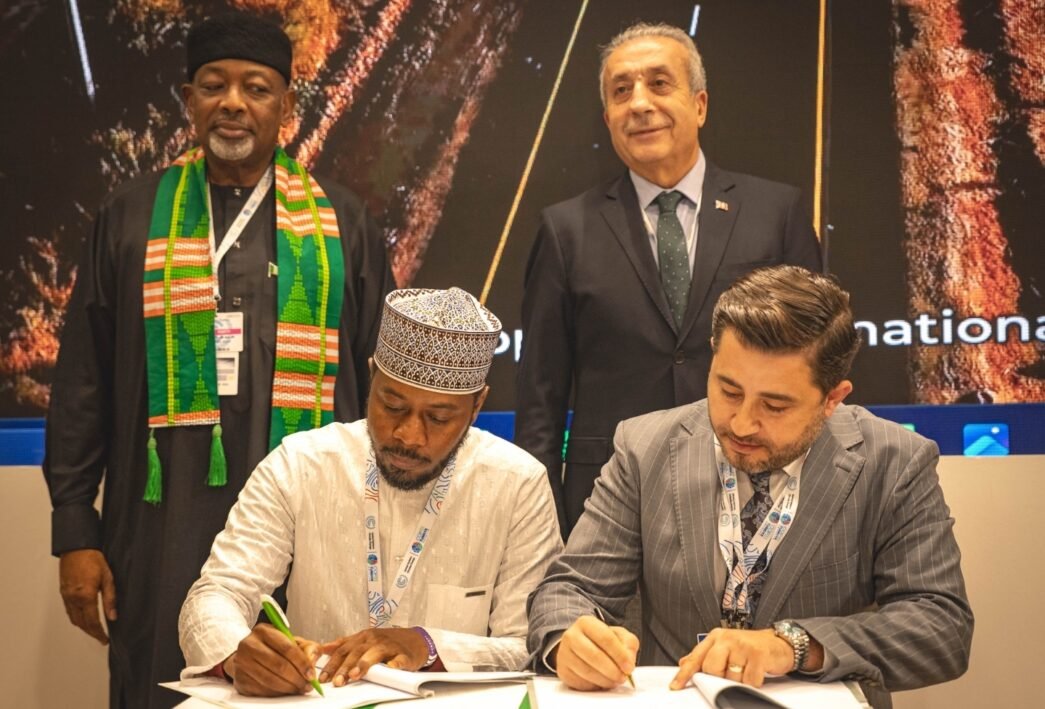
The Special Agro-Industrial Processing Zones (SAPZ) initiative, the Bank of Agriculture (BoA), and Direkçi Group, a Turkish agricultural technology and investment firm, signed the deal on the fringes of the current COP31 climate summit in Antalya, Turkey.
Mehdi Eker, a former Turkish minister of agriculture and rural affairs, Ibrahim Yumaklı, Turkey’s minister of forestry and agriculture, and Abubakar Kyari, the country’s minister of agriculture and food security, all attended the ceremony.
Prior to scaling up to 10,000 units nationwide, the initiative will launch with a $3 million pilot phase consisting of 1,000 greenhouse units in Kano State.
Under the terms of the agreement, participating farmers will access a $1.5 million loan facility from the Bank of Agriculture (BoA), matched by $1.5 million in foreign direct investment from Direkçi Group.
Designed to enable crop cultivation under regulated conditions, a greenhouse allows farmers to manage temperature, irrigation, and other environmental factors—reducing vulnerability to erratic rainfall, pests, and extreme weather.
Each of the 1,000 greenhouse structures in the Kano pilot will span approximately 240 square meters.
The BoA will administer the loans under a 36-month repayment schedule, featuring an initial four-month moratorium so farmers can establish their crops and begin generating revenue before repayments start.
Along with mobilizing farmers and coordinating the planned nationwide expansion, SAPZ will provide land, foundational infrastructure, seeds, and seedlings.
Among the initiative’s primary beneficiaries, women and smallholder farmers are at the top.
Tackling Climate Threats to Agriculture
The partnership comes at a critical juncture, as climate-driven challenges—including drought, flooding, extreme heat, and unpredictable rainfall—pose an escalating threat to Nigerian agriculture.
These adverse conditions destroy crops, disrupt planting cycles, and diminish farmers’ incomes, highlighting the urgent need for farming systems capable of withstanding shifting weather patterns.
While reducing several risks tied to traditional farming, the greenhouse initiative is expected to improve both the consistency and quality of tomato and pepper yields.
According to the agreement, the project will also drive technology transfer in modern crop management, precision irrigation, and climate control.
A central element of the partnership is a proposed off-take arrangement that enables industrial buyers to purchase harvests from participating farmers under pre-agreed standards for quality, pricing, and delivery.
This arrangement is projected to provide processors with a reliable supply of raw produce while offering farmers more stable and predictable markets.
Beyond direct cultivation, the partners anticipate generating employment across greenhouse construction, logistics, processing, and marketing.
Read Also: COP31- UK Names World’s First Envoy for Climate Security