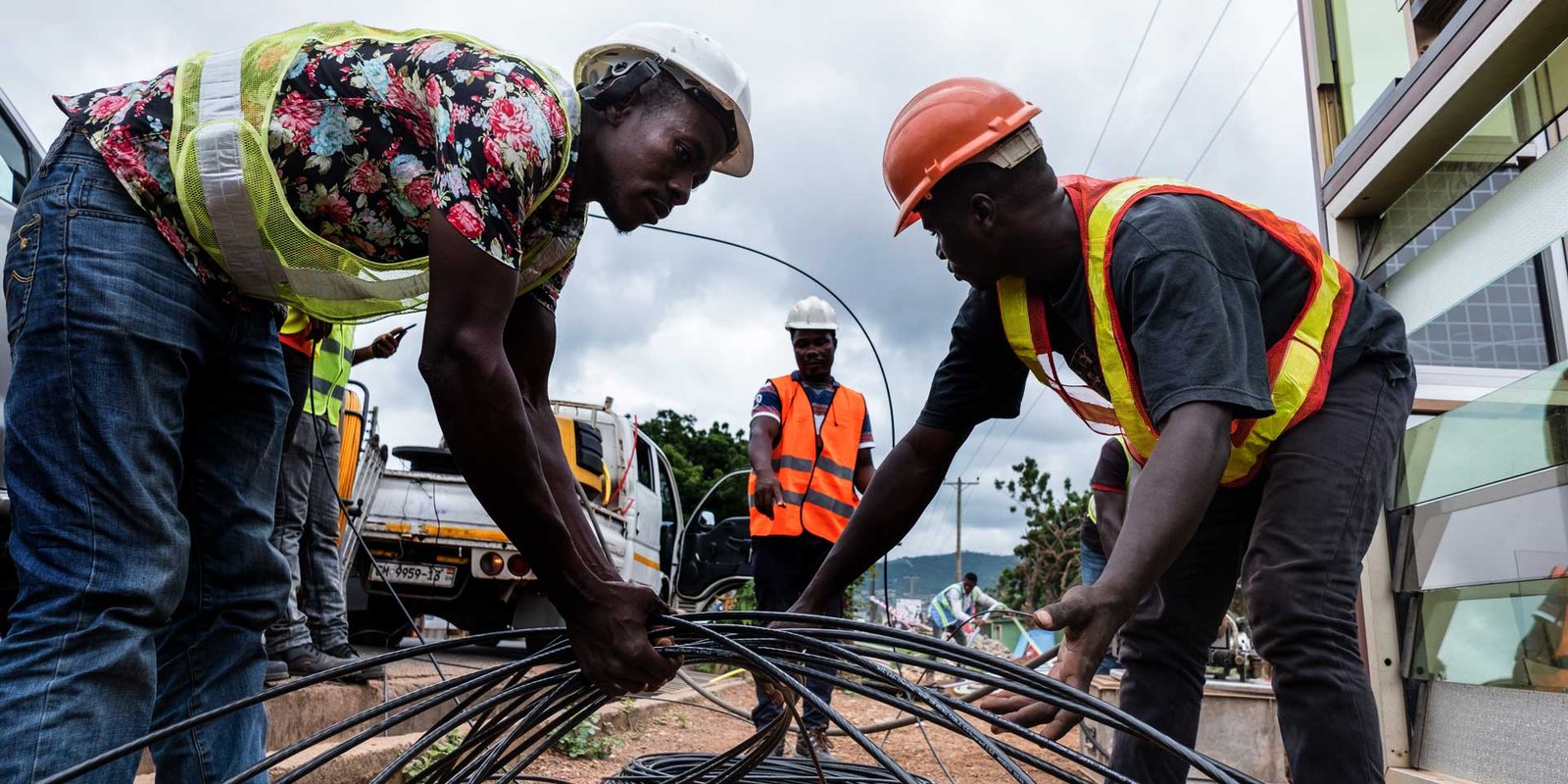
Nigeria is intensifying efforts to confront an ongoing challenge that has been damaging its telecommunications backbone and disrupting digital services across the country. Telecommunications regulators, security agencies, government ministries and industry players are now working together to address the alarming frequency of fibre optic cable cuts and vandalism that have hindered economic activity, affected millions of users and threatened national broadband ambitions.
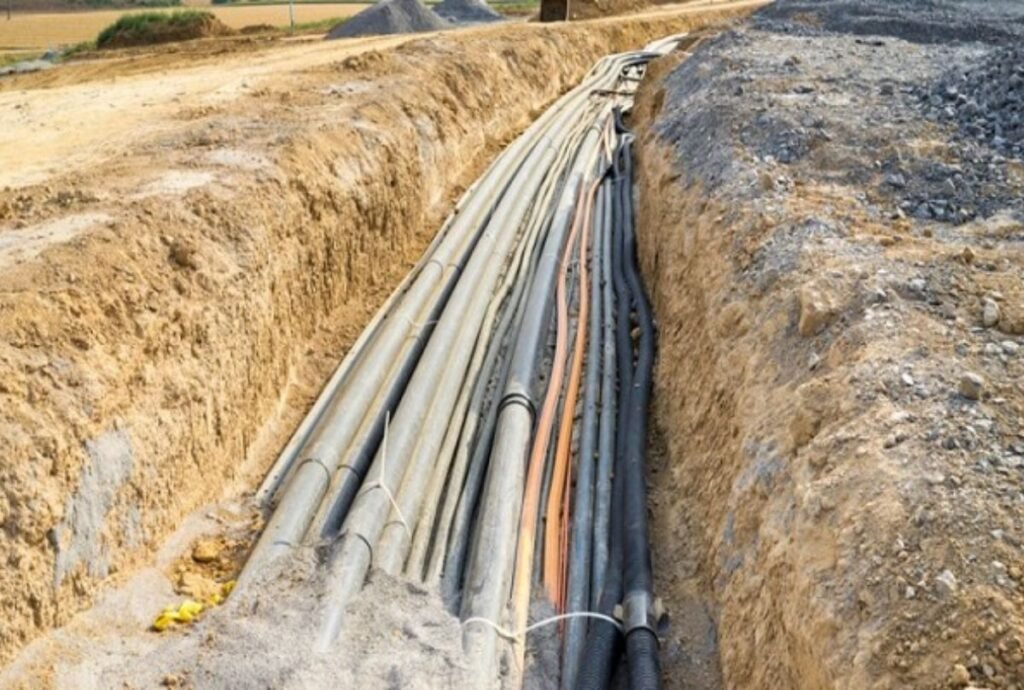
A growing crisis in infrastructure damage
Damage to fibre optic cables has been a persistent and escalating problem for Nigeria’s telecom industry. In 2024 alone, more than 50,000 incidents of fibre cuts were recorded, with roughly 30,000 of those linked directly to road construction work by federal and state agencies that did not coordinate with network operators.
Telecom regulators and operators have repeatedly sounded the alarm that inadvertent cuts during excavation, drilling, trenching or roadworks are the predominant causes. But it is not only construction-related accidents that are to blame. Vandalism and theft have also surged, resulting in lost revenue, prolonged service outages and widespread frustration among consumers.
Nigeria’s digital economy relies heavily on robust connectivity. Fibre optic cables carry the bulk of the country’s high-capacity internet traffic, support mobile broadband and fixed internet services, and underpin essential services such as mobile banking, healthcare and emergency communications. Repeated damage undermines these vital links and jeopardises broader development goals.
Joint action and regulatory enforcement
In response to the crisis, the Nigerian Communications Commission (NCC) has joined forces with the Nigerian Security and Civil Defence Corps (NSCDC) to enforce stricter compliance and oversight. The two agencies have warned construction companies, contractors and other stakeholders that damaging fibre infrastructure is unlawful under existing national security and cybercrime legislation.
Under the Designation and Protection of Critical National Information Infrastructure Order 2024, telecommunications infrastructure, including fibre optics, is now classified as a protected national asset. Damage to it is treated as a criminal offence. This shift elevates the legal and security approach to protecting essential digital infrastructure.
The partnership between the NCC and NSCDC has also emphasised proactive measures. This includes mandating pre-construction verification of fibre routes, urging all stakeholders to collaborate with network operators before any excavation, and encouraging swift reporting of accidental damage to minimise downtime and disruption.

Government committees and cross-sector coordination
Beyond enforcement, the federal government has taken concrete steps to institutionalise solutions. In early 2025, the Federal Ministry of Works and the Federal Ministry of Communications, Innovation and Digital Economy established a Joint Standing Committee focused on protecting fibre optic cables during road construction and rehabilitation works.
The committee’s mandate is to create channels for regular communication between ministries, regulators and telecom operators so that fiber routes are integrated into road design from the outset. It is expected to meet frequently, share performance reports, and coordinate industry-wide strategies to reduce the frequency of cuts.
Permanent secretaries from both ministries have underscored the committee’s role in ensuring that critical telecom infrastructure is prioritised in planning, design and construction phases of public works. The creation of a real-time communication mechanism is also intended to alert operators and regulators whenever civil works are about to begin near fibre corridors.
Telecom operators under strain
Telecommunications operators have felt the impact acutely. MTN Nigeria, the country’s largest mobile network provider, reported over 9,000 fibre cuts and related vandalism at more than 200 sites in 2025. These incidents have contributed to millions of consumer complaints as network performance falters.
For operators like MTN and Airtel, frequent fibre damage not only disrupts service but also drains resources that could otherwise be invested in expanding coverage and upgrading technology. The recurring outages have dented user experience and slowed progress toward national broadband goals.
Industry feedback suggests that while uncoordinated construction remains a leading cause, vandalism and theft have become more sophisticated and widespread. These acts add a layer of complexity that calls for both technical and community-based responses.
Broader implications for Nigeria’s digital future
The stakes of this crisis extend beyond intermittent internet outages. Frequent infrastructure damage has slowed Nigeria’s progress toward achieving its broadband targets and building a more resilient digital economy. Data from 2025 shows networks struggled to meet ambitious connectivity goals, with broadband penetration growth falling short of national targets.
The economic implications are significant. Telecommunications disruptions can cascade into other sectors such as finance, education and healthcare, all of which depend on reliable data connectivity. The costs associated with repairing damaged fibre and restoring network services also divert funds from expansion and innovation.
In response, regulators are exploring new tools and frameworks to measure network resilience and hold stakeholders accountable. Plans for a Digital Connectivity Index that ranks states and regions on broadband performance and infrastructure protection are underway.
Looking forward to coordinated action
The coordinated efforts of government agencies, industry groups and security forces represent a shift toward holistic management of Nigeria’s telecommunications infrastructure. By blending enforcement with planning, communication and public engagement, the country aims to reduce the frequency and impact of fibre damage.
But the work is far from done. Long-term success will depend on sustained collaboration among ministries, operators, construction firms and local communities. Clear guidelines and adherence to best practices for construction near critical infrastructure are essential if Nigeria is to protect and grow its digital economy.
Nigeria’s experience highlights a universal challenge faced by rapidly developing digital societies: as the demand for connectivity surges, so does the need for robust protection of the physical networks that deliver it. The actions taken today will shape the reliability and resilience of the nation’s telecom services for years to come.
Join Our Social Media Channels:
WhatsApp: NaijaEyes
Facebook: NaijaEyes
Twitter: NaijaEyes
Instagram: NaijaEyes
TikTok: NaijaEyes
READ THE LATEST EDUCATION NEWS