
Nigerian researchers are exploring a new way to teach complex scientific procedures through virtual reality, developing immersive learning tools that could help students understand genomics without depending entirely on expensive laboratory equipment.
The initiative, led by the Institute of Genomics and Global Health (IGH) at Redeemer’s University in Ede, Osun State, produced five virtual reality prototypes designed to teach different stages of polymerase chain reaction (PCR), a laboratory technique used to make multiple copies of a selected DNA segment for scientific analysis.
The prototypes emerged from the 2026 XR and Artificial Intelligence Genomics Hackathon, which ran from September 28 to October 16. More than 196 people registered for the programme, which brought together scientists, software developers, three-dimensional artists and science communicators.
According to The Guardian Nigeria, the event concluded with a demonstration day at the African Centre of Excellence for Genomics of Infectious Diseases auditorium at Redeemer’s University.
The project reflects a growing effort to make specialised scientific education more accessible across Africa, where access to advanced laboratory facilities and practical training opportunities remains uneven.
Also Read: Can Nigerian Schools Teach AI Skills Without Reliable Internet Access?
Five Virtual Reality Prototypes Target Laboratory Training
Each of the five teams developed an interactive learning experience covering a different stage of the PCR process. Their projects included explaining the principles behind the technique, identifying laboratory equipment and reagents, preparing reaction mixtures, arranging PCR plates, and loading and operating a virtual PCR machine.
Team Five, which developed the final loading and operation stage, emerged as the overall winner. Teams Two and Three finished second and third, respectively.
Rather than relying solely on textbooks, videos or classroom explanations, the proposed tools allow learners to explore simulated laboratory environments and follow procedures through interactive experiences.
The prototypes are intended to become part of GenomicsXR, an extended reality platform being developed by IGH to make genomics education more engaging and practical. Its first module, focused on DNA extraction, was introduced in 2025.
The next stage involves connecting the five PCR components into a continuous learning experience, checking their scientific accuracy and refining the interactive features before testing the completed platform with intended users.
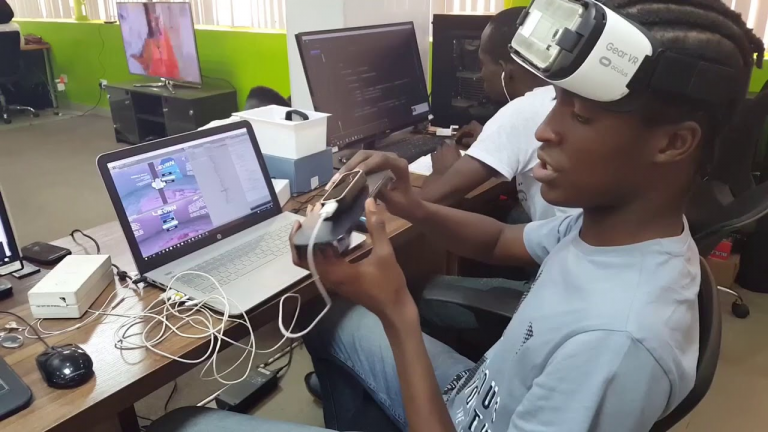
As Voice of Nigeria reported, the programme combined technical workshops, mentorship, project development and expert presentations. Participants also tested their prototypes using virtual reality headsets.
The technology is expected to complement conventional laboratory instruction, not replace the need for supervised practical work with real equipment.
African Health Research Could Benefit from Better Training
The project also speaks to a wider challenge facing African healthcare: building a skilled workforce capable of using genomic information to understand diseases, strengthen diagnosis and support public health decisions.
Genomics involves studying an organism’s genetic material, including the DNA that carries biological instructions. Its applications include investigating infectious diseases, understanding inherited conditions and supporting the development of more personalised medical care.
Virtual reality could help students practise laboratory procedures repeatedly in a simulated environment before handling real samples and equipment. It may also reduce some training costs and allow institutions with limited facilities to introduce learners to procedures that would otherwise be difficult to demonstrate.
However, the benefits will depend on the quality of the simulations, access to suitable devices and the platform’s ability to deliver accurate, measurable learning outcomes.
During the hackathon, management consultant Emeka Odibeli encouraged participants to concentrate on solving practical problems rather than developing technology simply because it was innovative. He urged young developers to create solutions that address healthcare needs in their communities.
IGH Director Professor Christian Happi highlighted the importance of developing genomics expertise, while Deputy Director Professor Folarin Onikepe emphasised personalised medicine and the need to improve African representation in genetic research.
These priorities are particularly relevant because stronger local research capacity can help African scientists investigate health challenges using evidence that reflects the populations they serve.
Back Story: Building Africa’s Genomics Capacity Through Technology
The latest prototypes build on IGH’s earlier work in immersive science education. In 2025, the institute introduced virtual laboratory projects designed to help learners practise complex procedures without requiring immediate access to a fully equipped physical laboratory.
A Nature Communications perspective published in February 2026 also highlighted virtual reality’s potential to strengthen public health genomics training across Africa, particularly where conventional training is expensive or difficult to organise.
The research noted that immersive simulations could support practical instruction in DNA extraction, PCR, sequencing workflows and genomic data analysis, provided the tools are carefully designed and evaluated.
For the Nigerian project, the immediate challenge is to turn five promising prototypes into a scientifically validated, connected learning platform.
If successful, GenomicsXR could offer universities and training institutions another way to teach advanced laboratory concepts, helping more students prepare for careers in biotechnology, medical research and public health.
Also Read: Can Nigerian Universities Teach AI Effectively Without Reliable Internet Access?