
Nigerian universities can no longer afford to measure educational success mainly by the number of degrees awarded. As the labour market changes rapidly, universities are being challenged to produce graduates who can do more than pass examinations and collect certificates.
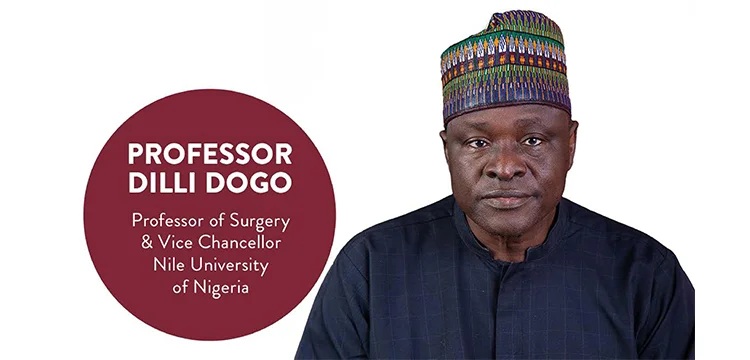
Professor Dilli Dogo, Vice-Chancellor of Nile University of Nigeria, recently argued that higher education institutions must place greater emphasis on practical skills, innovation and workplace readiness. He made the remarks while speaking with journalists in Abuja as he marked four years in office.
His argument speaks directly to a concern many Nigerian graduates already understand from experience. A university certificate may open the door to an interview, but it does not necessarily guarantee that a graduate has the practical ability to succeed once inside the workplace.
For Nigeria, where young people continue to enter the labour market in large numbers, the distinction between having a qualification and having useful skills is becoming increasingly important.
Also Read: Why African Universities Are Expanding AI Degree Programmes to Prepare Students for the Future
Why a University Degree Is No Longer Enough
For decades, the traditional university pathway was relatively straightforward. Students attended lectures, completed assignments, passed examinations and graduated with degrees that were expected to prepare them for professional careers.
That model remains valuable, but the economy surrounding it has changed.
Employers now operate in an environment shaped by artificial intelligence, digital transformation, entrepreneurship and rapidly changing technologies. This means graduates are increasingly expected to demonstrate problem-solving ability, digital competence, communication skills, adaptability and the capacity to apply what they have learnt.
Professor Dogo said education in the 21st century should not be reduced to certification. Universities, he argued, have a responsibility to ensure their graduates are prepared to meet the expectations of society and industry.
That shift is particularly important in Nigeria, where employers frequently complain about gaps between what graduates learn in school and what workplaces actually require.
A student may understand the theory behind a profession but still struggle when confronted with a real assignment. Closing that gap should therefore become a central responsibility of universities.
From Classrooms to Skills, Innovation and Industry
The solution does not mean abandoning academic knowledge or making degrees irrelevant. Rather, Nigerian universities need to connect academic learning with practical experience.
Universities can achieve this through stronger relationships with companies, professional organisations, entrepreneurs and technology firms. Students should have more opportunities to work on real projects, undertake meaningful internships, develop businesses, participate in research and solve problems connected to their communities.
This approach can also help universities become centres of innovation rather than institutions focused primarily on teaching and examinations.
There are already signs of this direction emerging. Veritas University in Abuja recently launched a N1.3 billion Skills and Innovation Hub designed to provide students with practical training in technology, entrepreneurship, fashion, music, creative arts and innovation. The facility is expected to strengthen the university’s effort to produce graduates with industry-relevant abilities.
The wider Nigerian university system can learn from such initiatives.
Universities should also rethink how students are assessed. Beyond written examinations, students could be evaluated through projects, prototypes, presentations, business ideas, research outputs and practical demonstrations of competence.
At the same time, innovation should not be understood only as creating technology startups. A graduate who develops a better agricultural process, improves healthcare delivery, designs an efficient construction method or finds a more effective way of delivering public services is also demonstrating innovation.
The real objective should be to produce graduates who can identify problems and confidently work towards solutions.
Also Read: Five Emerging Tech Skills Nigerian Graduates Need Before 2030 to Stay Competitive
Back Story: The Growing Push to Reform Nigerian Higher Education
The call for universities to move beyond degrees is not an isolated argument. Nigerian education authorities and university leaders have increasingly raised concerns about graduate employability, entrepreneurship, curriculum relevance and the connection between universities and industry.
In 2025, the National Universities Commission and the Committee of Vice-Chancellors of Nigerian Universities called for universities to become stronger drivers of innovation, entrepreneurship and national development. The NUC highlighted skills development, digital transformation, university-industry-government collaboration, graduate employability and the commercialisation of research among areas requiring greater attention.
Former University of Ibadan Vice-Chancellor, Professor Abel Idowu Olayinka, also argued in July 2026 that Nigerian universities must move beyond simply awarding degrees and focus more deliberately on producing knowledge that addresses societal challenges.
Taken together, these calls point to a broader transformation that Nigerian higher education can no longer ignore.
Degrees will continue to matter. However, the graduate of the future will need more than a certificate. Nigerian universities must give students the knowledge, practical skills, creativity, confidence and problem-solving ability required to create value in an increasingly competitive economy.
For students, that transformation could mean graduating with not just a degree, but something far more useful: the ability to actually use what they have learnt.