
Nigeria cannot promise economic transformation while treating education as a modest spending priority. Schools, universities and technical institutions are expected to produce the teachers, engineers, researchers and entrepreneurs the country needs. Yet the 2026 federal budget raises questions about whether public investment matches that responsibility. The issue is not what officials say, but what the enacted budget provides.
The announced figure differs from the enacted allocation
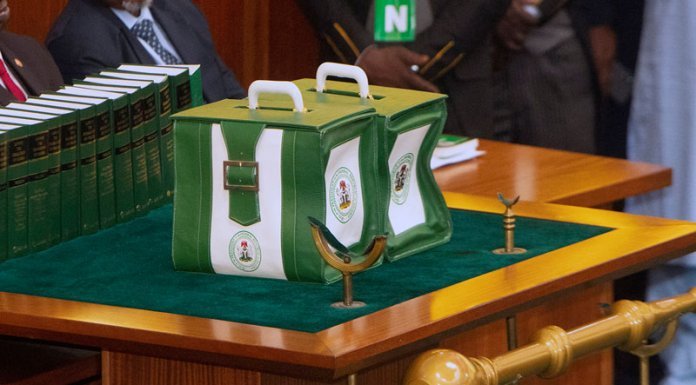
According to a report by the State House, Abuja, when President Bola Tinubu presented the 2026 budget in December 2025, he announced ₦3.52 trillion for education, within a proposed ₦58.18 trillion budget. He later assented to an Appropriation Act authorising ₦68.323 trillion in total expenditure.
A review of the Act’s detailed schedules by Vero Record found that the Federal Ministry of Education and the Universal Basic Education Commission together account for approximately ₦2.559 trillion, or 3.74 per cent of approved expenditure. This includes the Ministry’s recurrent, capital and loan-funded provisions and UBEC’s statutory transfer.
The speech does not itemise what its ₦3.52 trillion figure covers, so the two figures may not include identical spending streams, including possible TETFund and other ministry programmes. The Act’s education section also contains a summary figure that conflicts with the total obtained by adding its agency lines. The Budget Office should clarify this publicly.
Also Read: Nigeria’s Education Sector at a Crossroads as Minister Appeals for Bigger 2026 Budget
The funding share falls below international benchmarks
The detailed ₦2.559 trillion figure is far below the 15 to 20 per cent of public expenditure benchmark in UNESCO’s Education 2030 framework. UNICEF reported in September 2026 that Nigeria’s education spending had fallen to 3.6 per cent of total government spending in 2023.
The consequences are visible in learning outcomes. UNICEF says 49 per cent of Primary 3 learners, 67 per cent of Primary 5 learners and 86 per cent of Junior Secondary 2 learners failed to reach minimum proficiency in mathematics in 2022. Reversing this requires sustained investment, effective teaching and measurable improvements.
Underfunding transfers the burden to families
When public schools lack classrooms, learning materials, laboratories and qualified teachers, families shoulder extra costs through private lessons, transport and other expenses. Universities also need dependable funding for research, equipment, libraries and safe learning environments. Underinvestment weakens the future workforce and restricts opportunity for children from low-income households.
Government must account for funding and results
The ₦36.3 billion figure in budget comparisons is not the total education allocation. It is the reported difference between the 2026 detailed figure and the 2025 Appropriation Act as first signed. The 2025 budget was later repealed and re-enacted, so comparisons depend on which version is used. That complexity makes transparent reporting essential.
Calling this level of priority educational irresponsibility is a fair editorial judgement. The government must publish a reconciled education budget, release approved funds on time and show what the spending delivers in classrooms. Nigeria cannot build a knowledge economy on promises alone.
Back Story
Nigeria introduced the Universal Basic Education programme in 1999. The UBE Act of 2004 guarantees free, compulsory basic education from primary to junior secondary school. UNICEF nevertheless documents persistent gaps in access and learning. The distance between a legal promise and a child’s classroom experience remains a test of government commitment.
Also Read: Nigeria’s Unified Education Data System Set to Transform Education Planning Nationwide