Nigeria’s new free education data initiative raises a practical question: how much learning can 100 megabytes support? Since its nationwide rollout on 1 October 2026, eligible learners have been able to use selected educational resources without paying data charges for qualifying access. It is a welcome relief for families weighing every data purchase, but its value will depend on how students use it.
Under the Nigerian Communications Commission’s (NCC) Zero-Rated Data Access to Educational Platforms and Content initiative, eligible users can receive up to 100MB daily. If fully used every day, that adds up to about 700MB a week, 3GB a month and 36.5GB a year, according to the Commission’s official announcement.
Also Read: Nigerian Telcos Support NCC Zero-Rated Education Plan for Students
What Can 100MB Cover in a Study Day?
The allowance goes furthest when students read. NCC estimates text materials, PDFs and educational searches use 5MB to 15MB an hour, meaning 100MB could support hours of revision or research if documents are lightweight and large downloads are avoided.
Text-based platforms may use 10MB to 25MB an hour; audio lessons, 30MB to 60MB. The NCC’s published estimates put likely study time at two to five hours daily, depending on the task.
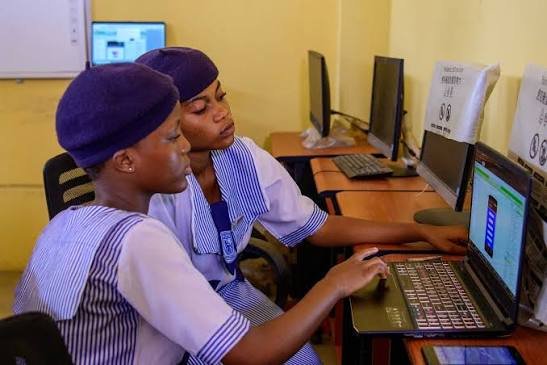
A learner reading notes, checking definitions, consulting a digital library or completing text-based exercises may stretch the allowance across a useful study session. Audio lessons leave less time, while video-heavy classes are likely to consume data faster. Images, downloads and background app activity also affect how long it lasts.

The Limits Behind the Free Data Promise
This is not 100MB for unrestricted browsing. The scheme covers approved educational websites and platforms only. Social media, entertainment, general browsing and non-approved sites will continue to use a subscriber’s regular data bundle. The Guardian explains the access rules, including the participation of MTN, Airtel and Globacom and the use of authorised learning services.
The allowance renews daily rather than accumulating indefinitely. The NCC says platforms are being encouraged to reduce unnecessary advertising and make content more data-efficient. But students must still be able to identify eligible websites, and the approved resources must work well on affordable phones. Clear platform lists and a simple complaint channel will help users resolve access or billing problems.
Free data cannot remove every barrier to digital learning. Students still need a suitable device, reliable network coverage, electricity and educational material that matches their courses. Rural connectivity and the quality of available resources will shape who benefits.
Back Story: Why Nigeria Introduced the Scheme
The NCC and Federal Ministry of Education launched the initiative in Abuja on 10 September, with the Association of Licensed Telecommunications Operators of Nigeria as a partner. Nationwide rollout followed on 1 October 2026. Government announcements said the programme would initially target around five million learners in public senior secondary schools and tertiary institutions, with scope to expand.
The scheme addresses a familiar problem: digital education can widen access to lessons and reference materials, but data costs leave some students offline. The NCC says approved resources may include digital libraries, online courses, teacher development and technical and vocational training platforms. Its programme statement says the initiative will be monitored to assess its performance.
Ultimately, 100MB is neither a complete internet solution nor an empty gesture. For reading, research and carefully selected learning tasks, it can deliver real value. The test is whether students can access relevant content reliably and whether officials measure learning outcomes, not just megabytes used.
Also Read: New Nigerian Study Finds AI Is Changing Students’ Study Habits