
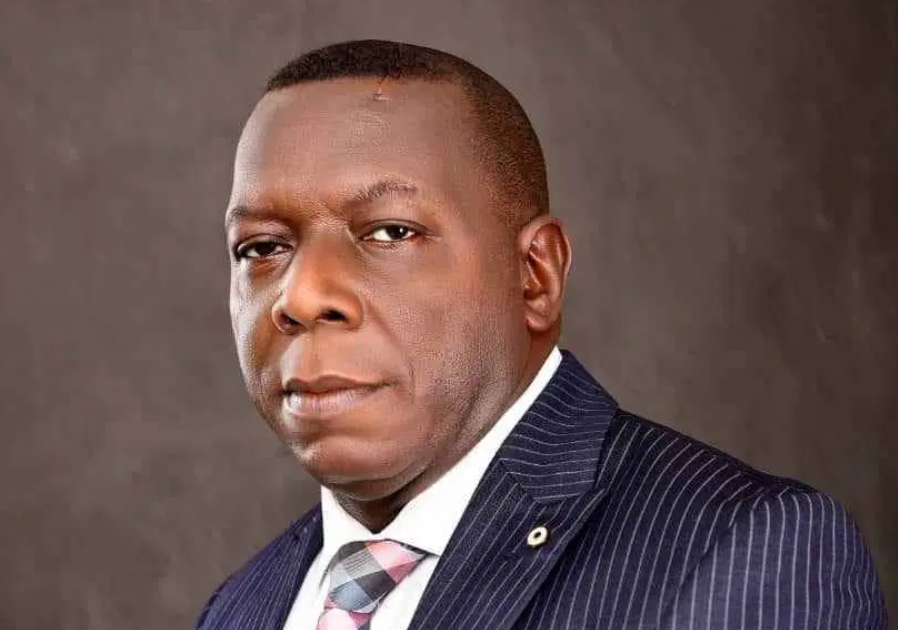
In a bold new move, Cross River State’s Commissioner for Education, Senator (Associate Professor) Stephen Odey, has vowed to personally spearhead a task force to clamp down on illegal schools operating across the state. His declaration, made in recent remarks, comes amid growing concerns over the proliferation of unapproved educational institutions that many believe undermine academic standards and put students at risk.
Odey painted a picture of urgency, insisting that the state government can no longer sit idly by as unsanctioned schools thrive unchecked. “I will personally lead the task force to shut down illegal schools in Cross River,” he affirmed, signalling that enforcement will now be direct and sustained. The Commissioner emphasised that the drive is not simply punitive but protective — aimed at safeguarding children, preserving quality in education, and restoring public confidence in the system.
The Depth of the Problem: Illegal Schools and Their Consequences
The rise of unapproved schools in Cross River has been a simmering issue for years. While some institutions operate in remote or underserved areas where educational access is weak, others emerge in urban settings, often circumventing regulatory scrutiny. These schools frequently lack proper facilities, qualified teaching staff, and accountability mechanisms.
In prior interventions, Odey’s office has already shut down several such institutions. In February 2025, for example, two illegal schools in Etung Local Government Area — Express Pathway Academy and Lord Animex Standard School — were sealed during unscheduled visits by the Education Ministry. More recently, in Calabar, the Ministry closed God’s Connection High School and Tdayspring Collegiate Stars after discovering they lacked official approval. Authorities cited concerns over overcrowding, poor safety standards, and noncompliance with state educational regulations as reasons for the closure.
Critics argue that these institutions lure parents by offering lower fees or more flexible arrangements. But the consequences are serious: students may receive substandard instruction, lack accreditation, or find themselves unable to transfer credits or progress to higher levels. Parents, in turn, may suffer financial loss and emotional distress when schools are abruptly shut without recourse.
Odey’s announcement suggests the state is now prepared to wage a more coordinated and visible campaign against these institutions.
What the Task Force Will Do: Strategy, Enforcement, and Outreach
While Odey’s words are firm, many now await the details of how his task force will operate. From initial statements, several elements appear central to the plan:
- Inspections and Monitoring
The Commissioner plans to oversee regular inspections across all Local Government Areas (LGAs), looking out for schools operating without approvals, missing licenses, or failing to meet minimal standards. Unscheduled visits, like those already conducted in Ikom, Etung, and Calabar, are likely to continue. - Closure and Sealing Orders
Institutions found in violation will face immediate closure. In previous cases, proprietors were instructed to report to the Ministry of Education to be guided on compliance procedures. Police or security agencies may assist in enforcing closures and preventing reoccupation. - Stakeholder Education & Public Awareness
Odey has urged parents and guardians to verify the legitimacy of schools before enrolment. He has also worked with school administrators and teachers to emphasise adherence to curriculum standards, accurate student registers, and approved textbooks. - Redeployment and Support
Some closures affect teachers and students. The state plans to redeploy teachers from shuttered schools to other institutions needing staff. For students, efforts will be made to transfer them to approved schools, although gaps remain in ensuring seamless transitions. - Data-Driven Oversight
The Ministry is pushing for better data management across schools — accurate student numbers, teacher qualifications, and operational status. This will help monitor licensed versus unlicensed schools over time.
While the task force is poised to act decisively, the success of this campaign will depend on tight coordination between the Ministry, local governments, law enforcement, and community stakeholders.

Challenges, Risks, and the Road Ahead
Odey’s initiative is ambitious — and fraught with potential challenges.
Resistance from Proprietors
Some school operators may resist, especially if they have invested significantly in infrastructure or have local support. Legal pushback, injunctions, or negotiations may slow closures.
Transition for Affected Students and Staff
When a school is shut down, students must find alternative placements. In remote areas, that may be difficult. Teachers may lose income or be reluctant to relocate. Ensuring their welfare is critical to avoid backlash.
Enforcement Capacity
Carrying out closures across a wide and diverse state requires manpower, logistics, and funding. The task force must be well-resourced and committed over the long term — not just symbolic gestures.
Ensuring Compliance, Not Just Closure
Closing illegal schools is one thing; preventing new ones from arising is another. Long-term oversight, licensing checks, and community vigilance will be needed to sustain gains.
Equity Concerns
Some illegal schools fill gaps where government schools are few or inaccessible. In cracking down, the state must also shore up infrastructure and access in underserved areas so students have legitimate alternatives.
Conclusion
As Cross River braces for what may be its most coordinated assault on illegal education operators to date, the message from Government House is clear: unlicensed schools will no longer be tolerated. Whether Senator Odey can maintain momentum, enforce compliance statewide, and manage the collateral consequences will define how effective this campaign will be.
Parents, students, and educators alike will be watching closely — hopeful that this crackdown restores integrity to the education system, but wary that the human toll doesn’t disproportionately hurt those already most vulnerable.
Join Our Social Media Channels:
WhatsApp: NaijaEyes
Facebook: NaijaEyes
Twitter: NaijaEyes
Instagram: NaijaEyes
TikTok: NaijaEyes