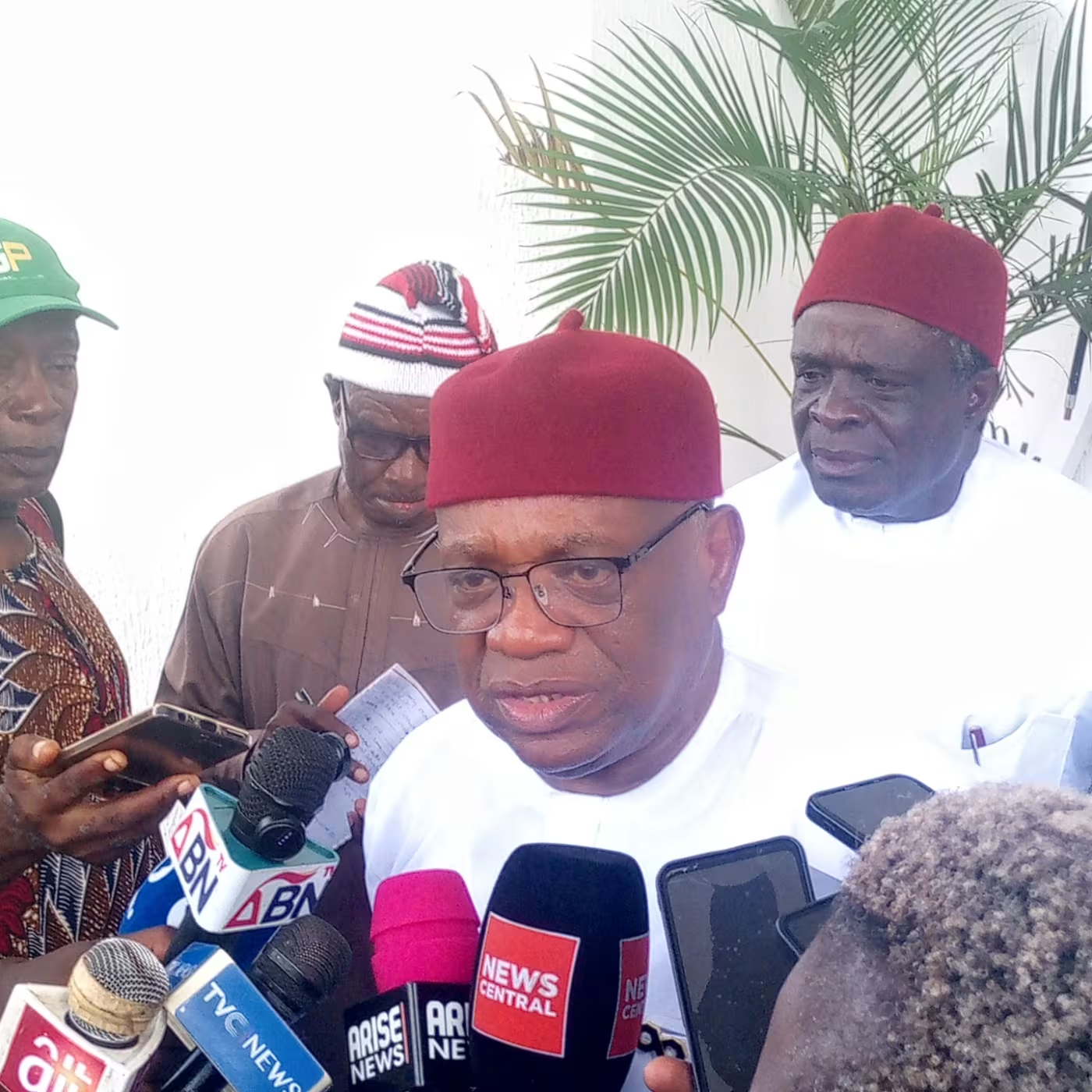

Senator Orji Uzor Kalu has described insecurity in parts of Nigeria as the major obstacle to the full impact of President Bola Tinubu’s economic reforms.
Kalu made the remarks while addressing members of the All Progressives Congress and his support groups at his country home in Igbere on Friday.
According to him, the influx of arms from countries such as Mali, Libya, and Burkina Faso into Nigeria through land borders has continued to fuel insecurity and create challenges for the government’s economic agenda.
The former Abia State governor noted that President Tinubu’s policies, including the removal of fuel subsidy and foreign exchange reforms, have attracted foreign investments, but insecurity remains a major factor slowing down growth in the manufacturing sector.
He stated that while the President has made significant progress in stabilising the economy, the security situation in some parts of the country continues to affect overall economic performance.
Kalu also called on APC members in Abia North and across Abia State to mobilise support for President Tinubu and other party candidates ahead of the 2027 general elections.
On the recently passed State Police Bill, Kalu addressed concerns about possible abuse by state governors, assuring Nigerians that safeguards would be introduced to prevent misuse.
He explained that both the executive arm and the Senate would work on a legal framework to regulate the operations of both the Federal Police Service and the proposed state police system.
According to him, clauses capable of enabling abuse would be carefully reviewed to ensure the legislation protects the interests of all Nigerians.
BACKSTORY:
Since assuming office, President Bola Tinubu has introduced a series of major economic reforms, including the removal of fuel subsidy and the unification of the foreign exchange market, as part of efforts to stabilise Nigeria’s economy and attract foreign investment.
While the reforms have been praised by some economic experts for improving revenue generation and restoring investor confidence, they have also faced criticism over rising inflation, increased cost of living, and slow impact on ordinary Nigerians.
At the same time, insecurity remains a major concern across several parts of the country, with banditry, terrorism, and cross-border arms trafficking continuing to threaten lives, businesses, and economic activities.
Analysts have repeatedly warned that without improved security, the full benefits of Tinubu’s economic policies may be difficult to achieve, as instability continues to affect production, investment, and the overall business environment.
ALSO READ: Orji Uzor Kalu Leads Bold Initiative as Ex-Governors Launch Strategic Committee for Abia