
The much-anticipated Osun State governorship election has been hit by technical problems involving the Bimodal Voter Accreditation System, BVAS, with voters in several parts of the state reporting delays and difficulties completing accreditation.
The problems have emerged during the actual election today, Saturday, August 15, 2026, rather than remaining a concern raised during the pre-election preparations.
At the polling unit of Osun State Deputy Governor, Kola Adewusi, the BVAS reportedly malfunctioned, slowing the accreditation process and preventing some voters from casting their ballots promptly. Adewusi expressed displeasure over the situation, saying the technical problem was affecting voters who had turned out to exercise their civic rights.
The development is particularly significant because INEC had presented its preparations for the election as evidence of its readiness. The commission planned to deploy 4,427 BVAS devices for the election, including machines reserved as backups.
However, reports from polling units suggest that having backup devices available does not necessarily eliminate the practical challenges associated with using the technology on election day.
Voters Struggle With Facial Verification and Low Batteries
One of the reported cases occurred in Ikirun, where 55-year-old voter Sharafa Lasisi encountered repeated difficulties with BVAS facial recognition. According to reports, several attempts were made to authenticate him, but the process was unsuccessful. The voter subsequently appealed for intervention because he wanted to participate in the election.
Another serious situation was reported in Ila Local Government Area.
At Ojude Ala I polling unit in the Iperin Registration Area, repeated BVAS glitches reportedly slowed accreditation significantly. Vanguard reported that only 75 of the 342 registered voters at the unit had been accredited at the time of its report, highlighting the effect that technical problems can have when a large number of people are waiting to vote.
In Egbedore Local Government Area, the problem was different but equally revealing. The Centre for Journalism Innovation and Development, CJID, reported that BVAS stopped working at about 1:34 p.m. at Polling Unit 024, Transformer Junction, Ofatedo Registration Area, after the device’s battery became low.
Some individuals reportedly offered power banks to help keep the device operational.
CJID also reported BVAS malfunctions in polling units across Ilesa West and Ife Central, suggesting that the technical difficulties were not restricted to a single location.
The reports have added a new layer to an election already attracting significant public attention.
Also Read: Nigeria’s 2027 Election Could Become the Country’s Biggest Test of Generative AI

Political Leaders Raise Concerns as Voting Continues
The BVAS difficulties have also attracted comments from political figures.
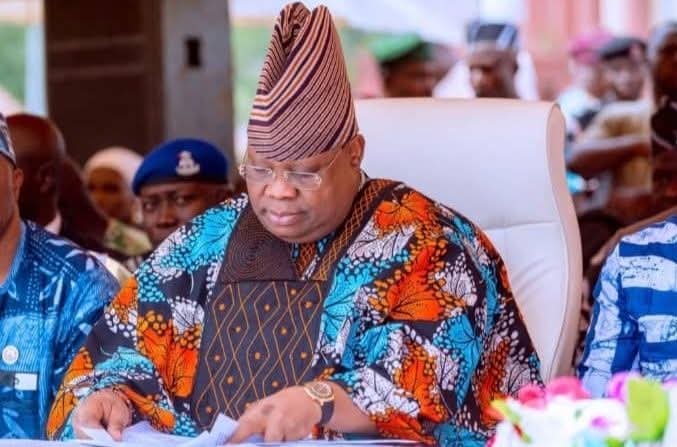
Governor Ademola Adeleke, who is seeking re-election on the Accord Party platform, expressed dissatisfaction over reports reaching him about malfunctioning and slow BVAS devices in several polling units. He said he had received complaints about technical problems during the voting process.
The complaints come despite INEC’s earlier efforts to demonstrate its preparedness.
During the pre-election period, the commission conducted a mock accreditation exercise intended to test its systems and identify possible problems before election day. However, reports from that exercise had already indicated that some BVAS devices experienced technical glitches.
That earlier experience makes today’s problems particularly important.
The purpose of a mock exercise is to expose weaknesses before millions of voters depend on the system. Where similar problems subsequently appear during the actual election, questions naturally arise about whether the identified faults were adequately addressed.
At the same time, individual cases of BVAS failure should not automatically be interpreted as evidence that the entire election technology has failed. Technical problems can occur with electronic equipment, particularly in environments where electricity, connectivity, device batteries and field logistics can create additional challenges.
The key issue is how quickly INEC responds when such failures occur.
Back Story: Why BVAS Remains Central to Nigeria’s Electoral Process
BVAS has become one of the most important technologies in Nigeria’s recent electoral reforms. The system is designed to authenticate voters biometrically and help prevent multiple voting, while election results are expected to be electronically transmitted through the IReV platform.
Its importance means that failures at polling units can have consequences beyond simply creating inconvenience.
For a voter who has spent hours travelling to a polling unit and waiting in line, an unsuccessful facial verification or a dead BVAS battery can mean the difference between participating in an election and going home without voting.
Today’s developments therefore provide another real-world test of Nigeria’s electronic election infrastructure.
There are also reports of other problems unrelated directly to BVAS. In Osogbo, some voters have complained that their names could not be found on the voters’ register, preventing them from voting despite previous participation at their polling units.
Meanwhile, large crowds and long waiting times have been reported in parts of Ede and other locations as voters await accreditation.
For INEC, the immediate priority will be to resolve technical problems quickly enough to ensure that eligible voters are not unnecessarily disenfranchised.
For voters and observers, however, the larger question goes beyond today’s delays. It is whether Nigeria can build an electoral technology system that remains dependable when it matters most.
The Osun election is providing a fresh answer to that question, one polling unit at a time.
Also Read: Osun Governorship Election 2026: What the Vote Means for Nigeria’s 2027 Presidential Race