
For much of the past three years, artificial intelligence in education was viewed with suspicion. Schools scrambled to block AI chatbots, teachers worried about widespread cheating, and education authorities raced to update academic integrity policies as tools such as ChatGPT became increasingly popular.
Today, that conversation is changing.
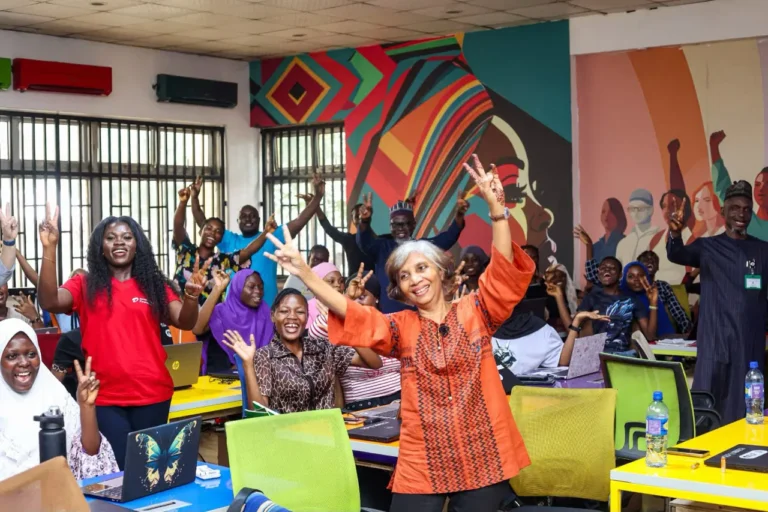
Instead of asking whether artificial intelligence should be allowed in schools, education leaders across the world are asking how it can be used safely, responsibly and effectively. From North America to Europe, Asia and parts of Africa, governments, universities and schools are introducing AI literacy programmes, teacher training initiatives and ethical guidelines aimed at preparing students for a future where artificial intelligence will become part of everyday life and work.
The shift marks one of the biggest changes in global education since generative AI entered mainstream use in late 2022. While concerns over plagiarism, misinformation and excessive dependence on technology remain, many educators now believe that teaching students how to use AI responsibly is more practical than trying to keep the technology out of classrooms altogether.
The changing attitude is also being driven by employers, who increasingly expect graduates to understand how artificial intelligence fits into modern workplaces. Schools are therefore under pressure to equip learners with both technical knowledge and the critical thinking skills needed to use AI wisely rather than blindly.
Recent findings released by Microsoft illustrate just how quickly AI has become part of education. According to the company’s 2026 AI in Education Report, AI use among students, teachers and education leaders has risen sharply over the past year, while a growing number of schools are now moving from experimentation to structured implementation supported by training and governance.
Also Read: Education Leaders Share Practical Roadmap for Safe AI Use in Schools
From Classroom Bans to Responsible AI Policies
When generative AI first became widely available, many schools reacted by banning it completely.
Teachers feared that students would rely on chatbots to write essays, solve assignments and complete projects without developing genuine understanding. Universities also invested heavily in AI detection software as concerns over academic dishonesty spread across campuses.
Although those concerns have not disappeared, experience has shown that outright bans are becoming increasingly difficult to enforce. Students continue to access AI tools through smartphones, laptops and web browsers, making complete prohibition almost impossible.
As a result, schools are gradually replacing restrictive policies with clear guidance on acceptable use.
Education experts say the new focus is on helping learners understand when AI should assist learning and when independent thinking remains essential. AI is increasingly being presented as a support tool rather than a replacement for teachers or original thought.
International organisations are reinforcing the same message.
The United Nations Interregional Crime and Justice Research Institute recently launched an initiative to strengthen AI literacy among teachers across Europe, the Middle East and Africa. The programme aims to help educators understand generative AI, develop practical classroom strategies and guide students towards ethical and responsible use of the technology.
UNESCO has also continued to encourage governments to ensure that AI serves education rather than replacing the human relationships that remain central to learning. The organisation has consistently emphasised ethical standards, transparency, fairness and learner protection as countries expand the use of artificial intelligence in schools.

Backstory
The rapid rise of generative AI in education can be traced to late 2022 when publicly available AI chatbots transformed how people searched for information, wrote documents and solved problems. Within months, millions of students around the world were using these tools to complete homework, summarise notes, draft essays and prepare for examinations.
The speed of adoption caught many education systems off guard. While some schools embraced the technology as an opportunity to improve learning, others saw it as a direct threat to academic integrity. Several school districts and universities responded by blocking access to AI platforms on their networks, while lecturers redesigned assessments to reduce opportunities for AI-assisted cheating.
As AI technology continued to improve, educators realised that banning it entirely was neither practical nor sustainable. Students could still access AI tools on personal devices outside school premises, making enforcement increasingly difficult. At the same time, businesses across industries began integrating AI into daily operations, creating demand for graduates who understood how to work with the technology rather than avoid it.
This changing reality prompted governments, education ministries and international organisations to rethink their approach. The focus gradually shifted from restriction to responsible adoption. Instead of asking students not to use AI at all, schools began teaching them how to verify AI-generated information, acknowledge AI assistance where appropriate, protect personal data and apply critical thinking before accepting AI responses as factual.
Today, AI literacy is increasingly viewed as a core digital skill alongside computer literacy, internet safety and media literacy. Many education experts argue that preparing students for an AI-driven economy requires schools to teach responsible use rather than rely on blanket prohibitions. Recent initiatives by UNESCO, Microsoft and other education partners reflect this growing consensus that AI should complement teaching while preserving the essential role of educators and human judgement.
Also Read: Why Schools Should Lead AI Education Instead of Banning Technology
What the Shift Means for Nigeria and the Future of Education
The global move towards responsible AI adoption carries important lessons for Nigeria and many other African countries. As governments work to improve digital education and prepare young people for future jobs, artificial intelligence is likely to become an increasingly important part of classrooms.
Some Nigerian universities have already begun discussions on how AI should be used in teaching, research and assessment. Educators are also exploring ways to update curricula so that students learn not only how to use AI tools but also how to question their outputs, identify bias and apply independent reasoning.
Experts say teacher training will be critical to achieving this goal. Many teachers are still learning how generative AI works, making professional development essential if schools are to integrate the technology effectively. Without adequate support, there is a risk that the gap between technologically equipped schools and those with limited digital infrastructure could widen.
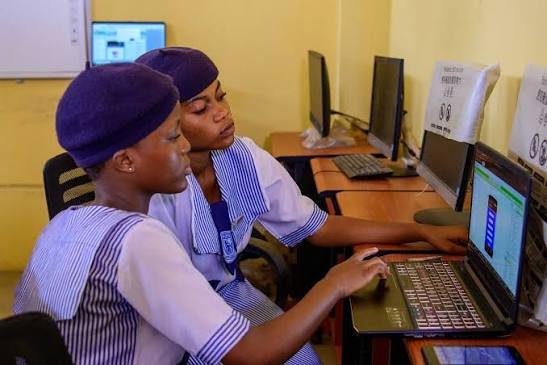
Infrastructure remains another major challenge. Reliable internet access, electricity, digital devices and affordable connectivity continue to limit technology adoption in many schools across Nigeria and other developing countries. Addressing these barriers will be just as important as developing AI policies if students are to benefit from the technology.
There are also growing concerns about privacy, misinformation and algorithmic bias. AI systems can generate inaccurate or misleading information with confidence, making it essential for students to verify facts through credible sources rather than accept AI responses at face value. Education specialists argue that critical thinking, creativity and problem solving should remain at the centre of learning, with AI serving as a supporting tool rather than a substitute for human intelligence.
Despite these concerns, the direction of travel is becoming increasingly clear. Around the world, education systems are moving beyond fear towards practical governance. Instead of treating AI solely as a threat, schools are recognising it as a technology that students will almost certainly encounter throughout higher education and their careers.
For Nigeria, this presents an opportunity to build a generation of learners who are not only digitally literate but also capable of using artificial intelligence responsibly, ethically and productively. Achieving that goal will require investment in teacher development, stronger digital infrastructure, clear national guidelines and collaboration between government, schools and technology companies.
Education has always evolved alongside technological change, from calculators and computers to the internet and mobile devices. Artificial intelligence represents the next stage of that evolution. The challenge for schools is no longer whether AI should have a place in education, but how it can be integrated in ways that strengthen learning, uphold academic integrity and prepare students for a rapidly changing world. The countries that succeed will likely be those that balance innovation with responsibility, ensuring that technology enhances education without diminishing the value of human curiosity, judgement and creativity.