

Nigeria’s ambition to become a major destination for artificial intelligence (AI), cloud computing and digital infrastructure has received a boost following a $1.87 million grant from the United States Trade and Development Agency (USTDA) to support a proposed data centre development in the country.
The funding will cover a feasibility study for two large-scale data centres planned for Lagos and Delta states under the AFRIDATA Datacenter Platform, a pan-African digital infrastructure initiative promoted by INFRAGORA Global Capital.
The agreement, announced in Abuja in October 2026, represents an early step towards a proposed investment estimated at between $650 million and $1 billion. The wider initiative is expected to strengthen Nigeria’s capacity to store, process and manage digital information locally while providing infrastructure for the growing demand for AI and cloud-based services.
According to the USTDA, the proposed facilities will initially deliver a combined capacity of between 60 and 70 megawatts (MW), with provisions for expansion to 100MW.
The project is particularly significant as businesses, financial institutions, telecommunications companies and government agencies increasingly depend on reliable computing infrastructure to manage their digital operations.
Also Read: Nigeria’s Teachers Could Benefit From Delta State’s Technology-Based Teacher Tracking Model
Lagos and Delta to Host AI-Ready Data Centres
Under the proposed development plan, Lagos will host the primary data centre, which is expected to provide advanced computing infrastructure for AI applications, cloud services and data storage.
The Lagos facility is being designed to meet Tier IV reliability standards. This classification represents one of the highest levels of data centre infrastructure resilience, with systems designed to minimise service interruptions even when equipment requires maintenance or experiences failure.
INFRAGORA is also considering the Lagos Free Zone as a possible location for the facility.
The second data centre will be established in Delta State, where it will provide backup infrastructure and disaster recovery services. This arrangement is intended to ensure that customers can maintain access to critical digital services even when the primary facility experiences operational difficulties.
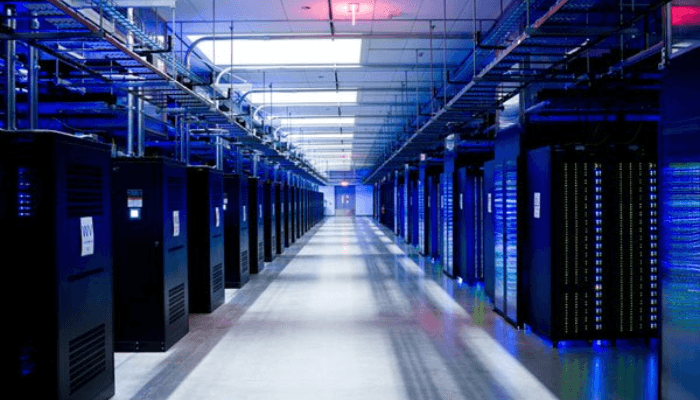
According to the project’s official feasibility study announcement, the two facilities will accommodate approximately 3,600 conventional server racks and 480 high-density racks designed for graphics processing units (GPUs), which are particularly important for handling demanding AI workloads.
The feasibility study will examine the technical, commercial and financial requirements for delivering the facilities. It will also assess the project’s ability to attract investment, identify suitable technology suppliers, evaluate regulatory requirements and determine the most effective approach to implementation.
Electricity supply will be an important consideration. Data centres require substantial and consistent power to operate servers, cooling systems and other critical equipment. INFRAGORA is therefore considering dedicated electricity generation using gas, renewable energy and battery storage.
The project is also expected to benefit from international connectivity through submarine cable systems, including Equiano and 2Africa, which provide links between Africa and other global internet networks.
Speaking about the initiative, USTDA Deputy Director Thomas R. Hardy said the agency’s support would strengthen Nigeria’s digital economy while creating opportunities for American technology companies.
He added that African countries preparing to deploy AI solutions needed secure and trusted technology infrastructure.
Investment to Create Jobs and Expand Digital Infrastructure
Beyond the construction of the two facilities, AFRIDATA has outlined a broader ambition to develop an ecosystem that supports technology businesses and digital innovation across Nigeria and other African markets.
The proposed investment is expected to create employment opportunities in construction, engineering, cybersecurity, data centre management and other technology-related services.
According to BusinessDay’s report on the agreement, the company also plans to establish an ICT business park that would accommodate technology companies, start-ups, small businesses and government digital programmes.
Another component of the initiative is the proposed AFRIDATA Academy, which will focus on training in artificial intelligence, data management and cybersecurity. The programme is expected to support skills development among young Nigerians, particularly women, preparing them for employment in the expanding digital economy.
Ezekiel Odiogo, Senior Managing Director of INFRAGORA Global Capital, said the development would help position Nigeria as a regional centre for digital infrastructure while supporting productivity and economic growth across West Africa.
The Nigerian project is the first phase of a wider continental investment programme estimated at between $2 billion and $3 billion. Other countries being considered for the AFRIDATA platform include Angola, Cameroon, Côte d’Ivoire, Egypt, Ghana, Kenya and South Africa.
However, the proposed investment will still require substantial financing and successful project implementation before the facilities become operational. The feasibility study is intended to establish the commercial and technical conditions necessary to move the development towards that stage.
Back Story: Why Nigeria Needs More Data Centres
Africa’s digital economy continues to expand, but the continent has a relatively small share of the world’s data centre infrastructure.
The USTDA estimates that Africa accounts for less than two per cent of global data centre capacity, despite having a substantial and growing population of internet users and technology consumers.
This infrastructure gap means that businesses and individuals across several African countries depend heavily on computing and storage facilities located outside the continent.
Expanding local data centre capacity could improve access to digital services, reduce dependence on distant infrastructure and support the development of home-grown technology businesses.
Nigeria is particularly important in this regard. According to USTDA’s project information, the country’s data centre market is growing at an estimated annual rate of 14.2 per cent and is projected to reach 226.7MW by 2029.
The proposed AFRIDATA development therefore reflects a growing recognition that Nigeria’s digital transformation will require more than internet access and software adoption. It will also depend on reliable electricity, advanced computing facilities, secure data storage and skilled technology professionals.
The $1.87 million grant does not represent funding for the construction of the data centres themselves. Rather, it will finance the preliminary assessment required to determine whether the proposed billion-dollar development can be commercially and technically delivered.
If the project progresses successfully, Nigeria could strengthen its position in Africa’s emerging AI and cloud computing market while attracting further investment into its digital infrastructure.
Also Read: Can Africa Build Its Own AI Infrastructure Instead of Depending on Foreign Data Centres?