
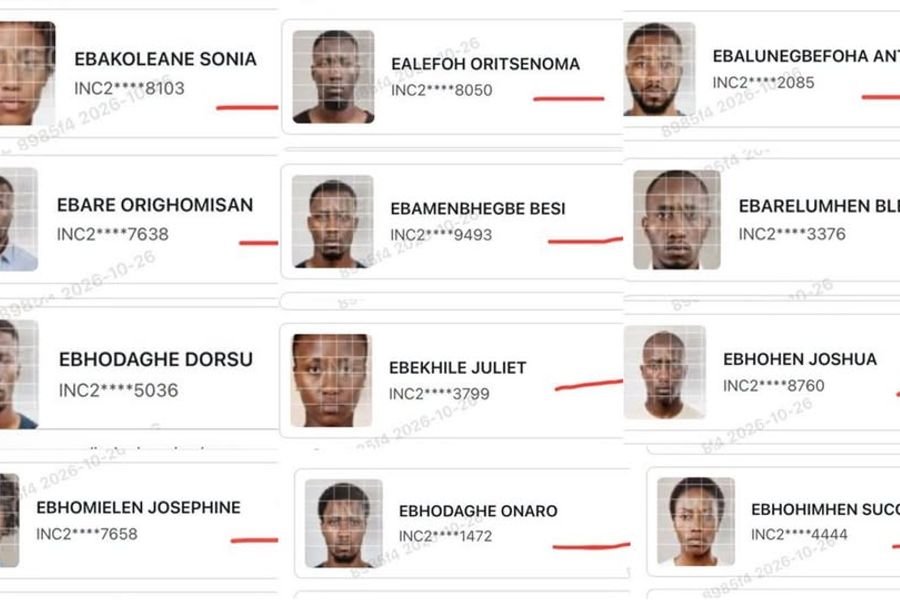
The discovery of suspected AI-generated photographs in Nigeria’s preliminary voters’ register has exposed a wider question: are the controls for confirming that each registrant is a real, eligible voter strong enough?
The Independent National Electoral Commission (INEC) reviewed questionable entries after citizens spotted unusual photographs and other inconsistencies in the register published online on October 26, 2026. The same preliminary register had been displayed nationwide from October 9 to 15. INEC said the online copy did not reflect all clean-up work already underway.
Also Read: Why Are Northern-Associated Names Appearing in Abia’s Voter Register?
How questionable records entered the system
INEC’s ICT Director, Lawrence Bayode, told Premium Times that some records contained AI-generated faces, calendar images and photographs reused across profiles. He said some officials allegedly used authorised logins to create questionable entries. One alleged method involved abusing a special procedure for applicants with disabilities who could not provide all fingerprints. Premium Times Nigeria+1
INEC Chairman Joash Amupitan later said 54 people in 10 states had been identified over registration irregularities and could face disciplinary action or prosecution. INEC has not said each person was responsible for AI photographs; identification is not a conviction.
What the figures actually show
INEC said 11,088,238 records were generated during the 2025/2026 Continuous Voter Registration exercise. Its Automated Biometric Identification System initially flagged 1,545,052 for examination. A flag is not proof of fraud: records require human review before removal.
Before publication, 1,277,052 registrations had been excluded. After public complaints, 268,000 cases were reviewed: 217,722 rejected and 50,278 cleared. Further screening found 113,886 additional invalid entries, bringing removed invalid registrations to 1,608,660. INEC separately reported removing 873 records of verified deceased voters.
There is an arithmetic discrepancy. The two categories add up to 1,609,533, while INEC’s reported combined figure was 1,609,553, a difference of 20 records.
What INEC must fix before 2027
The problem is not simply that AI can create convincing faces. It is that registration controls were allegedly bypassed by people with authorised access. INEC needs stronger identity checks, tighter staff-account audits, independent review of exceptional registrations and clear records of how flagged entries are resolved.
The commission must protect genuine voters too. A false positive could exclude an eligible citizen; an invalid entry could weaken confidence. The 50,278 cases retained after review show why automated detection must support, not replace, human adjudication. INEC should explain its controls and offer a clear process for correcting missing or inaccurate details.
Back Story: A register built over many years
Nigeria’s register draws on exercises dating back to 2011, conducted with different technologies and standards. INEC said some suspicious photographs and duplicate entries circulating online relate to records from 2011 to 2023, not only the latest exercise. Older data therefore also needs auditing. Premium Times Nigeria
Section 19 of the Electoral Act 2026 provides for public display and a 14-day period for objections. Section 23 makes procuring a fictitious person’s registration and knowingly transmitting false declarations as genuine offences. Public scrutiny and enforcement are essential safeguards. Independent scrutiny will establish whether these safeguards work in practice before certification.
Also Read: Experts Back AI Checks on Nigeria’s Voters’ Register Ahead of 2027 Elections