
As artificial intelligence becomes increasingly common in Nigerian classrooms, questions about student privacy and data ownership are becoming harder to ignore. Every time a student uses an AI-powered learning platform to ask questions, complete assignments, practise mathematics or receive personalised lessons, the interaction generates information that could be valuable beyond the immediate learning experience.
For instance, a student using an AI tutor may share their name, school, academic performance, learning difficulties, examination results and personal responses. The platform may also record how long the student spends on particular lessons, which questions they struggle to answer and how their performance changes over time.
These records help AI systems understand individual learning patterns and provide more personalised educational experiences. However, they also create an important question: who controls this information, and what happens to it after the student finishes using the platform?
The issue is particularly important in Nigeria, where schools, universities and private educational technology companies are increasingly exploring AI-powered learning solutions. While these technologies offer opportunities to improve education, students and their parents must understand that their digital activities can leave behind information that organisations may collect, process and retain.
Also Read: Who Owns the Knowledge AI Learns From in Nigerian Languages?
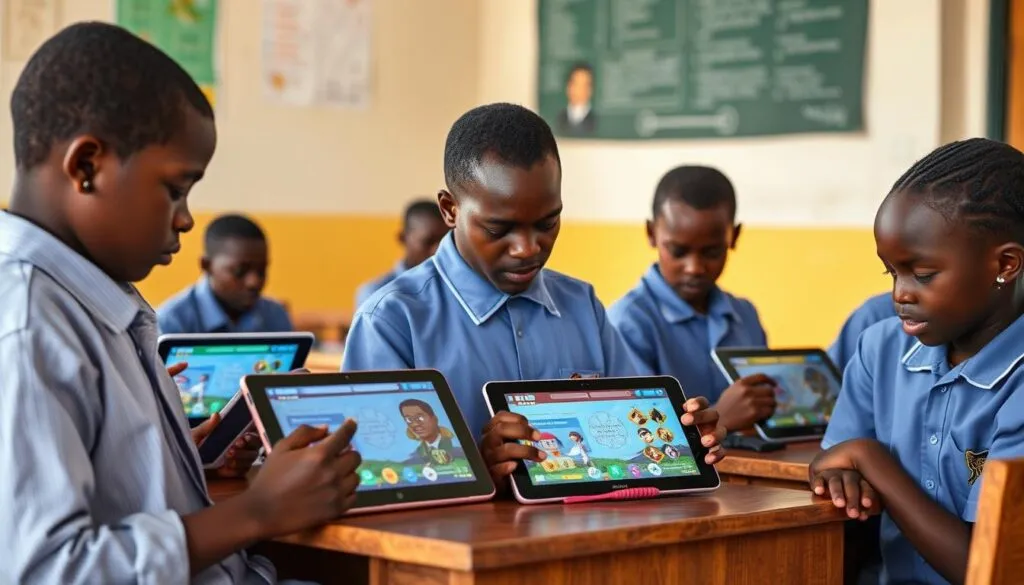
Understanding the Data AI Learning Platforms Collect
Student data generated through AI learning platforms goes beyond the information learners deliberately submit. It can include personal information, academic records, learning behaviour, search histories, conversations with AI assistants and technical information about the devices used to access the platforms.
Some platforms also use learning analytics to identify students’ strengths and weaknesses. For example, an AI-powered mathematics tutor may record that a particular student repeatedly struggles with algebra but performs well in geometry. Over time, the system uses such information to recommend lessons and adjust the difficulty of subsequent exercises.
Although this process can improve learning outcomes, the information creates privacy concerns when students have little knowledge of how it is stored, shared or reused.
A major concern is whether educational technology companies can use students’ information to improve their AI models, develop commercial products or share insights with third-party organisations.
According to a report published by WikkiTimes on data privacy in Nigerian educational technology platforms, consent and transparency remain important challenges in the country’s EdTech sector. Students may accept lengthy privacy policies simply because they need access to learning resources without fully understanding the implications.
What Nigerian Data Protection Law Says About Student Information
Nigeria already has a legal framework governing how organisations collect and process personal information. The Nigeria Data Protection Act 2023 establishes rules that apply to organisations handling personal data, including educational institutions and technology companies.
Under the Act, students are recognised as data subjects when their personal information is collected and processed. This means they have rights concerning how organisations handle their information.
These rights include being informed about data collection, requesting access to personal information, seeking corrections where information is inaccurate and, under applicable conditions, requesting deletion or objecting to certain forms of processing.
However, it is important to distinguish between data ownership and data protection. The law does not automatically give students ownership of every database, algorithm or technical record generated through their use of an educational platform. Instead, it establishes rights and responsibilities concerning personal data.
Educational institutions and technology providers may also have different responsibilities. A school could determine why student information is collected, while an external platform processes that information on the school’s behalf.
This distinction makes contractual agreements between schools and technology providers particularly important. Such agreements should explain who controls the information, what the provider can do with it, how long it will be retained and whether it can be shared with other organisations.
Back Story: Why Nigeria Must Take Student Data Ownership Seriously
The conversation about student data is becoming more relevant as research examines the ethical implications of AI adoption in Nigerian education.
A 2026 study published in Discover Education, involving 535 responses from students across eight Nigerian universities, examined concerns surrounding AI-driven education. The researchers identified issues including data privacy, accessibility, bias, academic integrity and the relationship between students and teachers. They recommended formal institutional policies to guide AI adoption.
Similarly, the National Universities Commission’s AI policy direction highlights the importance of institutional governance, responsible AI use and protecting personal information.
These developments suggest that adopting AI in education requires more than providing students with access to digital tools. Schools and universities must establish clear policies explaining how student information is collected, protected and used.
Parents also have an important role, particularly where children under 18 use these platforms. Institutions should ensure that appropriate safeguards, parental involvement where required and child protection measures are in place.
Ultimately, Nigerian students should not have to sacrifice their privacy to benefit from modern educational technology. AI platforms can improve access to knowledge and support personalised learning, but these benefits must come with transparency, accountability and respect for individual rights.
The question is no longer simply whether AI can improve education. It is whether Nigeria can build an AI-powered education system that protects the people whose information makes these technologies work.
Also Read: Nigerians Urged to Protect Personal Data as AI Raises New Privacy Concerns