A university degree is still valuable, but in 2026, graduating with a certificate alone may no longer be enough to stand out in the job market.
Artificial intelligence is changing the way companies recruit, organise work and measure productivity. As a result, employers are increasingly looking for graduates who can use AI tools alongside the knowledge they gained from university.
This does not mean every graduate needs to become a software developer or machine learning engineer. Instead, AI literacy is becoming a practical workplace skill, much like basic digital literacy became essential in previous years.
Research from Pearson and Amazon Web Services found that 53% of employers surveyed across six countries struggle to find graduates with the AI skills they need. Even more strikingly, only 28% of employers believed universities were keeping pace with AI-driven changes in the workplace.
For students approaching graduation, that gap is worth paying attention to.
Also Read: Nigerian Universities Must Prioritise Skills, Innovation and Employability Beyond Degrees
Employers Are Looking for More Than AI Knowledge
One mistake students can make is assuming that learning AI means simply knowing how to use ChatGPT or another chatbot.
The reality is broader.
Employers increasingly want graduates who understand how to work with AI, check its output, protect sensitive information and use the technology to improve real tasks. Research from Ithaka S+R describes AI readiness as involving areas such as AI literacy, prompt and input quality, critical evaluation and continuous learning.
In practical terms, this could mean using AI to analyse a large spreadsheet, summarise research, generate a first draft, automate repetitive administrative work or support customer service.
But the graduate must still know when the AI is wrong.
That human judgement is becoming particularly important because AI systems can produce inaccurate or misleading information. UNESCO’s AI Competency Framework for Students therefore places emphasis not only on AI techniques but also on a human-centred mindset and ethics.
This means the strongest graduate may not necessarily be the person who knows the most AI commands. It could be the person who knows how to combine AI with critical thinking, communication, creativity and professional knowledge.
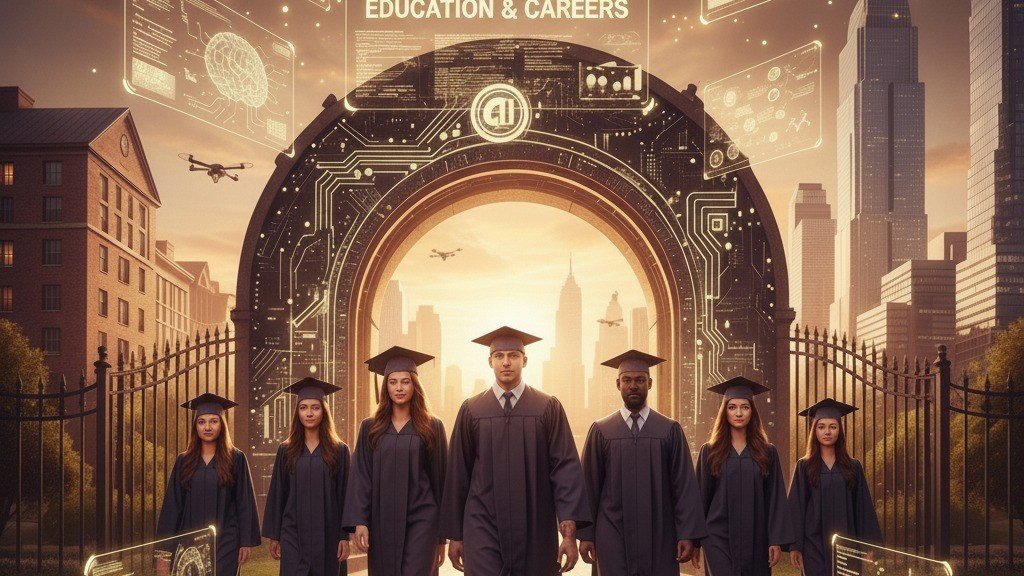
Nigerian Graduates Cannot Afford to Ignore the Shift
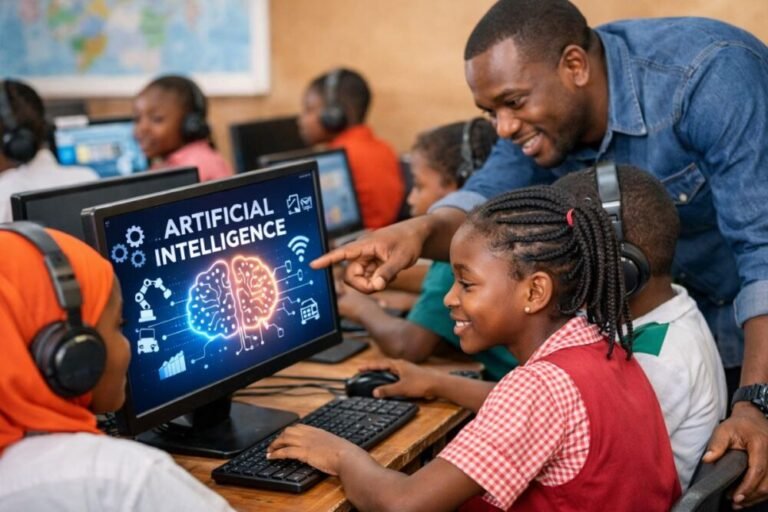
The development is particularly relevant to Nigeria, where thousands of young people enter the labour market every year and compete for jobs that increasingly require digital skills.
Nigeria is also positioning itself to develop a larger AI-skilled workforce. Its national AI strategy has placed considerable attention on building AI capacity among young people and using artificial intelligence to support economic development.
There are also signs that AI education is moving closer to the mainstream. In July 2026, reports indicated that artificial intelligence was being considered as part of Nigeria’s education reforms, including its integration into digital technology and related areas.
For Nigerian university students, this creates an opportunity rather than simply another academic burden.
A student studying mass communication could learn AI-assisted research and content verification. An accounting student could develop skills in data analysis and automation. An agricultural science student could explore AI applications in precision agriculture. A physics graduate could combine computational skills with AI and data science.
The important point is to connect AI with an existing field of expertise.
Back Story: The Graduate Job Market Is Already Changing
The growing demand for AI skills is happening against a difficult global employment backdrop.
In the United Kingdom, graduate vacancies fell to their lowest level since records began in 2016, with only 8,383 positions advertised in July 2026, according to The Guardian. The report linked the difficult environment partly to businesses investing in automation and AI while dealing with higher operating costs.
At the same time, evidence from the United States shows that AI is changing what companies expect from new graduates rather than simply eliminating every entry-level opportunity. Recent research reported by The Washington Post also points to a broader mismatch between what graduates bring to the workplace and what employers need.
The message for universities is becoming difficult to ignore. Students need opportunities to develop practical AI competencies before they leave campus.
The message for students is equally clear: waiting until after graduation to learn how AI affects their profession could put them at a disadvantage.
However, AI should not replace the purpose of university education. A graduate who can use an AI tool but cannot analyse an argument, communicate clearly, solve unfamiliar problems or verify information will still struggle.
The future belongs to graduates who can combine AI skills with genuine expertise and human judgement.
For Nigerian students in particular, learning these skills early could make the difference between simply having a university degree and being able to compete effectively in an increasingly AI-driven labour market.
Also Read: Five Emerging Tech Skills Nigerian Graduates Need Before 2030 to Stay Competitive