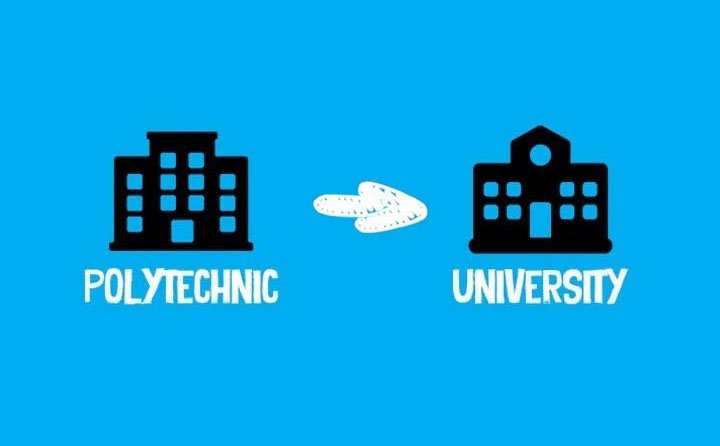
Nigeria’s education debate has returned to a familiar crossroads. Across the country, a growing number of polytechnics are being converted into universities, a move often celebrated as progress. But beneath the surface, a deeper concern is emerging among educators, industry leaders, and policy analysts. The question is no longer whether universities are important. It is whether Nigeria can afford to weaken the very institutions designed to power its technical and industrial future.
This is not just an education story. It is an economic one. It is about jobs, productivity, and whether the country is preparing its young people for the realities of a modern workforce.
Table of Contents

The shrinking space for technical education
In recent years, Nigeria has witnessed a steady push to upgrade polytechnics into universities. While this may appear to expand access to degree education, experts warn that it is quietly eroding the foundation of technical training in the country.
Polytechnics were never designed to compete with universities. Their mandate is different and deliberate. They focus on hands-on skills, practical knowledge, and industry-ready training. From engineering and construction to applied sciences and technology, these institutions produce the middle-level manpower that keeps economies running.
Yet, enrolment in polytechnics has declined sharply over time, driven largely by societal bias and the long-standing discrimination against Higher National Diploma holders. Many students now see universities as the only prestigious path, even when their career goals may be better served through technical education.
The result is a dangerous imbalance. Nigeria is producing more graduates with theoretical knowledge, but fewer technicians, artisans, and technologists who can translate ideas into real-world solutions.
Conversion may deepen the skills gap
The argument for conversion often centres on prestige and global competitiveness. Universities are seen as more attractive, more recognised, and more aligned with international standards. But this approach risks overlooking a critical reality.
Every advanced economy thrives on a strong technical workforce. Engineers, machinists, software technicians, builders, and innovators do not emerge from theory alone. They are trained through systems that prioritise practice, experimentation, and applied learning.
When polytechnics are converted into universities, that practical focus is often diluted. Programmes shift towards academic theory, and the pipeline of skilled workers begins to shrink. According to analysts, this could widen Nigeria’s already significant skills gap, leaving industries struggling to find qualified technical personnel.
This is not a hypothetical concern. Across sectors such as manufacturing, construction, and technology, employers are already reporting shortages of skilled workers. These are the very roles polytechnics were created to fill.
Eliminating or weakening them in favour of universities risks creating a workforce heavy on certificates but light on capability.

Understanding the real problem
It would be easy to assume that polytechnics are failing and therefore need to be upgraded. But the reality is more complex.
The core issue is not the existence of polytechnics. It is how they have been treated within the broader education system.
For years, polytechnic graduates have faced limited career progression compared to their university counterparts. The HND versus degree divide has created an artificial hierarchy that undervalues technical expertise. This has discouraged students from enrolling and pushed institutions into a cycle of declining relevance.
At the same time, funding, infrastructure, and policy support for polytechnics have lagged behind. Many institutions operate with outdated equipment, limited industry partnerships, and curricula that do not fully reflect current technological trends.
Yet, despite these challenges, polytechnics remain essential. They offer programmes across engineering, business, environmental studies, and applied sciences, equipping students with practical skills that are directly linked to employment and entrepreneurship.
The problem, therefore, is not that polytechnics exist. It is that they have not been properly empowered to succeed.
A stronger path forward for Nigeria
If Nigeria is serious about economic growth and youth employment, the solution lies not in conversion but in revitalisation.
First, the government must address the long-standing disparity between HND and university degrees. Equal recognition in the labour market would restore confidence in polytechnic education and encourage more students to pursue technical careers.
Second, investment in infrastructure is critical. Modern laboratories, updated equipment, and digital tools are essential for training students in today’s fast-evolving industries.
Third, stronger partnerships between polytechnics and industry can bridge the gap between education and employment. When companies collaborate with institutions on training, internships, and curriculum design, graduates are better prepared for the workforce.
There is also a need to rethink societal perceptions. Technical skills should not be seen as a second choice. In many countries, they are among the most respected and financially rewarding career paths.
Finally, policymakers must recognise that universities and polytechnics serve different but complementary roles. One is not superior to the other. A balanced education system requires both.
Nigeria’s ambition to industrialise, innovate, and compete globally cannot be achieved through theory alone. It requires a workforce that can build, fix, design, and create.
That workforce is not produced by accident. It is trained deliberately.
And that is why polytechnics do not need to disappear into universities. They need to be strengthened, modernised, and repositioned at the centre of national development.
Join Our Social Media Channels:
WhatsApp: NaijaEyes
Facebook: NaijaEyes
Twitter: NaijaEyes
Instagram: NaijaEyes
TikTok: NaijaEyes
READ THE LATEST EDUCATION NEWS