2026 is shaping up to be the year when tokenisation of real-world assets stops being a series of laboratory experiments and starts behaving like a proper market. For the past few years, firms and technologists have been busy proving the basic idea: physical and financial assets can be represented on blockchains. Now the conversation has shifted from whether it can be done to whether those digital representations can actually move, trade and deliver reliable returns for real investors. That change matters for everyone, from global fund managers to local wealth builders in Lagos and beyond.
From pilots to persistent liquidity
Through 2025 many projects were focused on minting tokens and demonstrating technical feasibility. In 2026, the bar is different. Market participants are demanding sustained secondary market activity, not one-off initial issuances. That means the next stage is about creating the plumbing that supports continuous trading. Exchanges, custody providers and settlement systems are being reworked so tokenised assets are mobile and tradeable in the same way conventional securities are. A recent market note from ChainUp and 1exchange frames this as a deliberate pivot from static token creation to liquidity engineering.
Two institutional signals that help explain the mood shift are the public moves by major exchanges to incorporate tokenised instruments. Announcements and proposals from the New York Stock Exchange and Nasdaq indicate a willingness to allow trading models that run around the clock and to explore regulatory frameworks that recognise tokenised assets. Those developments change the incentives for banks, custodians and institutional traders because they point to a future where tokenised instruments can plug into mainstream market infrastructure instead of sitting off to the side.
What is changing and why it matters
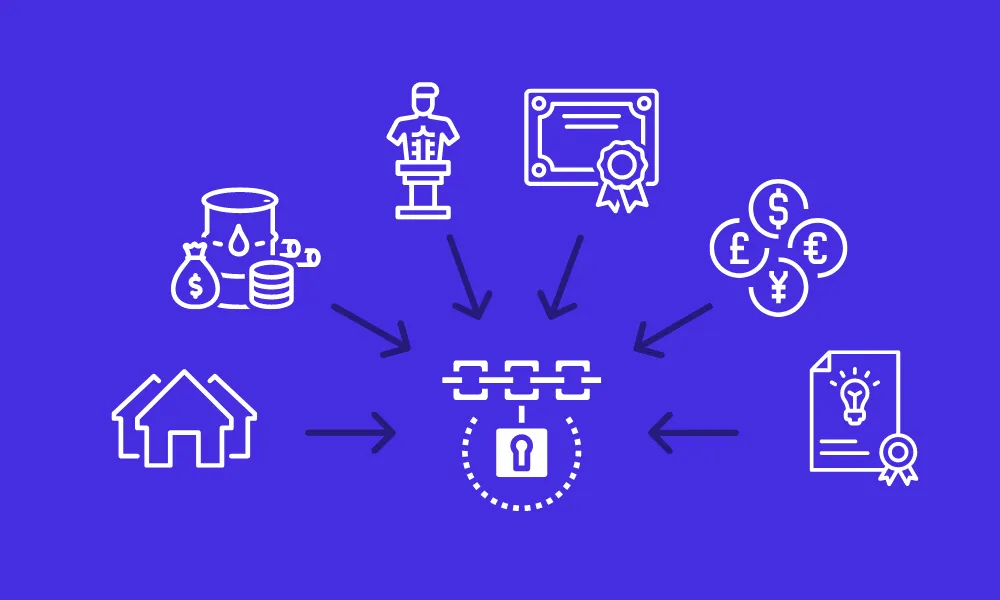
Three technical and institutional trends are converging to make 2026 different.
First, programmable compliance is now a practical tool rather than a research idea. Smart contracts can carry embedded rules for identity, transfer restrictions and regulatory checks. That capability means compliance is not just a manual afterthought. Instead, it becomes part of the transaction itself so trades can be auditable and automated at scale. Regulators and institutional buyers prefer that approach because it reduces manual reconciliation and shrinks operational risk.
Second, settlement is being redesigned. Industry players are pushing on-chain delivery versus payment, where asset transfer and payment finality happen together within a single automated flow. Removing the traditional gaps that cause settlement delays makes tokenised private credit, real estate shares, and fixed income instruments behave more like the exchange-traded instruments investors are used to. Faster, atomic settlement lowers counterparty risk and makes collateralisation simpler.
Third, custody and cross-chain mobility have matured. Advances such as multi-party computation, custody and wrapped liquidity rails allow tokenised value to move between different blockchain networks and traditional financial rails without exposing participants to undue complexity. That interoperability is essential if tokenised assets are to be useful across jurisdictions and trading venues. In practical terms, it means an investor in one country can hold and move tokenised exposure that represents credit, property or infrastructure in another country through a single operational interface.
Taken together, these shifts move the industry from proofs of concept to repeatable products. That is important because institutional capital does not deploy at scale to experiments. It deploys where the operational, legal and compliance frameworks make risk manageable.
Outlook for Nigeria and Africa
What does this mean for Nigeria and the African continent? The immediate implication is opportunity mixed with caution. Tokenisation could unlock ways to fractionalise large illiquid assets such as commercial property, renewable energy projects and receivables. That makes it possible for a far wider pool of investors to participate in assets that previously required deep pockets. For entrepreneurs and project developers, the ability to tap global capital pools without incurring the full weight of legacy settlement inefficiencies is attractive.
However the benefits will not materialise automatically. African regulators and financial institutions need to engage with the technology and shape rules that protect investors while preserving access. That is not a trivial ask. The proof points in 2026 are likely to come from jurisdictions that combine legal clarity and pro-market regulation. Singapore and Dubai are already being cited as such hubs. Nigeria should watch closely and consider how to adapt existing securities law, investor protections and custody standards to the tokenised world if it wants to be part of the next wave.
There is also an education and infrastructure gap. Local custodians, custodial banks and exchanges must understand how on-chain settlement integrates with traditional banking rails. Without coordinated progress across those institutions, tokenised instruments risk being useful only to cross-border sophisticated players rather than everyday investors.
A practical path ahead
For practitioners, the immediate checklist is straightforward. Build venues that support regulated secondary trading. Embed compliance into token design so transfers are auditable and permissioned as required. Standardise post-trade workflows so custody, clearing and reporting can talk to each other. And adopt interoperability tools so tokenised exposures can move between chains and settlement systems with predictable legal treatment.
For policymakers, the tasks are different but complementary. Clarify which tokenised instruments fall under securities rules, set standards for custody and insolvency treatment, and create sandbox environments where market infrastructure can be stress tested under realistic conditions. Good regulation will encourage institutional participation. Overbearing or vague regulation will push activity to friendlier markets abroad.
Finally, investors should treat 2026 as a year of selective adoption. Some asset classes will tokenise faster because they fit naturally with digital workflows. Private credit and certain kinds of structured assets are early candidates because they can benefit from automated compliance and faster settlement. Other asset classes will take longer as legal and operational issues are worked through.
Closing view
2026 is not a guarantee that tokenised assets will instantly replace existing markets. It is howeve,r the year when tokenised assets begin to look and act more like the kinds of investable products that pension funds, asset managers and family offices will consider seriously. The work now is not glamorous. It is plumbing, legal drafting, regulator engagement and operational standardisation. Those quieter tasks are what convert promising pilots into resilient markets.
For Nigeria and the broader African market, the choice is clear. Engage now or risk watching liquidity and innovation flow through other jurisdictions. If policymakers, custodians and market operators coordinate, tokenisation can become a tool to democratise access to asset classes that were previously out of reach. If they delay, local opportunity will be limited to tokenisation experiments that mainly benefit outside players.
Join Our Social Media Channels:
WhatsApp: NaijaEyes
Facebook: NaijaEyes
Twitter: NaijaEyes
Instagram: NaijaEyes
TikTok: NaijaEyes