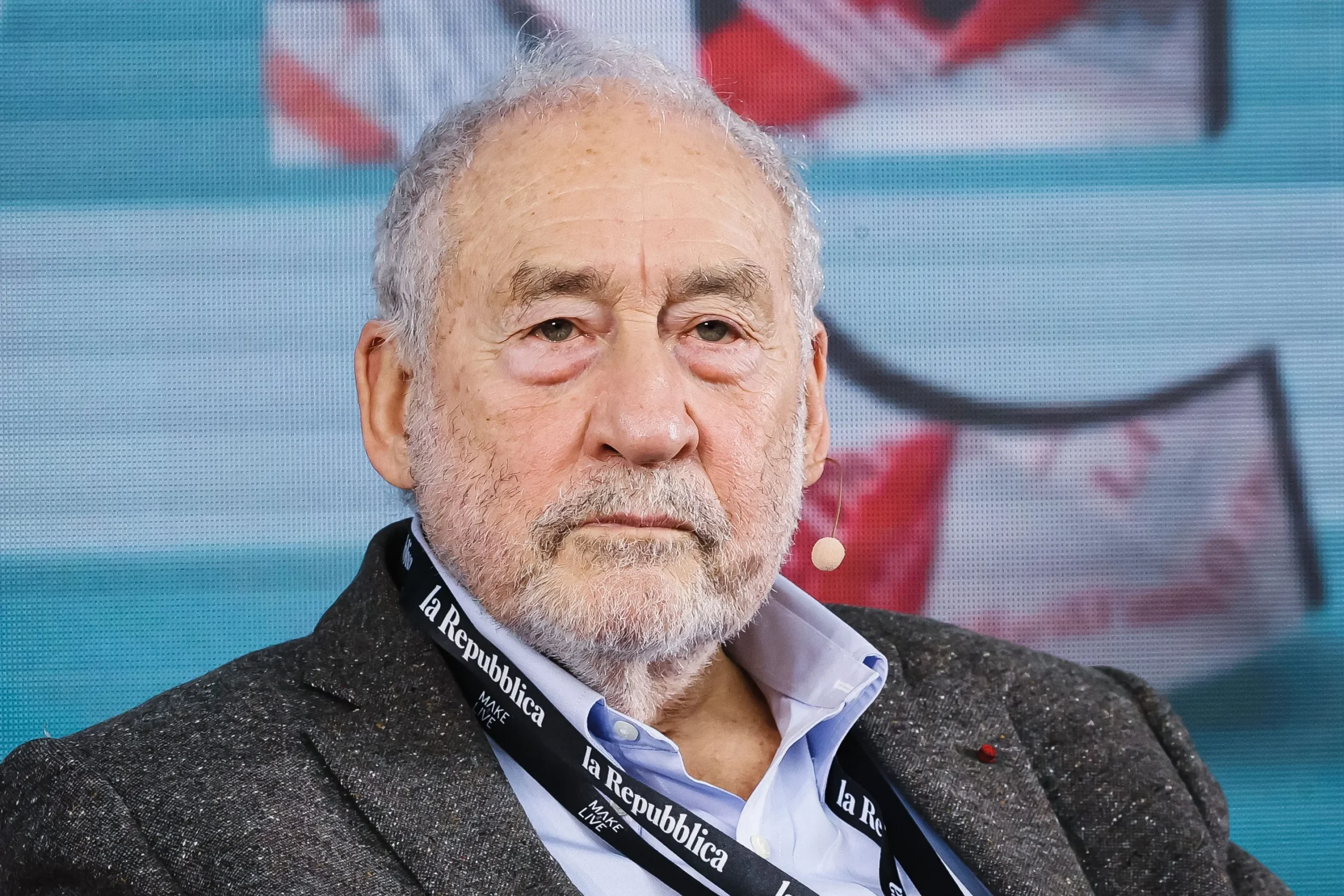

The global excitement around artificial intelligence has reached a fever pitch. Tech companies are investing billions, governments are racing to regulate it, and businesses everywhere are adopting new tools that promise to transform productivity. Yet according to Nobel Prize-winning economist Joseph Stiglitz, the world may first face a painful economic adjustment before artificial intelligence delivers the benefits many expect.
In a recent discussion about the future of AI and the global economy, Stiglitz offered a sobering assessment. While the technology may eventually help workers and businesses become more productive, he believes the current wave of investment and expectations resembles a bubble that could burst before those long-term advantages appear.
For workers, governments, and businesses, the warning highlights a deeper issue. The challenge is not simply whether AI will change the world. The question is how society will manage the disruption that could come first.
The Growing AI Investment Boom
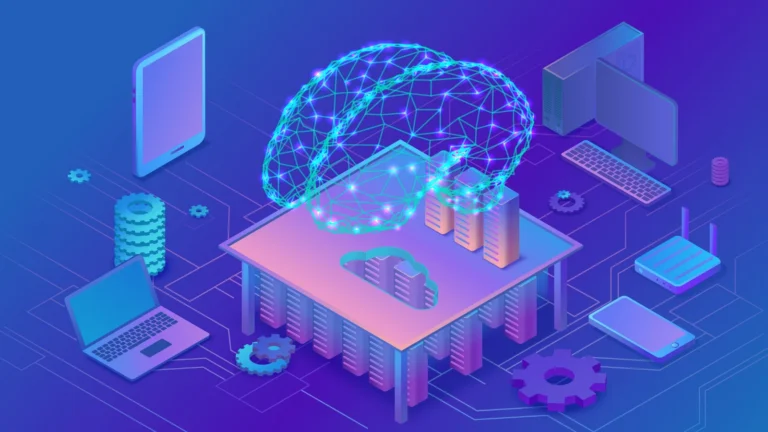
Over the past few years, artificial intelligence has become one of the biggest drivers of investment across the technology sector. Companies are pouring enormous amounts of capital into developing advanced models, building data centres, and integrating AI into everyday products.
This surge in spending has helped support parts of the global economy. According to Stiglitz, AI investment is currently acting as an economic engine. As he explained, the economy is in some ways being propped up by the large amounts of money flowing into AI development.
However, such explosive growth has also raised concerns among economists and investors. Some analysts argue that expectations around artificial intelligence may have run ahead of the technology’s real economic impact. The idea of an AI bubble has gained traction as market valuations climb rapidly despite limited evidence that many companies are generating sustainable profits from AI products.
The situation has parallels with past technology booms. During the late 1990s dot-com era, investors rushed to fund internet startups with massive expectations of future profits. When those expectations proved unrealistic for many companies, the bubble burst, and markets corrected sharply.
Stiglitz believes the AI boom could follow a similar path if enthusiasm outpaces real economic value.
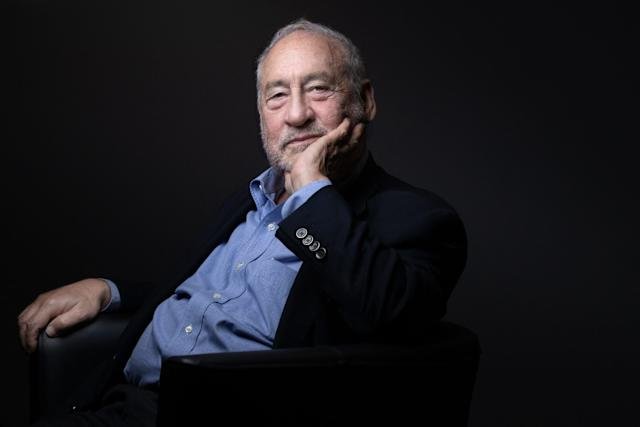
Joseph Stiglitz on Why a Burst Could Hurt Workers First
The economist’s main concern is not simply financial markets. His deeper worry is how the transition will affect workers.
If the AI boom collapses suddenly, the economic shock could trigger layoffs, slower growth, and a difficult period for labour markets. Stiglitz argues that society currently lacks strong institutions to manage such a transition or support workers who may lose their jobs due to technological disruption.
Artificial intelligence is already capable of performing tasks that previously required human expertise. From writing and coding to data analysis and customer support, many forms of knowledge work can now be assisted or partially automated by AI systems.
In the short term, this could mean fewer entry-level roles in certain industries. As companies adopt AI tools, they may need fewer junior employees to perform routine tasks.
The result could be what economists call labour displacement. Workers who previously performed those roles must find new opportunities, retrain, or move into different sectors.
This type of disruption is not new. Throughout history, technological revolutions have transformed labour markets. The industrial revolution reshaped manufacturing, while computers changed office work in the late twentieth century.
But Stiglitz argues that the speed of AI development could make the transition particularly challenging.
Without policies such as stronger worker protections, retraining programmes, and social safety nets, the adjustment could create economic inequality and job insecurity.
AI May Eventually Become a Powerful Work Partner
Despite his warnings, Stiglitz does not believe artificial intelligence will permanently destroy the job market. In fact, he suggests the technology could eventually become a valuable assistant for workers.
If societies successfully navigate the difficult transition period, AI could help people perform tasks faster, improve decision making, and unlock new forms of productivity.
Instead of replacing workers entirely, many AI systems are likely to operate as tools that augment human capabilities. In fields such as medicine, law, engineering, and education, AI can analyse data, generate insights, and support professionals in complex decision making.
In that scenario, workers who learn how to collaborate with AI tools may become more productive than ever before.
Other economists also highlight this possibility. Some research suggests that while AI could displace millions of jobs, technological innovation historically creates new roles and industries over time.
For example, the rise of the internet created entirely new professions such as social media managers, data scientists, and cybersecurity specialists. Many of those roles did not exist only a few decades ago.
A similar transformation could occur with artificial intelligence.
New careers may emerge around AI development, oversight, ethics, training data management, and human-AI collaboration.
The challenge lies in ensuring that workers are prepared for those changes.
The Policy Choices That Will Shape the AI Era
Stiglitz believes the outcome of the AI revolution will depend largely on policy decisions made by governments and institutions.
Technology itself is not inherently good or bad for society. Its impact depends on how it is deployed and regulated.
If governments fail to manage the transition effectively, AI could widen economic inequality. Wealth generated by automation might concentrate in the hands of a small number of technology companies and investors.
On the other hand, strong policies could ensure that the benefits are shared more widely across society.
Possible approaches include investing heavily in education and reskilling programmes, strengthening labour protections, and encouraging innovation that complements human workers rather than replacing them.
Public institutions may also need to rethink economic safety nets. As technological disruption accelerates, workers could face more frequent career changes and periods of transition.
Preparing for this reality could mean redesigning unemployment systems, supporting lifelong learning, and creating pathways for workers to adapt to new industries.
The goal, according to Stiglitz, should not be to stop technological progress but to guide it in ways that benefit society as a whole.
A Moment of Choice for the Global Economy
Artificial intelligence represents one of the most powerful technological developments of the modern era. Its potential to transform industries, science, healthcare, and education is enormous.
Yet the path forward may not be smooth.
The current surge of investment, excitement, and speculation could lead to unrealistic expectations. If the economic benefits of AI take longer to materialise than investors anticipate, markets may face a painful correction.
For workers and businesses, the transition could bring uncertainty.
At the same time, history suggests that technological revolutions often create new opportunities after initial disruption.
The printing press, electricity, computers, and the internet all triggered periods of economic change before eventually generating new industries and employment.

Artificial intelligence may follow the same pattern.
The difference today is the speed of technological change and the global scale of the transformation.
Stiglitz’s warning is therefore less about stopping AI and more about preparing for the turbulence that may come before its full benefits emerge.
If societies manage that transition wisely, artificial intelligence could eventually evolve from a perceived threat into a powerful partner for human work.
But reaching that future will require careful policy choices, resilient institutions, and a workforce ready to adapt.
Join Our Social Media Channels:
WhatsApp: NaijaEyes
Facebook: NaijaEyes
Twitter: NaijaEyes
Instagram: NaijaEyes
TikTok: NaijaEyes