
Colonel Appolonia Anele, Acting Director of Army Public Relations, stated in a press release on Saturday that the reorganisation is part of initiatives to bolster national security and enhance operational effectiveness nationwide.
The sweep of the new military assignments directly reshaped leadership lines across Army Headquarters, shifting field commanders, school commandants, and principal staff officers into new roles.
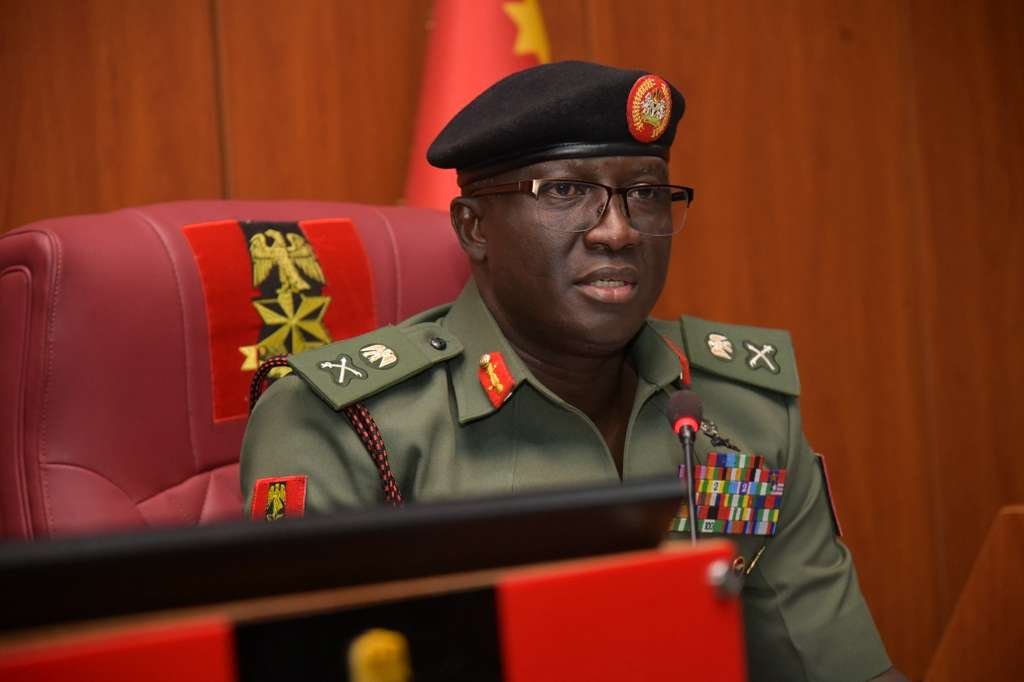
Orchestrating the move, Chief of Army Staff Lieutenant General Waidi Shaibu authorized the strategic redeployment adding that the goal was to sharply strengthen the Army’s operational capacity to confront evolving security crisis across the country.
Under the new postings, the military appointed Major General WM Dangana as General Officer Commanding (GOC) of the 3 Division, Nigerian Army, and Commander of Joint Task Force Operation ENDURING PEACE, replacing Major General EF Oyinlola.
Similarly, the military named Major General EI Okoro as GOC of the 6 Division, Nigerian Army, and Land Component Commander of Joint Task Force South-South Operation DELTA SAFE, succeeding Major General EE Emeka.
The statement further announced the appointment of Major General JR Lar as Commander, Army Headquarters Garrison, while Brigadier General OM Oyekola will serve as Acting Military Secretary (Army). Brigadier General I Waziri retains his position as Chief of Staff in the Office of the Chief of Army Staff.
ALSO READ: Nigerian Army intercepts suspected terrorist supplier, recovers 150 combat boots in Zamfara State
BACKSTORY:
The Nigerian Army’s latest shake-up comes amid growing security concerns across the country, including insurgency in the North-East, bandit attacks in the North-West, oil theft in the Niger Delta, and separatist tensions in the South-East.
The military leadership views the redeployment as part of a broader strategy to strengthen operations and improve responses to evolving security threats.
Since President Bola Ahmed Tinubu overhauled Nigeria’s security leadership in 2025 and appointed Lieutenant General Waidi Shaibu as Chief of Army Staff, the military has faced growing pressure to achieve better results in tackling insecurity.
Analysts say the latest changes are not unusual within the Army, but the scale and timing suggest a strategic move to reposition commanders in key conflict zones and tighten operational control. The appointments of new General Officers Commanding in divisions overseeing the Middle Belt and Niger Delta are particularly significant, given the rising violence and economic importance of those regions.
Overall, the reshuffle reflects the Army’s attempt to adapt to evolving security challenges and reinforce its leadership structure at a critical time.