
For many Nigerians, the 2023 general election did not end when the results were announced. It ended with disappointment, arguments and, for some, the belief that their votes no longer matter. Since then, many have openly declared they will never vote again, insisting that elections are predetermined and that participating is a waste of time.
Those frustrations are understandable. Trust in the electoral process has taken a hit, and many citizens feel let down by institutions they once believed would protect the sanctity of their votes.
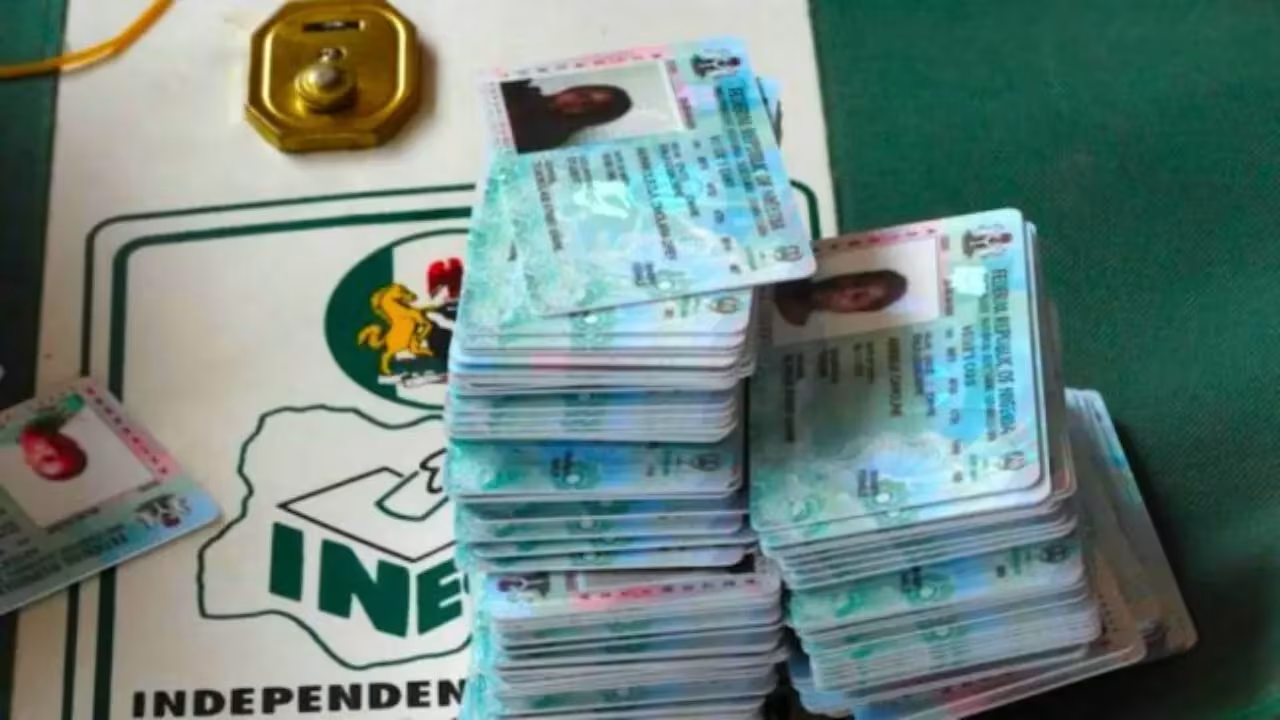
But giving up your Permanent Voters Card (PVC) may be one of the biggest political mistakes you can make before the 2027 general election.
Refusing to Vote Doesn’t Punish Politicians
Many Nigerians believe refusing to vote is a form of protest. In reality, politicians rarely lose sleep over those who stay at home on election day. Elections are decided by those who show up, not by those who boycott the process.
History has shown that voter turnout can significantly influence electoral outcomes. Every person who decides not to participate simply reduces the number of voices capable of shaping the final result.
Your Permanent Voters Card (PVC) is more than a document issued by INEC. It is your constitutional right to choose who governs you, question those in power and influence the direction of the country.
If you surrender that right before election day, someone else will make that decision for you.
2027 Is a Fresh Opportunity
It is tempting to assume that 2027 will simply repeat everything Nigerians witnessed four years earlier. But every election is different.
Political alliances have shifted dramatically. New coalitions have emerged. Parties are restructuring, politicians are changing camps and millions of first-time voters are expected to participate. The political landscape that produced the 2023 outcome is already changing.
That is precisely why this is not the time to walk away from the democratic process.
Instead of giving up, Nigerians should demand greater transparency, hold institutions accountable and insist on improvements while remaining active participants in the electoral system.
None of those demands can be meaningfully backed if citizens voluntarily remove themselves from the process.
Read Also: The Questions Hanging Over the Credibility of 2027 General Election Processes
Your PVC Is Still Your Voice
Social media posts can trend for a day. Street protests can make headlines. Political debates can dominate television screens.
But on election day, only one thing determines who occupies public office—votes cast by registered voters.
Your Permanent Voters Card (PVC) is not a guarantee that Nigeria’s problems will disappear overnight. It is not even a guarantee that your preferred candidate will win.
Democracy becomes weaker when good people stop participating because they have lost hope. Whether you support the ruling party, the opposition or remain undecided, the decision to collect your Permanent Voters Card (PVC) is ultimately a decision to keep your voice alive.
Disappointment should never become disengagement. If Nigeria is to change, it cannot happen from the sidelines. It begins with citizens who refuse to surrender the one democratic tool that still belongs entirely to them.
Read Also: 2027 General Elections-INEC Chair Promises Every Vote Will Count