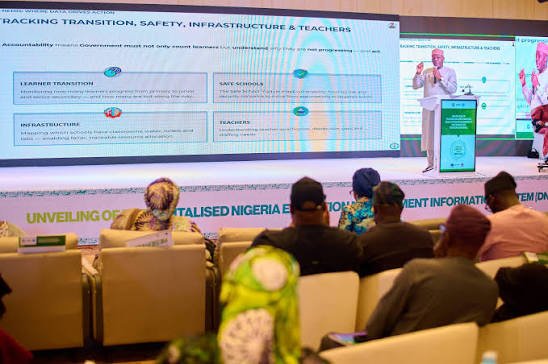

Nigeria is taking another significant step towards modernising its education sector with the introduction of a Unified Education Data System, a digital platform designed to bring together education records from across the country into one reliable database.
For decades, one of the biggest obstacles to effective education planning in Nigeria has been the absence of accurate and coordinated data. Different agencies often worked with separate records, making it difficult for policymakers to determine exactly how many students were enrolled, where schools needed support, or how educational resources should be distributed.
The Federal Ministry of Education says the new system is expected to solve that long-standing challenge by creating a central source of verified information covering learners, teachers, schools, infrastructure, and academic performance across every level of education.
Education stakeholders believe the initiative could mark a turning point for evidence-based decision-making, allowing governments at the federal and state levels to respond more quickly to challenges affecting schools and students.

Also Read: Africa’s AI Future Hinges on Power Supply More Than Smart Algorithms, IMF Warns
A Digital Platform Designed to Track Every Learner
At the centre of the initiative is the creation of a unique educational identity for every learner in Nigeria. Through the platform, each student will have a permanent record that follows them throughout their academic journey, from basic education to tertiary institutions.
Officials say the system will be linked with Nigeria’s National Identity Number framework, making it easier to monitor enrolment, school transfers, attendance, learning progress, and completion rates while reducing duplication and inconsistencies in education records.
Beyond student records, the platform is also expected to provide real-time information on school facilities, teacher availability, classroom conditions, and learning outcomes. Such data will enable education authorities to identify underserved communities, plan new interventions, and allocate funding more effectively.
Experts say reliable education data is essential for addressing issues such as out-of-school children, teacher shortages, overcrowded classrooms, and uneven distribution of learning resources across different states.
The initiative also aligns with the Federal Government’s broader digital transformation agenda, which seeks to improve governance through technology and accurate national databases.
Why Accurate Education Data Matters
Reliable education statistics influence nearly every major policy decision. Without trustworthy data, governments may struggle to determine where new schools should be built, how many teachers need to be recruited, or which communities require urgent intervention.
The Unified Education Data System aims to provide policymakers with current information instead of relying on outdated surveys or fragmented reports. This could improve budget planning, infrastructure development, and monitoring of educational programmes nationwide.
For development partners and international organisations, access to dependable education data also improves transparency and accountability. It allows investments to be directed towards areas with the greatest need while making it easier to measure the impact of education projects over time.
Parents and students may also benefit indirectly as better planning can lead to improved service delivery, stronger learning environments, and more targeted support for schools facing resource shortages.
Also Read: 90% of Students Now Use AI in the Classroom as Global Survey Signals New Era of Learning
Back Story
The introduction of a unified education database forms part of a broader reform agenda initiated by the Federal Government to strengthen Nigeria’s education sector through digital innovation and better governance.
In recent years, the government has launched the Nigerian Education Data Initiative and other complementary platforms aimed at creating a comprehensive national education database. These efforts are intended to replace fragmented record-keeping with a connected digital ecosystem capable of capturing information from basic education through tertiary institutions.
Government data indicates that millions of student records have already been captured as implementation expands across states, while education authorities continue working with relevant agencies to integrate schools into the national system.
If successfully implemented nationwide, the Unified Education Data System could become one of Nigeria’s most important education reforms in recent years. By providing policymakers with accurate and timely information, the platform has the potential to improve planning, strengthen accountability, and ensure that education investments deliver greater value for millions of Nigerian learners.