
The debate over artificial intelligence in education is moving rapidly across the world, but African schools cannot afford to simply copy AI education policies developed in Western countries and expect them to work in the same way.
AI is already changing how students learn, how teachers prepare lessons and how schools manage academic work. From generative AI tools that can explain difficult subjects to systems capable of supporting personalised learning, the technology presents opportunities that African education systems should not ignore.
However, adopting artificial intelligence in African schools requires more than importing policies from Europe, North America or other developed education systems. The realities are different.
A policy designed for a school where every student has reliable internet, access to a personal computer and regular electricity may not work in a Nigerian school where dozens of students share limited digital resources.
This difference is at the heart of the growing conversation around responsible AI in African education.
The International Development Research Centre has noted that AI can support personalised education, curriculum development, first-language learning and assistance for students with disabilities. At the same time, it warns that AI can reproduce existing inequalities, increase the digital divide and create privacy concerns, particularly for children.
For African policymakers, therefore, the question should not simply be whether schools should use AI. The more important question is what kind of AI education policy can actually improve learning within African conditions.
Also Read: Nigerians Urged to Protect Personal Data as AI Raises New Privacy Concerns
The Back Story: Africa Is Developing Its Own AI Education Direction
Africa is not starting from zero.
The African Union adopted its Continental Artificial Intelligence Strategy in 2024, identifying education as one of the sectors where AI can play an important role. The strategy calls for stronger AI competencies, investment in skills and inclusive approaches to AI adoption.
The African Union’s Digital Education Strategy also provides an important foundation by looking at education through three connected ideas: learning with AI, learning about AI and preparing learners for an AI-driven future.
Recent research also shows why implementation cannot be treated as a one-size-fits-all exercise. UNESCO’s 2026 study on digitalisation and AI in African higher education examined experiences across countries including Nigeria, Ghana, Kenya, Ethiopia, Cameroon, South Africa, Sierra Leone and Zimbabwe. The study highlights differences in infrastructure, institutional capacity, teacher preparation and existing digital systems across the continent.
That variation matters.
Even within Nigeria, the experience of a well-funded private school in Lagos or Abuja can be completely different from that of a public school in a rural community.
African governments therefore need policies that recognise local conditions rather than treating Western education systems as the default model.
Infrastructure, Teachers and Language Cannot Be Ignored
One of the biggest mistakes African education policymakers could make is to focus on AI tools before addressing the foundations required to use them effectively.
Reliable electricity, affordable internet, appropriate devices and digital literacy remain critical. Introducing sophisticated AI platforms into schools without addressing these challenges could create another layer of inequality between students who can access technology and those who cannot.
Teacher preparation is equally important.
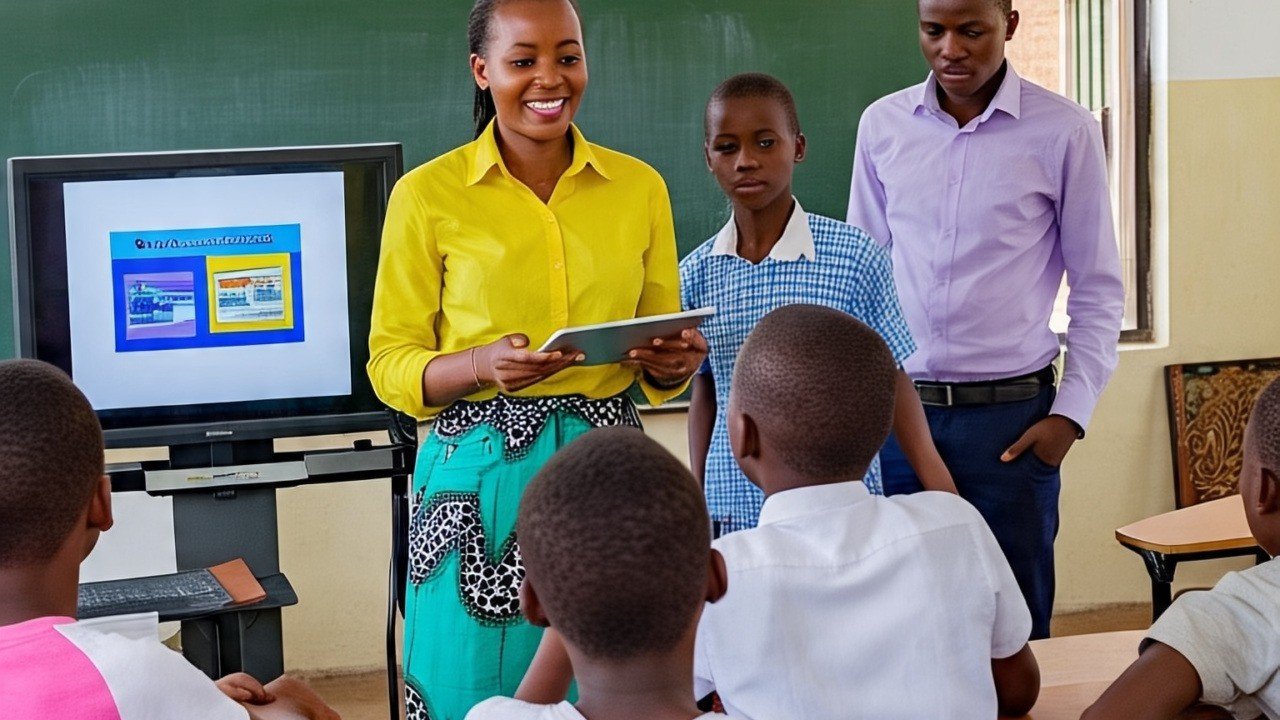
Teachers should not be expected to suddenly become AI experts because a government has introduced a new policy. They need practical training on how AI can support teaching, how to identify unreliable AI-generated information, how to protect student data and how to ensure students are still developing independent thinking.
Research examining AI integration in African education has similarly identified infrastructure limitations, teacher capacity, data privacy and governance as major issues that need attention.
Language is another major consideration.
African classrooms operate across hundreds of languages and cultural contexts. AI systems trained predominantly on data from major global languages may not understand local expressions, accents, cultural references or indigenous languages effectively.
That means African policymakers should also think about who creates educational AI systems, what data is used to train them and whose knowledge is represented.
Also Read: Education Leaders Share Practical Roadmap for Safe AI Use in Schools
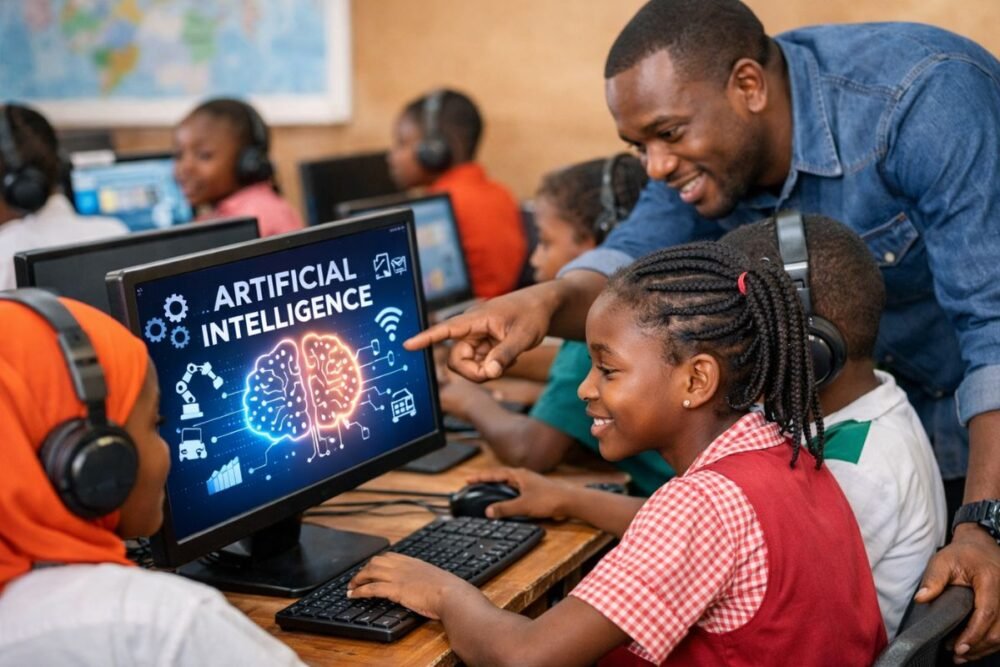
Nigeria and Africa Should Build, Not Simply Borrow
There is nothing wrong with learning from countries that are already experimenting with AI in education. In fact, African policymakers should study international experiences carefully.
But copying policy word for word is different from learning from experience.
Nigeria, for example, needs an AI education framework that reflects its own classroom realities. Such a framework should address responsible student use, teacher training, data protection, assessment, academic integrity, digital access and the role of AI in the curriculum.
AI should also complement teachers rather than be presented as a replacement for them. A classroom is not simply a place where information is delivered. Teachers understand students, communities and social circumstances in ways technology cannot automatically reproduce.
The goal should therefore be to create students who can use AI intelligently, question its answers and understand its limitations.
Africa also has an opportunity to contribute its own ideas to the global AI education conversation. Rather than always importing educational technology and waiting for foreign institutions to determine the rules, African universities, teachers, governments and technology developers can participate in building systems designed around African needs.
The future of AI in African education should not be about choosing between technology and tradition. It should be about using technology where it genuinely improves learning while protecting the human, cultural and educational values that schools are meant to develop.
For Nigeria and the wider continent, the smartest AI education policy may not be the one that looks most like a Western model. It may be the one that understands the realities of African classrooms well enough to create something that works here.