
Nigeria’s teacher shortage is becoming too serious to treat as a problem that can be solved simply by building more classrooms. In parts of the country, schools are already struggling to find enough qualified teachers, while those in service often have to handle heavy workloads, large classes and administrative responsibilities.
The situation is particularly visible in the Federal Capital Territory, where education authorities recently described manpower shortages as one of the major challenges facing secondary schools.
At the same time, artificial intelligence is rapidly changing how teachers prepare lessons, assess students and create learning materials. This creates an important question for Nigeria: can AI help reduce the pressure created by the shortage of teachers without turning the technology into a replacement for the people standing in front of the classroom?
The answer may be yes, but only if Nigeria treats AI as an assistant to teachers rather than a substitute for them.
Also Read: Global Shortage of AI Teachers Threatens Future Workforce as Demand Surges
AI Could Give Nigerian Teachers More Time to Teach
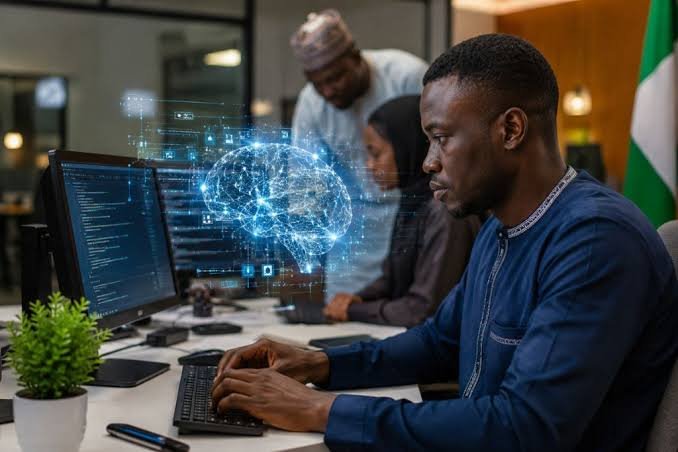
One of the strongest arguments for using AI in Nigerian education is not that it can teach an entire class, but that it can take some repetitive work away from teachers.
Lesson planning, preparation of teaching materials, creating quizzes, organising assessments and updating lesson notes can consume significant amounts of a teacher’s time. Recent research focusing on Nigeria found that generative AI can help reduce workload associated with lesson preparation and administrative activities, potentially improving teacher efficiency and well-being.
For a teacher handling a crowded classroom, saving even a few hours each week could make a meaningful difference.
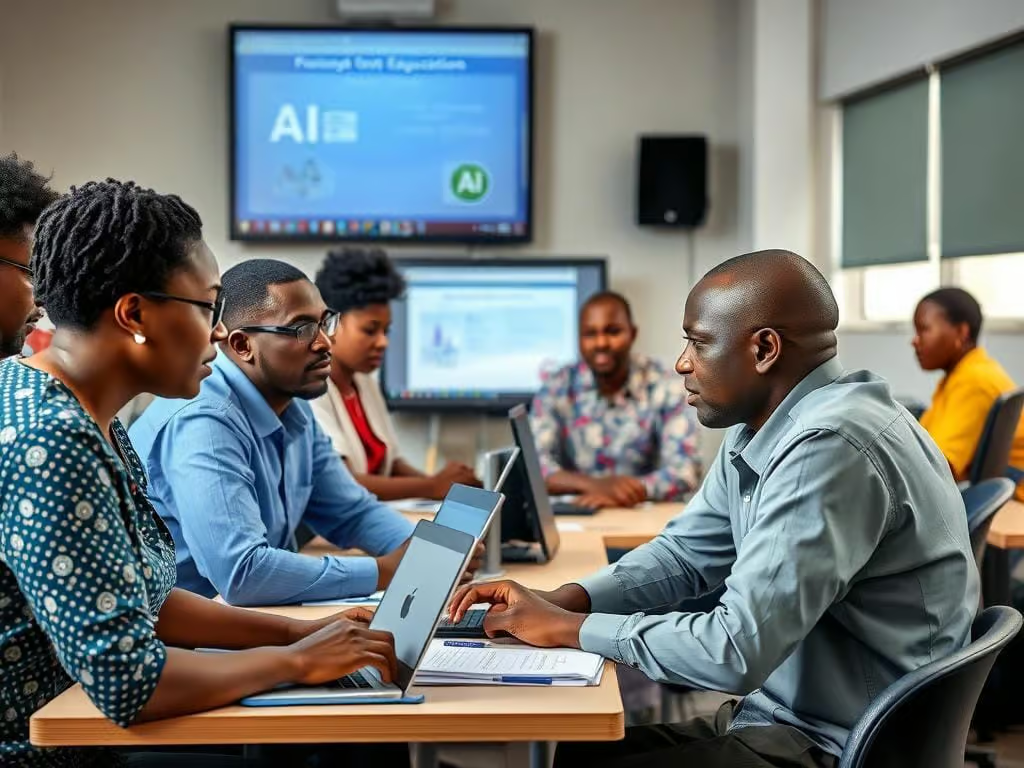
AI tools can help teachers generate draft lesson plans, produce different explanations of difficult topics, prepare practice questions and adapt learning materials for students with different needs. The teacher can then review, correct and customise the material before presenting it to students.
That distinction matters.
A computer may produce a lesson plan within seconds, but it does not know the personality of a particular classroom in the way an experienced teacher does. It may not understand why a student who normally participates has suddenly become withdrawn. It cannot replace the encouragement, discipline, mentorship and human connection that are central to teaching.
Research published in July 2026 involving 2,586 Nigerian secondary school teachers also examined teachers’ AI awareness and pedagogical skills, highlighting the growing importance of preparing educators for AI-supported teaching.
Nigeria Still Needs More Human Teachers
It would be dangerous to interpret the rise of AI as an excuse to stop recruiting teachers.
Nigeria’s official Teachers Registration Council of Nigeria currently records about 1.61 million certified teachers, although the figure represents registered teachers rather than a simple measure of how many teachers are available in every classroom where they are needed. The same data shows that women constitute about 59.2 per cent of registered teachers.
The distribution of teachers is also important. Having teachers somewhere in the country does not necessarily mean that every school has enough qualified educators, particularly in underserved communities.
The Federal Government has recognised the problem. Its National Teacher Policy includes the possibility of temporarily engaging retired teachers and skilled volunteers in areas experiencing serious manpower shortages.
This suggests that Nigeria’s solution will have to involve people, policy and technology working together.
AI can support a teacher in Abuja, Kano, Enugu or a rural community, but it cannot independently solve issues such as poor teacher retention, inadequate remuneration, limited professional development and unequal distribution of educators.
Also Read: Why Artificial Intelligence Is Making This One of the Most Important Eras for Teachers
Back Story: Why the AI Debate Matters Now
Nigeria’s education system is entering a period in which the demand for better learning is growing alongside the pressure on teachers.
In July 2026, Nigeria launched the $552 million HOPE-EDU programme, backed by the World Bank and Global Partnership for Education. The initiative is expected to reach about 29 million children, more than 500,000 teachers and 65,000 public schools.
The scale of that intervention shows just how large Nigeria’s education challenge is.
Meanwhile, the Federal Government has also been investing in digital learning and teacher development. In June, the government announced the provision of ICT equipment and instructional materials to 15 colleges of education through a partnership involving Nigeria, Japan, UNESCO-IICBA and the African Union.
These developments point towards a future where technology becomes part of the education system, but technology alone will not be enough.
The real opportunity is to make every qualified teacher more productive.
If AI can reduce paperwork, accelerate lesson preparation, support assessment and help teachers personalise learning, educators can spend more of their limited time doing what technology cannot easily reproduce: explaining, encouraging, mentoring, observing and understanding their students.
For Nigeria, that should be the goal.
AI should not become an excuse to ask one teacher to handle even more students. Instead, it should help existing teachers work better while government and education stakeholders continue recruiting, training and retaining more educators.
The future of Nigerian education may therefore not be a choice between teachers and artificial intelligence. It could be a partnership in which teachers remain at the centre, and AI works quietly in the background.
That is a far more realistic way to use technology to confront Nigeria’s teacher shortage.