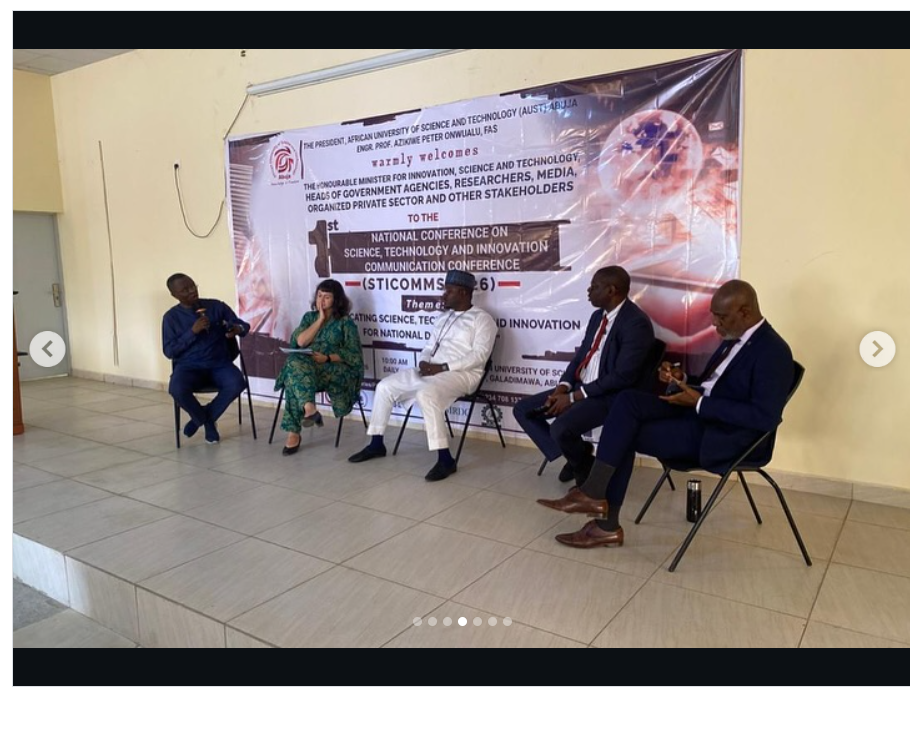

The African University of Science and Technology (AUST), Abuja, has hosted a major conference focused on how better communication of science, technology and innovation can help Nigeria turn research and new ideas into practical solutions for society.
The three-day National Conference on Science, Technology and Innovation Communication (STICOMMS 2026), held from January 20 to 22, brought together academics, scientists, policymakers, industry professionals, journalists, communicators and development practitioners to examine an issue that is often overlooked in Nigeria’s innovation conversation: how research reaches the people who need it.
The conference was organised around the theme, “Communicating Science, Technology and Innovation for National Development,” with discussions centred on strengthening the connection between knowledge creation, public understanding, policymaking and economic development.
For a country investing in digital transformation, education, research and emerging technologies, the conversation is particularly important. Nigeria has no shortage of universities, researchers and technology innovators. The bigger question is whether the knowledge being produced is being effectively communicated and converted into solutions that can improve everyday life.
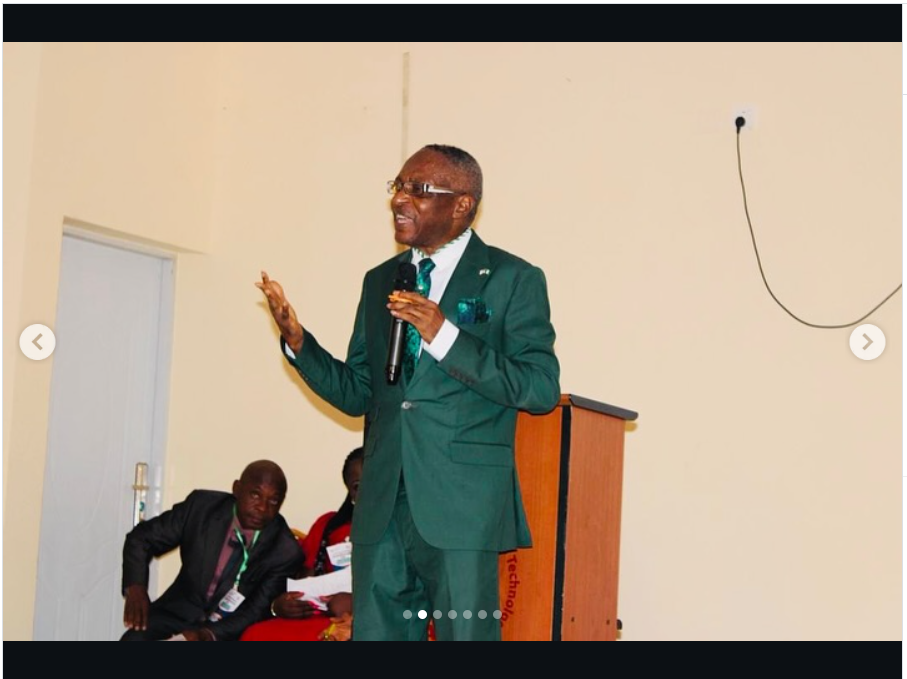
According to AUST President, Professor Peter Azikiwe Onwualu, science communication should no longer be treated as an optional part of research. He argued that discoveries only achieve their full value when they are understood, trusted and applied by society.
Also Read: STEM Africa Fest Champions Innovation-Based Learning Across Africa
Why Science Communication Matters to Nigeria
One of the strongest messages from STICOMMS 2026 was that innovation cannot exist in isolation.
A research breakthrough sitting inside a university laboratory may have limited impact if policymakers do not understand its relevance, businesses cannot see an opportunity to commercialise it, journalists cannot explain it to the public, or communities cannot connect it to their everyday challenges.
This is where science communication becomes important.
The conference explored the role of communication in areas including public health, education, food security, climate change, digital transformation, governance, security and economic growth. These are sectors where research and technology can make a difference, but only when ideas move beyond academic papers and reach the wider society.
Participants also examined the need for stronger cooperation between universities, government and industry. The conference promoted what organisers described as a closer relationship between academia and the sectors responsible for turning knowledge into policies, products and services.
For Nigerian universities, this presents an opportunity to rethink how research is presented to the public. Instead of seeing communication as something that happens after research has been completed, scientists and institutions can make it part of the innovation process itself.
Back Story: AUST’s Push for Science and Innovation
The STICOMMS conference came at a time when Nigeria is paying increasing attention to science, technology and innovation as tools for national development.
Ahead of the event, organisers said the conference was designed to create a platform where academia, government, industry and the media could collaborate on improving public understanding of science and technology. The programme included presentations, panel discussions, practical workshops, exhibitions of patents and innovations, as well as networking opportunities.
The conference also created room for youth-focused innovation through initiatives involving hubs, scholarships and mentorship opportunities, with participation extending beyond Nigeria.
AUST’s involvement is significant because the university is positioned around science, technology and engineering education. Its researchers have also presented work connected to areas such as artificial intelligence, 5G communication, machine learning and sustainable cloud infrastructure.
The conference therefore reflects a broader attempt to position Nigerian universities not simply as places where knowledge is produced, but as active contributors to national problem-solving.
What STICOMMS Means for Nigeria’s Innovation Future
The conclusion of STICOMMS 2026 produced a clear message: Nigeria needs to become better at communicating the science and technology it is already producing.
Participants adopted a communiqué calling for stronger national frameworks for science, technology and innovation communication, increased capacity building for scientists, journalists and communicators, deeper engagement between the media and scientific institutions, and improved cooperation among academia, industry and policymakers.
The recommendations are important because Nigeria’s innovation challenge is not simply about producing more ideas. It is also about making those ideas visible, understandable and useful.
When researchers can explain their findings clearly, journalists can report them accurately, policymakers can make better decisions, and businesses can identify opportunities for commercialisation. The public also becomes better positioned to understand how science affects issues such as education, healthcare, agriculture, climate and technology.
The success of the first STICOMMS conference could therefore provide a foundation for continued conversations around science communication in Nigeria. Organisers have indicated that the platform is intended to support sustained collaboration and dialogue around innovation and national development.
For Nigeria, that may be one of the most important lessons from the conference. Innovation is not complete when a discovery is made. It becomes meaningful when people understand it, trust it and can use it to solve real problems.
Also Read: Facebook, Instagram Hit by Global Outage, Leaving Millions Locked Out of Their Accounts