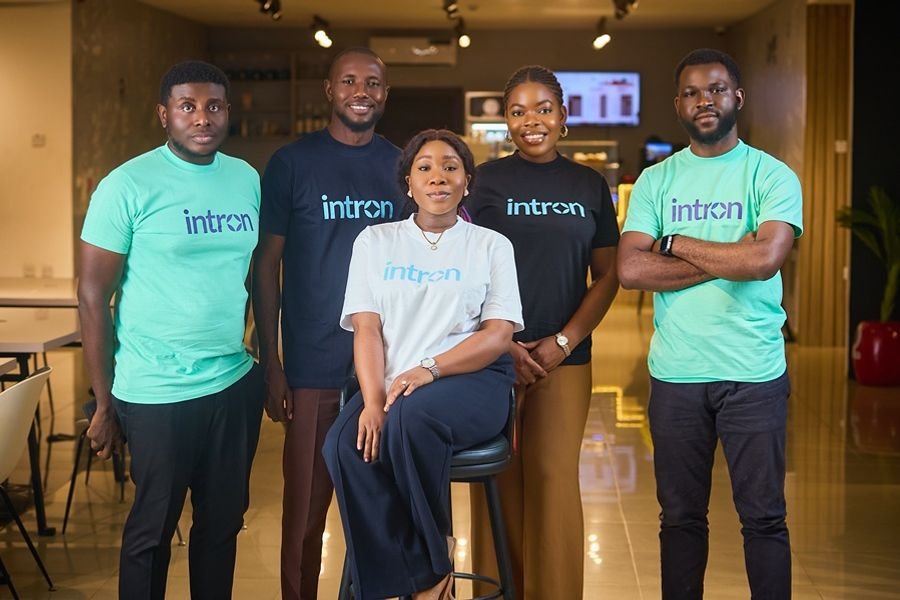

Intron, the Lagos-based voice technology company, has launched Sahara v2.5, an upgraded artificial intelligence model designed to understand how Africans naturally speak, including conversations where people switch between English and local languages.
The release is particularly significant for Nigeria and other multilingual African markets, where changing languages during a conversation is normal rather than unusual. A person may begin a sentence in English, switch to Yoruba or Igbo, add Nigerian Pidgin and continue speaking without stopping to translate their thoughts.
Sahara v2.5 is built to handle that pattern. Intron says the new release introduces bilingual code-switching speech recognition across 12 African languages, allowing AI systems to follow conversations that move between languages without losing the surrounding context. Intron’s official Sahara v2.5 page describes the model as being built around natural language mixing in African conversations.
The company has also expanded African-language coverage with seven additional languages, including Nupe, Kanuri, Nigerian Fulfulde, Tigrinya, Kikuyu, Dholuo and Somali. That brings the number of African languages covered to 31, although Sahara v2.5 itself supports 63 languages in total. Intron’s release information makes that distinction clear.
Also Read: Intron Launches Africa-Wide Challenge to Help Voice AI Understand How Africans Really Speak
Sahara v2.5 Targets a Major Weakness in Voice AI
For years, voice AI systems have performed best when users speak in a single language with relatively standard pronunciation. That approach creates problems in African markets, where multilingual conversations, accents and regional expressions are part of everyday communication.
Intron says Sahara v2.5 addresses this through 12 bilingual models covering combinations such as English and Hausa, English and Igbo, English and Yoruba, English and Nigerian Pidgin, English and Swahili, as well as other African language combinations.
The company is also introducing what it describes as its first African trilingual speech model. The system can follow a conversation moving between Kinyarwanda, English and French without resetting the conversation context. TechEconomy’s report on the launch reports that the model was designed specifically around this type of multilingual interaction.
Sahara v2.5 is not limited to understanding speech. Intron says its text-to-speech technology can generate responses with language mixing across 13 supported languages, giving developers the ability to create voice agents that can respond more naturally to African users. Intron’s documentation outlines the model’s speech-generation capabilities.
The company has also published benchmark comparisons against models from Google, Meta and ElevenLabs. Intron reports that Sahara v2.5 delivered lower word error rates in several of its tested African-language and code-switching evaluations. These are company-published benchmarks, so independent testing will still be important before the claims are treated as a broader industry standard.
Why the Upgrade Matters to Nigeria
The Nigerian market could be one of the strongest use cases for technology like Sahara v2.5.
Nigeria has hundreds of languages, while English remains the official language and Nigerian Pidgin is widely used in informal and commercial communication. In practice, people often move between languages depending on who they are speaking with, what they are discussing and how comfortable they feel expressing a particular idea.
That makes multilingual voice technology relevant to customer service, banking, healthcare, education and government services.
A bank, for example, could build a voice assistant that starts a conversation in English and continues in Hausa or Yoruba when a customer switches language. A healthcare platform could capture a consultation more accurately when a patient mixes English with an indigenous language. Education companies could also use local-language voice tools to make digital learning easier to access.
TechPoint Africa reports that Intron’s technology is already being applied in healthcare, where multilingual conversations can make clinical documentation more difficult.
The wider opportunity is accessibility. AI becomes more useful when users do not have to change the way they speak simply to make a machine understand them.
Back Story: Intron’s Push to Build African Voice AI
Intron’s latest release builds on years of work around African speech recognition. The company has focused on collecting and training speech data that reflects African accents, dialects and real-world conversations.
Intron says its datasets contain more than six million audio clips contributed by over 70,000 Africans across 13 countries, covering more than 700 African accents. The company’s Sahara platform information says its technology is already being used in areas including healthcare, finance and legal documentation.
The company’s earlier work also included AfriSpeech and other speech datasets aimed at addressing the lack of representative African-language data in AI development.
That background is important because Sahara v2.5 is not simply another language expansion. Its central idea is that African users should not have to change their accents, abandon local expressions or avoid switching languages to use voice technology.
For Nigeria and the rest of Africa, that could become increasingly important as voice interfaces move into everyday services. The success of Sahara v2.5, however, will ultimately depend not only on how many languages it supports, but on how reliably it performs in real conversations outside controlled demonstrations.
For now, the release represents another notable step in the push to build AI systems around the way Africans actually communicate.
Also Read: African Schools Need AI Education Policies Built for African Realities