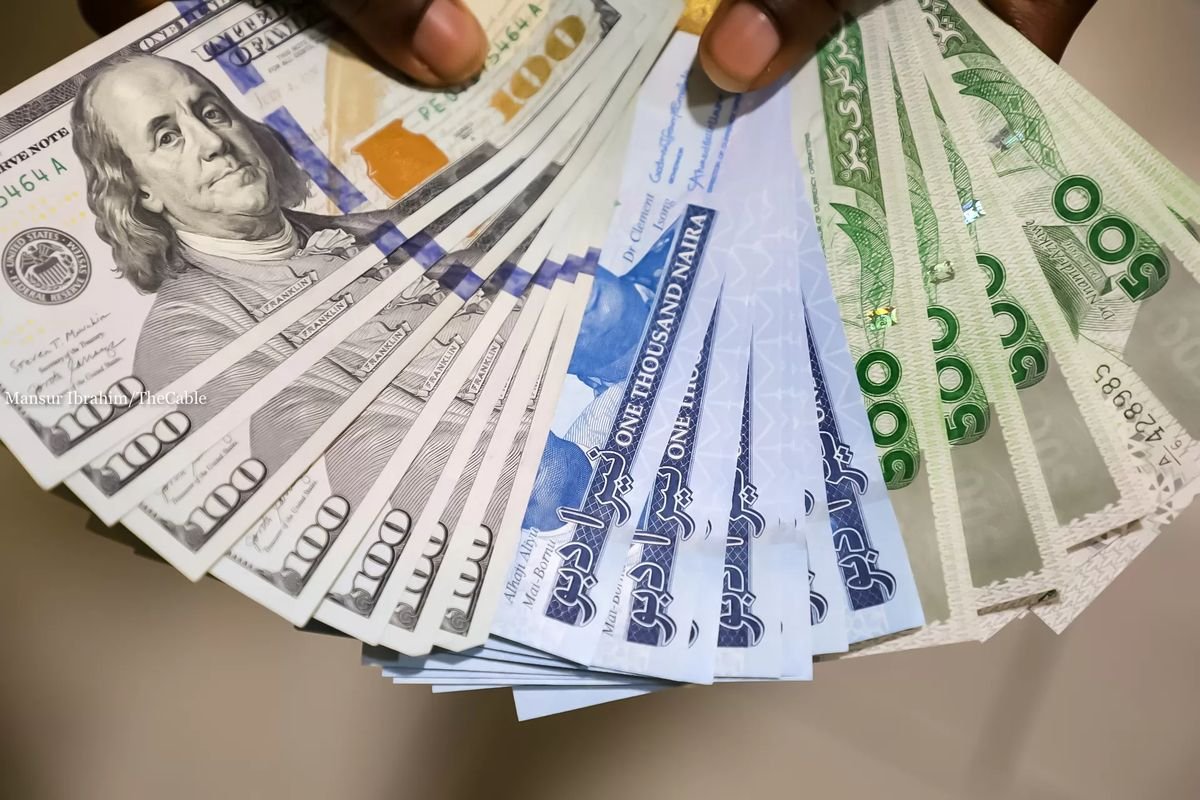

Concerns surrounding naira depreciation risk in Nigeria escalated after chief economist Bismarck Rewane cautioned that the Central Bank’s latest interest rate reduction could put pressure on the local currency. Managing Director of Financial Derivatives Company made these disclosures following the Monetary Policy Committee’s choice to drop the benchmark interest rate by 350 basis points to 23 percent.
Also read Naira Under Pressure as Dollar Demand Surges
While policy makers intended the “jumbo cut” to lower borrowing burdens, financial experts warn that decreasing local yields diminishes returns on naira assets. Consequently, foreign investors may seek higher returns abroad, placing immediate pressure on domestic currency values against the U.S. dollar.
Backstory: Navigating Inflation, Rate Easing, and Exchange Vulnerabilities
Understanding this monetary shift requires looking at how Nigeria’s central bank managed inflation and monetary policy over recent months. Under Governor Olayemi Cardoso, monetary authorities maintained high interest rates to curb rising prices and build external reserves.
Earlier in September 2024, the apex bank held interest rates high at 27.25 percent before entering a gradual easing cycle. As headline inflation dropped by nearly nine percentage points, central bankers found room to lower rates down to 26.5 percent, and finally to 23 percent at their 307th policy meeting. Bismarck Rewane, who has advised financial institutions for over three decades, explained that lowering rates creates a delicate balancing act between domestic growth and currency stability.
- September 2024: Central Bank of Nigeria raises monetary policy rate to 27.25 percent to tame elevated inflation.
- Mid-2026: Annual inflation drops by nearly nine percentage points, prompting initial rate adjustments down to 26.5 percent.
- September 22, 2026: Monetary Policy Committee slashes benchmark rate by 350 basis points down to 23 percent.
- September 23, 2026: Financial analysis by news reporter Olalekan Adigun highlights Rewane’s perspective on potential exchange rate volatility.
Declining Yields and the Foreign Portfolio Challenge
Balancing credit extension against capital preservation remains a difficult mission for financial planners. Speaking during a television interview referenced by business publication Nairametrics, Rewane noted that lower interest rates reduce real returns for domestic and international investors.
“So it’s a jumbo cut from 26.5% to 23%, 350 basis points is huge by any stretch of imagination,” Rewane stated. “The real rate of return for investors here dropped from +11.1 to +7.61… The danger is that you may then begin to start to buy alternative assets, which includes dollars.”
Furthermore, Rewane observed that the naira’s fair value sits around N1,150 to the dollar, though parallel market rates recently hovered near N1,387 to N1,390 per dollar.
Reducing Debt Service Burden and Driving Long-Term Growth
Despite foreign exchange concerns, lower interest rates offer substantial relief for fiscal planners and corporate borrowers. Nigeria spends roughly N15.8 trillion on national debt servicing, meaning lower interest rates significantly reduce government borrowing expenditures.
Additionally, cheaper credit boosts profit margins for manufacturing companies and corporate institutions. Moving forward, Rewane urged fiscal authorities to implement strict spending discipline and plug revenue leakages to complement monetary policies and sustain economic stability.