
President Bola Tinubu has called for a responsible approach to artificial intelligence, arguing that Nigeria and other African countries should focus on how the technology can improve lives and support development.
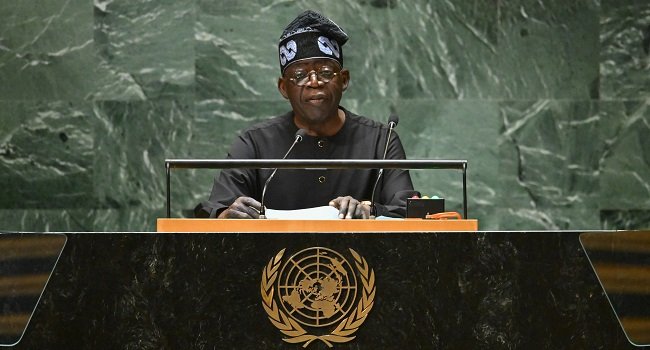
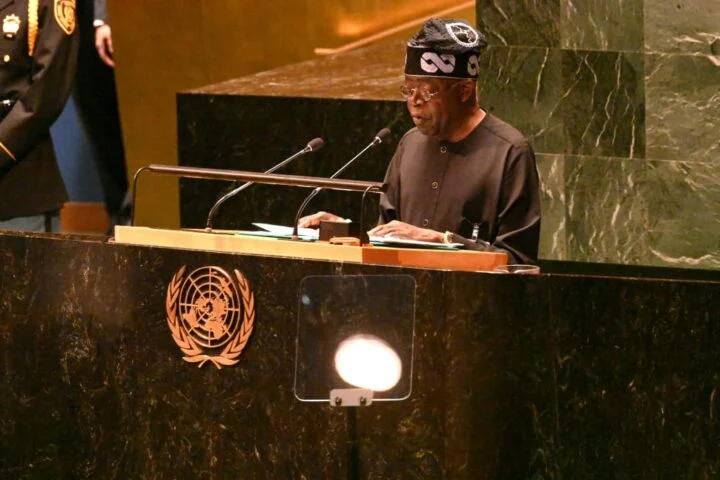
The message was delivered on Thursday in New York by Vice-President Kashim Shettima, who represented Tinubu during Nigeria’s national statement at the 81st United Nations General Assembly. Shettima said AI could become a tool for progress or destruction depending on how people and institutions deploy it.
Rather than allowing fear to define Africa’s relationship with emerging technology, the Nigerian delegation urged governments, researchers and the private sector to direct AI towards practical needs across the continent.
Also Read: Why Schools Should Lead AI Education Instead of Banning Technology
Tinubu’s message focuses on practical uses of artificial intelligence
Shettima said Nigeria should not approach AI only through the question of what could go wrong. He pointed to healthcare, education, agriculture, governance and economic productivity as areas where artificial intelligence could help tackle long-standing challenges.
The Vice-President described technology as neutral in itself, stressing that its impact depends on the purpose behind its use. He used the example of a knife, which can cause harm in one situation but save a life in another, to illustrate why the conversation around AI should include responsibility and judgement.
The argument is particularly relevant for Nigeria, where policymakers are trying to expand digital infrastructure while positioning the country as a contributor to the global technology economy.
The statement presented at the UN said Nigeria should participate actively in shaping AI’s future rather than simply waiting to adopt systems developed elsewhere. Shettima said the country is investing in digital public infrastructure, broadband connectivity, innovation ecosystems, research institutions and technology entrepreneurship.
Nigeria’s AI ambitions extend beyond the UN speech
The government’s position on AI is backed by a national policy framework. Nigeria’s National Artificial Intelligence Strategy identifies AI as a tool for economic growth, innovation, national productivity and human well-being, with applications including healthcare, education and agriculture. The strategy also stresses inclusive and responsible development.
Nigeria’s National Centre for Artificial Intelligence and Robotics, known as NCAIR, says its mandate includes research, adoption, entrepreneurship and international collaboration around AI and other emerging technologies. Its current research areas include health, agriculture, education, finance and data science.
One visible recent initiative is N-ATLAS, an open-source multilingual large language model designed around Nigerian languages and Nigerian-accented English. NCAIR says the model supports Yoruba, Hausa, Igbo and Nigerian-accented English, with potential applications in education, governance, health and commerce.
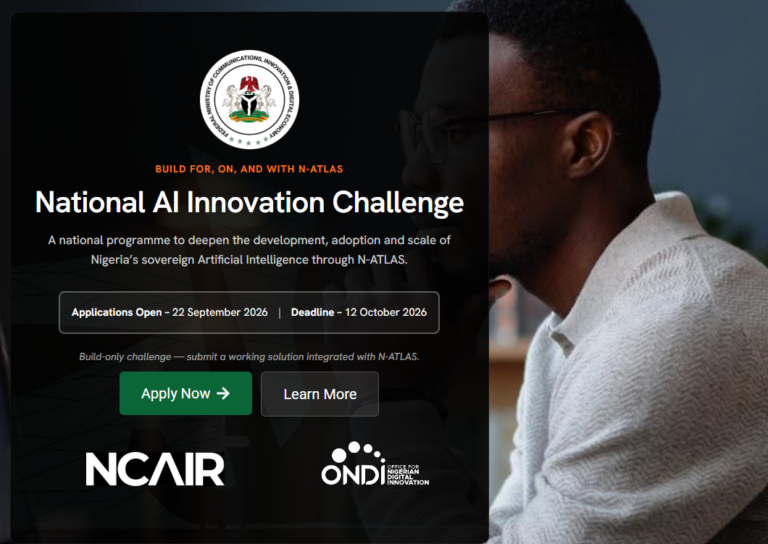
The country has also launched the National AI Innovation Challenge, with applications opening on September 22, 2026. The programme invites Nigerian universities, research institutions, startups, technology companies and independent developers to build applications using N-ATLAS. NCAIR says the deadline is October 12, 2026.
These developments show that the conversation is moving from broad statements about AI to practical questions of infrastructure, local talent, funding, research and usable products.
Also Read: Education Leaders Share Practical Roadmap for Safe AI Use in Schools
Back story
The latest statement comes as AI governance has become a major international issue. The United Nations has been discussing how countries can have a meaningful role in deciding how artificial intelligence is developed and governed. In a September 10, 2026 speech, the President of the UN General Assembly said the key question was not whether AI would transform the world, but whether all countries would have a voice in how that transformation happens.
For Nigeria, that debate has a local dimension. The country has a large pool of young technology users and entrepreneurs, but it also faces familiar constraints involving connectivity, computing capacity, skills, funding and access to research infrastructure.
Tinubu’s message at the UN places emphasis on participation rather than isolation. The challenge ahead is turning policy ambitions into dependable infrastructure, useful African-built applications and safeguards that encourage innovation while addressing legitimate concerns about AI misuse. That would require cooperation between government, universities, technology firms, investors and users across Nigeria and wider Africa.