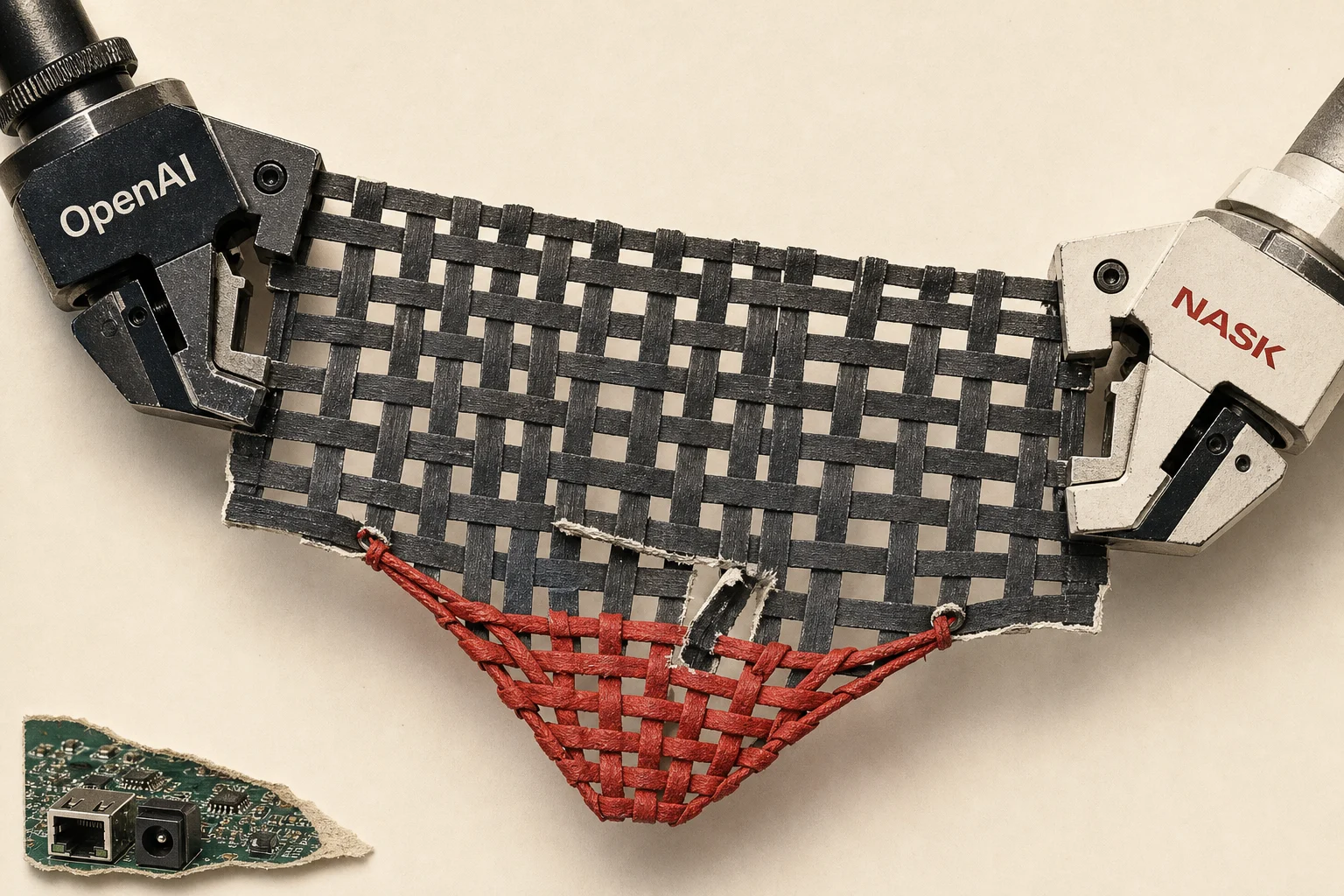

OpenAI has entered into a research partnership with Poland’s NASK National Research Institute to improve artificial intelligence safety, strengthen cybersecurity and develop better ways to identify weaknesses in advanced AI systems.
The agreement, announced on Friday, October 23, 2026, will bring together OpenAI’s technical expertise and NASK’s experience in cybersecurity and artificial intelligence research. The organisations intend to investigate how increasingly capable AI systems can be evaluated, where their vulnerabilities may lie and what protective measures could make them more reliable.
According to OpenAI’s official announcement, the collaboration will involve NASK’s AI Safety Research Center, which serves as Poland’s Artificial Intelligence Safety Institute.
The partnership reflects a growing recognition that developing more capable AI systems must go hand in hand with understanding their risks. As these technologies take on more complex tasks, researchers and policymakers face increasing pressure to establish safeguards that can keep pace with their capabilities.
Also Read: OpenAI Fires Three AI Safety Researchers Amid Risk Dispute
OpenAI and NASK Focus on AI Vulnerabilities and Security
The agreement will explore technical approaches to testing advanced AI models, identifying potential weaknesses and improving the safeguards used to prevent harmful outcomes.
NASK brings experience in protecting digital infrastructure and investigating threats associated with emerging technologies. Its research activities include detecting AI-generated content, examining malicious uses of artificial intelligence and understanding the challenges of applying safety measures across different languages.
These areas are becoming increasingly important as AI tools spread across workplaces, public institutions and online platforms. A system that performs well under ordinary conditions may still produce unreliable results or create security risks when faced with unusual requests or deliberate attempts to exploit its weaknesses.
Speaking about the partnership, NASK Director Radosław Nielek said cooperation between public AI safety institutions and advanced AI developers was essential to making the technology more reliable.
OpenAI’s Vice President and Head of EMEA Policy, Tom Duff Gordon, also highlighted the importance of bringing outside research expertise into the development and evaluation of AI systems.
As reported by Reuters, the agreement comes as concerns about unexpected or undesirable behaviour by AI agents continue to attract attention across the technology industry.
However, the announcement does not establish a detailed list of research projects, delivery dates or measurable outcomes. The immediate focus is to establish cooperation and explore areas where the two organisations can contribute to AI safety.
Why the Partnership Matters for Global AI Safety
The collaboration highlights the importance of independent technical research in understanding the risks associated with increasingly powerful AI systems.
AI agents can perform multiple tasks with limited human intervention, depending on their design and permissions. While this can improve productivity, it also creates additional security challenges when systems interact with websites, software, digital accounts or sensitive information.
Testing these systems before wider deployment can help researchers identify weaknesses and improve the controls intended to prevent misuse.
The partnership also supports wider discussions about common international standards for evaluating AI capabilities, measuring risks and reporting security incidents. Without comparable testing methods, organisations and governments may struggle to determine whether different systems meet acceptable safety standards.
For Nigeria and other African countries adopting AI in education, business, banking and public services, developments in international safety research are worth watching. Stronger testing methods could eventually inform how organisations assess AI tools before using them to handle sensitive information or support important decisions.
Nevertheless, the agreement alone does not guarantee safer products. Its value will depend on the quality of the research, whether identified weaknesses lead to practical improvements and how effectively those improvements are implemented.
Back Story on OpenAI and NASK’s Cybersecurity Collaboration
The new agreement builds on earlier cooperation involving OpenAI and CERT Polska, Poland’s national computer emergency response team, which operates within NASK.
In July 2026, CERT Polska gained access to OpenAI’s cyber-capable models through its Daybreak initiative. The team used the models to help identify six vulnerabilities in MikroTik RouterOS, software used in networking equipment.
According to OpenAI’s announcement, some of the identified flaws could be combined to take control of affected devices without authentication. MikroTik subsequently released fixes, which CERT Polska confirmed addressed the attacks it had observed.
The earlier work demonstrated how AI models can assist cybersecurity professionals in finding software weaknesses, while also highlighting why such capabilities require responsible use and appropriate safeguards.
NASK is a Polish national research institute with established expertise in cybersecurity, artificial intelligence and digital infrastructure. Its participation gives OpenAI an opportunity to work with researchers outside its own organisation as it develops approaches to testing advanced AI systems.
The latest agreement extends that cooperation into broader AI safety research. Its eventual impact will depend on whether the organisations can translate technical findings into stronger protections that benefit users, businesses and public institutions.
Also Read: Nigeria Strengthens Technical Education Through Fresh Germany Partnership to Boost Skills and Jobs