
Students from Sunflower School in Kano State have developed an artificial intelligence-powered farming application designed to help Nigerian farmers identify crop diseases, access treatment advice, and make better decisions about selling their produce.
The innovation, known as AgroLens AI, earned the student team, Agrolens Technologies, first place at Junior Achievement Nigeria’s 2026 National Company of the Year Competition. The victory has also secured the young innovators an opportunity to represent Nigeria at the African Company of the Year Competition in Cape Town, South Africa.
According to reports by Premium Times and BusinessDay, the platform combines crop disease identification with practical agricultural services, giving farmers access to several useful tools through a single mobile application.
The four-member team comprises Fadillah Abdulsalam, Ruqayya Jallo, Hayfa Mukhtar and Maryam Butu. Their achievement highlights how Nigerian students are applying digital technology to address problems that affect farmers, food production and rural livelihoods.
The team received a $250 cash prize and an all-expenses-paid trip to South Africa following its success at the national competition. The students will now take their innovation to the continental stage, where they will compete alongside other young African entrepreneurs.
Also Read: Kano Tech Hub Turns AI Education Into a Pathway for Young Nigerians
How AgroLens AI Could Help Nigerian Farmers
AgroLens AI is designed to make agricultural information more accessible, particularly for farmers who struggle to identify crop diseases, find reliable treatment advice or obtain favourable prices for their produce.
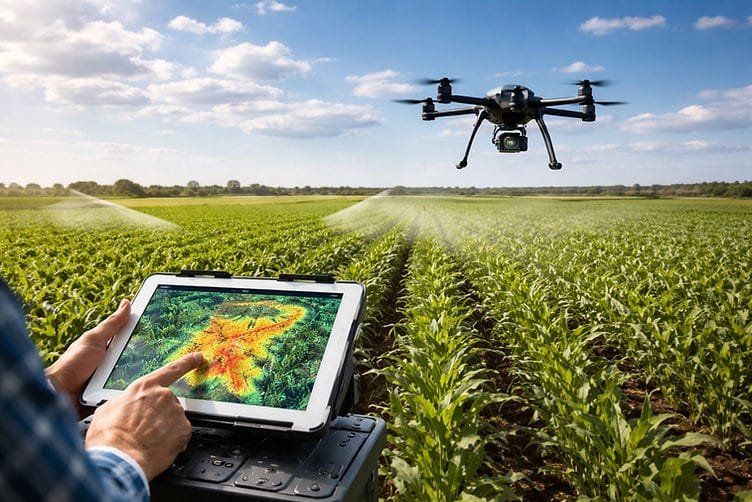
The application uses artificial intelligence to identify crop diseases and pest-related problems. It also provides treatment recommendations, helping farmers understand what may be affecting their crops and what steps they could take to address the problem.
Beyond disease detection, the platform offers real-time market price information, connects farmers with potential buyers and provides information about agricultural financing. Bringing these services together could help farmers make more informed decisions throughout the farming process, from managing crop health to finding markets for harvested produce.
Language accessibility is another important feature. AgroLens AI supports English, Hausa, Yoruba, Igbo and Nigerian Pidgin, making it relevant to farmers across different linguistic communities.
The application also includes voice-enabled features for users who may have difficulty reading instructions or prefer speaking to typing. This approach could make digital agricultural services easier to use among farmers with limited literacy.
However, the platform’s long-term impact will depend on factors such as the accuracy of its disease detection, the usefulness of its treatment recommendations, internet access and the ability of farmers to use the service in their daily operations.
If these challenges are addressed, the innovation could become a useful addition to the tools available to Nigerian farmers, especially those who cannot easily obtain timely agricultural advice.
Back Story: Kano Students Turn Innovation Into Opportunity
The students’ achievement emerged from Junior Achievement Nigeria’s National Company of the Year Competition, an initiative that encourages young people to develop business ideas, build practical skills and create solutions to real-world problems.
The programme forms part of efforts to bridge the gap between classroom education and the skills required for entrepreneurship and employment. Through activities such as business development, project planning and pitching, participating students gain experience turning ideas into products and services.
At the 2026 competition, held on 21 October, Agrolens Technologies competed against other student-led ventures and emerged as the overall winner. The team also received the Product Innovation and Operational Excellence Award.
New Era Company from Community Secondary School in Asokoro, Abuja, finished second, while Nexora International School Lagos placed third.
The victory also extends Kano State’s strong performance at the national competition. Edwin Idoko, Junior Achievement Nigeria’s Kano State programme officer, said the achievement marked the state’s third consecutive year of success at the event, crediting education authorities, volunteers and programme officers for their support.
Speaking at the gathering, Junior Achievement Nigeria’s acting executive director, Olaolu Akogun, stressed the importance of equipping young people with practical experience as technology continues to change how people work and create value.
The programme reflects a growing emphasis on helping students move beyond theoretical learning to develop solutions with commercial and social value.
What the Innovation Means for Agriculture in Nigeria
Agriculture remains an important source of livelihoods in Nigeria, but farmers face persistent difficulties, including crop diseases, pest attacks, limited access to expert advice and challenges in reaching profitable markets.
Early identification of crop diseases can help farmers respond before damage spreads across their farms. Digital tools that provide accessible guidance may therefore support better farm management, although recommendations generated by artificial intelligence should not replace professional agricultural advice where specialist assessment is necessary.
AgroLens AI’s combination of disease detection, market information and buyer connections is particularly relevant because farmers’ challenges do not end when they identify a crop problem. They must also obtain appropriate inputs, manage costs and find buyers willing to pay reasonable prices.
The next stage will be demonstrating how effectively the application works in real farming conditions and whether farmers can access and trust its recommendations.
For Nigeria’s agricultural sector, the students’ accomplishment offers a promising example of local talent applying technology to practical economic challenges. Their upcoming participation in the African competition will also give them an opportunity to present their solution to a wider audience.
Ultimately, the value of AgroLens AI will be measured not only by the awards it wins, but also by whether it helps farmers reduce losses, improve productivity and earn better incomes.
Also Read: FCMB Plans AI-Powered Farm Advisory Services in Hausa, Yoruba and Igbo