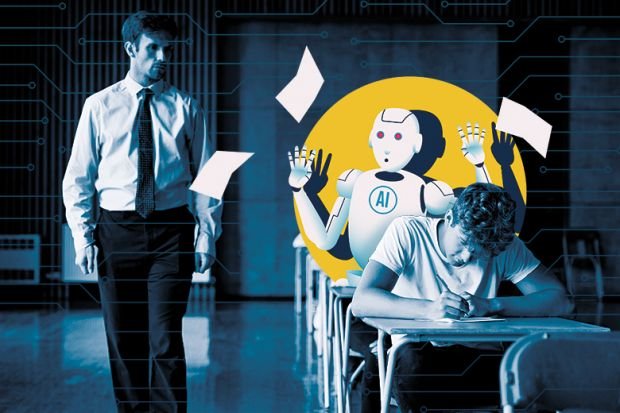

Universities across the world are facing increasing pressure to rethink their examination systems as students become more dependent on artificial intelligence (AI) tools to complete academic assessments. The growing use of platforms such as ChatGPT, Google Gemini and Microsoft Copilot is raising concerns about academic dishonesty, the credibility of university qualifications and the future of independent learning.
While AI has become a useful resource for explaining difficult concepts, conducting research and supporting students with academic work, its growing use in producing examination answers and completing assignments is creating a difficult situation for lecturers and university administrators.
A major study published in the journal Science on May 21, 2026, has brought fresh attention to the problem. Researchers from Cornell University and the University of California, Berkeley analysed responses from more than 95,000 students across 20 public research universities in the United States.
The findings showed that approximately one-third of the students regularly used generative AI to produce text, videos or computer code for their assignments. More concerningly, researchers estimated that 9 per cent had used AI to cheat on academic work.
The study also identified differences in AI adoption across academic disciplines. Computer science students recorded a higher rate of regular AI use, at 62 per cent, compared with 24 per cent among students studying arts-related disciplines.
According to the researchers, the findings demonstrate that universities cannot continue relying entirely on traditional assessment methods without considering how easily students can now obtain AI-generated answers.
Also Read: Teachers Redesign Classroom Exams to Curb AI-Assisted Cheating
AI Use Raises Questions About Academic Integrity
One of the biggest challenges facing universities is distinguishing between students who use AI to improve their understanding and those who depend on it to complete work they are expected to produce independently.
Generative AI tools can explain complicated subjects, summarise academic materials, suggest research directions and assist with problem-solving. However, students who submit AI-generated answers without understanding the underlying concepts may obtain good grades without developing the knowledge those grades are supposed to represent.
This raises questions about the reliability of academic qualifications, particularly when students can complete assessments without demonstrating their actual abilities.
The challenge is not limited to take-home assignments. Research published in 2024 in PLOS ONE demonstrated how difficult it could be to identify AI-generated examination submissions.
In an experiment conducted at the University of Reading in the United Kingdom, researchers secretly introduced entirely AI-generated answers into five undergraduate assessment modules. The findings showed that 94 per cent of the AI-generated submissions went undetected by examiners.
The AI-generated answers also achieved higher grades, on average, than genuine student submissions.
These findings highlight the limitations of relying on lecturers to identify AI-generated content simply by reading students’ work. They also raise concerns about the effectiveness of existing academic misconduct policies.
Nigerian Universities Also Face the Challenge
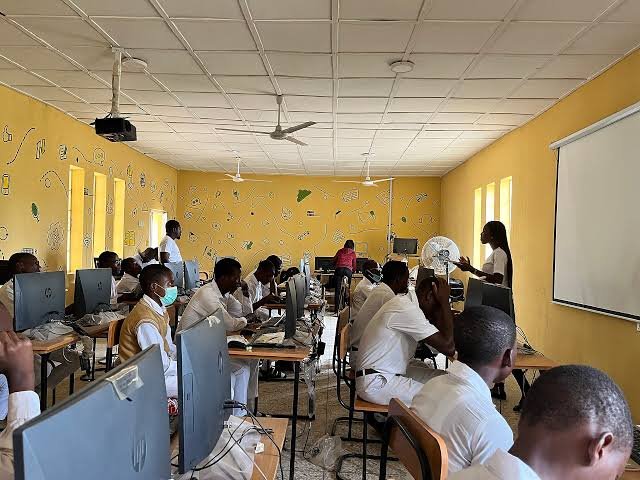
The growing dependence on AI in higher education is particularly relevant to Nigeria, where universities are increasingly embracing digital learning and technology-supported academic activities.
A February 2025 report by Nairametrics highlighted concerns among Nigerian lecturers about students using ChatGPT to generate assignments and submit answers they could not adequately explain.
Prof. Isaac Nwaogwugwu of the University of Lagos described an instance in which approximately 40 per cent of more than 100 MBA students submitted remarkably similar answers to an assignment.
Other lecturers have also expressed concerns about students producing impressive academic submissions but struggling to explain basic concepts when questioned.
The situation presents an additional challenge for institutions already dealing with large student populations, limited resources and the difficulties of monitoring academic activities.
AI detection software may appear to offer a solution, but such tools are not always reliable. Consequently, universities need approaches that examine students’ actual understanding rather than depending exclusively on software to identify AI-generated content.
Institutions must also establish clear guidelines explaining when students can use AI, what constitutes academic misconduct and how AI-assisted work should be acknowledged.
Back Story: Universities Must Rethink Traditional Assessments
The debate surrounding AI and academic examinations has intensified since the emergence of ChatGPT in November 2022. Its ability to generate human-like responses, solve problems and produce academic content has changed how students access information and approach their studies.
A 2025 survey by the Higher Education Policy Institute in the United Kingdom found that 88 per cent of undergraduate respondents had used generative AI in their assessments during the preceding year, compared with 53 per cent in 2024.
Rather than responding with outright restrictions, researchers are encouraging universities to reconsider how they evaluate students.
The Cornell research team identified three possible approaches: returning to supervised examinations, establishing clearer rules for acceptable AI use and redesigning assessments to incorporate AI while testing students’ professional abilities.
For universities, the challenge is to ensure that technological progress does not come at the expense of genuine education.
AI is becoming an important part of the modern workplace, making it increasingly necessary for students to understand how to use these tools responsibly. However, the ability to generate an answer should not be confused with the ability to understand it.
Ultimately, universities must find a way to embrace technological change while preserving the intellectual development, critical thinking and academic standards that higher education is expected to deliver.
Also Read: African Students Take Centre Stage in Global Debate on AI, Disinformation and Digital Literacy