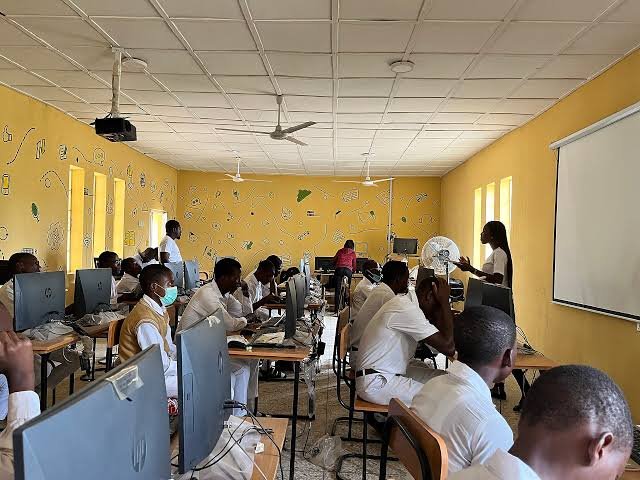

Artificial intelligence is becoming an increasingly important part of education, and Nigerian education technology company Edves is stepping up efforts to make the technology more useful to teachers, school administrators and students.
As it marks 10 years of operations, the company has announced plans to expand its artificial intelligence (AI) capabilities, with a stronger focus on improving classroom teaching, simplifying school administration and supporting better learning outcomes.
Rather than concentrating only on the digital management of school records, Edves wants to put technology directly into the hands of teachers to help them prepare lessons, assess students and monitor teaching activities more effectively.
The company disclosed its plans in a statement issued to The PUNCH by its Communications Executive, Mary Ayo-Aina, as part of activities marking its 10th anniversary.
Founded on October 24, 2016, Edves initially focused on digitising school administration. Over the years, however, it has expanded its services to cover online learning, assessments, curriculum management and AI-supported educational solutions.
Its latest strategy reflects a growing recognition that technology in education should do more than move paperwork from physical files to computer screens. It should also improve what happens inside classrooms and make learning more effective.

Edves Targets Practical AI Applications for Teachers
A major part of the company’s expansion strategy is the development and deployment of AI-powered tools that can assist teachers with everyday professional responsibilities.
These include lesson planning, curriculum-linked assessments and teaching observation. The tools are designed to reduce some of the administrative pressure on teachers while helping schools gain a clearer understanding of classroom activities.
For teachers, preparing lessons that meet curriculum requirements and suit different learning needs can be demanding. AI-supported planning tools could make this process more organised by providing assistance with lesson preparation and assessment design.
Similarly, curriculum-linked assessments can help teachers evaluate students against relevant learning objectives rather than relying solely on general classroom tests.
Teaching observation is another area receiving attention. By giving school administrators better visibility into classroom practices, the technology could support more informed decisions about teaching quality and areas where educators may need additional assistance.
Edves Chief Executive Officer and Co-founder, Dimeji Falana, said the company’s next phase would prioritise the educational impact of its technology.
He explained that the organisation intended to deepen its AI capabilities and increase its international presence, while measuring progress through improvements in teaching effectiveness, administrative efficiency and student learning.
The company’s position suggests that its future success will depend not simply on how many schools adopt its platform but also on the measurable improvements those schools experience.
Also Read: Edves Expands AI Education Tools as Nigerian Platform Reaches 2,300 Schools
Expansion Across Nigeria and International Markets
Edves’ ambitions are supported by an expanding customer base that now extends beyond Nigeria. The company currently serves more than 2,300 schools in 12 countries, with its platform supporting over 625,000 students, 57,000 teachers and 387,000 parents across Africa, Europe and North America. Punch Newspapers+1
In Nigeria, the company has been involved in government-backed education initiatives, including Enugu State’s Smart Green Schools programme, which covers 260 schools, and Anambra State’s Smart Schools initiative across 22 pilot local government areas.
These projects demonstrate how digital platforms can support education authorities in managing information across multiple institutions. They also provide opportunities to improve coordination, strengthen school administration and support evidence-based decisions.
Speaking about the company’s experience with public education projects, Falana said digital systems could help government authorities coordinate school information and improve the management of education services.
However, the company acknowledges that introducing technology into schools is only one part of the challenge.
Its Co-founder and Chief Operating Officer, Dare Adebayo, said the next stage of growth would be judged by whether the technology produced measurable improvements in teaching, administration and student learning.
He stressed the importance of ensuring that schools, teachers and learners experience practical benefits from adopting digital solutions rather than simply increasing their use of technology.
This is particularly important in Nigeria, where schools operate under different conditions, including differences in infrastructure, internet connectivity, available resources and teachers’ digital skills.
Consequently, the success of AI-powered education tools will depend partly on how accessible, affordable and easy to use they are for the people expected to benefit from them.
Back Story: Edves’ Journey from School Administration to AI in Education
Edves began operations in Nigeria on October 24, 2016, with an initial focus on digitising school administration. Its development over the past decade reflects the broader transformation of the education technology industry, where digital solutions are increasingly being applied to teaching, learning and institutional management.
The company received early industry recognition in 2017 after participating in Co-Creation Hub’s Intel-powered Growth Accelerator programme. It subsequently won the Best EdTech Prize at the 2018 Seedstars Global Summit in Switzerland.
In 2023, Edves secured seed funding from Beta Ventures, Fondation Botnar and Future Africa to support product development and business expansion. Punch Newspapers+1
The company’s latest AI strategy represents another stage in that development, moving beyond administrative automation towards tools that directly support classroom instruction.
As Edves enters its second decade, its ambition is to strengthen its international presence while making artificial intelligence more useful within education systems.
Ultimately, the real measure of this transition will not be the number of schools using AI-powered platforms, but whether teachers become more effective, administrators make better decisions, and students achieve improved learning outcomes.
Also Read: Why Schools Should Lead AI Education Instead of Banning Technology