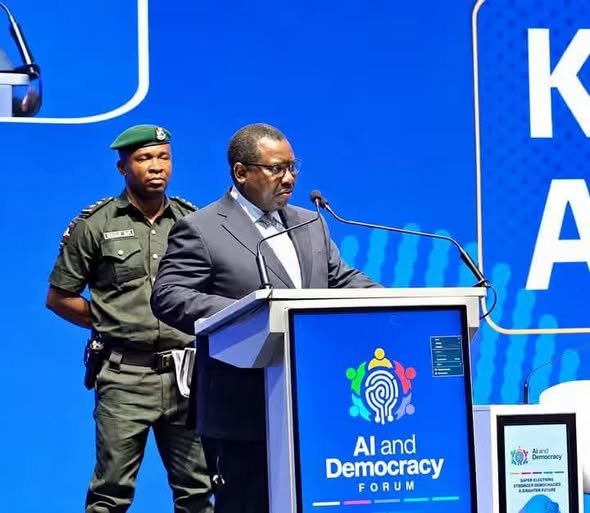

The Independent National Electoral Commission (INEC) is strengthening measures to protect Nigeria’s 2027 general elections from artificial intelligence (AI)-generated misinformation, deepfakes and foreign information manipulation, amid growing concerns about the influence of digital platforms on political campaigns.
INEC Chairman, Professor Joash Amupitan, disclosed the commission’s concerns on Monday, November 2, 2026, in Abuja during the opening of the National Summit on Electoral Information Integrity. The summit, themed Beyond the Ballot: AI, FIMI, and the Integrity of Nigeria’s 2027 Elections, brought together electoral stakeholders, media professionals, technology experts and development partners to examine emerging threats to democratic participation.
The commission warned that political parties and their supporters were increasingly using social media to promote candidates while spreading misleading information about political opponents.
According to Amupitan, the nature of electoral interference has expanded beyond conventional activities such as ballot snatching and physical intimidation. Digital manipulation, automated disinformation campaigns and synthetic media now present additional challenges that could influence public opinion before Nigerians cast their votes.
Also Read: INEC Introduces AI Tools to Strengthen Election Results Verification Ahead of 2027 Polls
INEC Raises Alarm Over AI-Generated Election Disinformation
One of the commission’s major concerns is the possibility that manipulated audio recordings and videos could be circulated to impersonate electoral officials or announce events that never happened.
Amupitan particularly warned about the possibility of deepfake content announcing a false postponement of the 2027 general elections shortly before voting begins. Such fabricated announcements could create widespread confusion, especially if released when journalists and official communication channels have limited time to verify information and respond.
The danger is not limited to election postponement announcements. Artificial intelligence tools can also be used to produce convincing videos of political candidates making controversial statements, fabricate electoral instructions, manipulate photographs and circulate false claims about voting procedures.
The INEC chairman explained that these threats could affect different stages of the electoral process, including campaigns, voter education, accreditation, voting and the announcement of results.
He maintained that public awareness campaigns alone would not adequately address the problem. Instead, Nigeria requires stronger institutional preparedness, effective verification systems and cooperation among organisations responsible for protecting the country’s information environment.
The commission’s concerns reflect the growing importance of digital security in elections, where a misleading message shared across social media platforms can reach thousands of people before authorities establish whether it is genuine.
Stakeholders Call for Coordinated Action Against Digital Manipulation
The national summit also highlighted the importance of bringing government institutions, political parties, journalists, technology companies, civil society organisations and security agencies into a coordinated response.
The European Union, through its Support to Democratic Governance in Nigeria (EU-SDGN) programme, is supporting initiatives aimed at strengthening electoral information integrity and democratic institutions.
European Union Ambassador to Nigeria and ECOWAS, Gautier Mignot, also warned that elections could be undermined without anyone physically interfering with ballot papers. Fabricated announcements, misleading information and false election results could damage public confidence even when the actual voting process remains undisturbed.
Former INEC Chairman, Professor Attahiru Jega, similarly emphasised the need for practical measures to protect electoral information. He advocated the use of technology, including AI-powered chatbots, to help election management bodies provide citizens with accurate and timely information.
Other discussions at the summit focused on developing a coordinated response framework that would enable relevant institutions to identify, verify and respond to emerging digital threats.
However, any measures introduced to address misinformation must also respect freedom of expression, media independence and citizens’ right to access information.
Back Story: INEC’s Preparations for the 2027 General Elections
INEC’s latest warning comes as the commission continues preparations for the 2027 general elections, scheduled to begin with the Presidential and National Assembly elections on January 16, 2027.
The commission had previously announced the establishment of a specialised artificial intelligence unit within its Information and Communication Technology Directorate to monitor digital threats, identify deepfakes and strengthen electoral cybersecurity.
In an October 2026 announcement, Amupitan explained that the unit would deploy digital monitoring tools, deepfake detection software and data analytics to identify attempts to manipulate electoral information.
INEC has also maintained that artificial intelligence will support election administration rather than replace human oversight in critical decisions.
These preparations are particularly important given Nigeria’s large electoral population and the increasing dependence of political campaigns on social media platforms.
As the 2027 elections approach, the commission faces the challenge of ensuring that voters can distinguish authentic electoral information from digitally manufactured falsehoods.
Ultimately, protecting the credibility of the elections will require more than securing polling stations and election materials. It will also depend on whether INEC and other stakeholders can build an information environment where Nigerians have access to reliable information and can make electoral decisions without manipulation.
Also Read: NDC accuses INEC of denying access code for candidates’ nomination