
Industrial goods companies trading on NGX spent N820.7 billion on energy in the first nine months of 2026. This amount reported as fuel and power costs in their unaudited financial statements of the period ended on September 30, 2026, shows 6.3% growth compared with N771.9 billion spent in the corresponding period in 2025.
The most significant contributors to the overall energy costs of the industry are the following firms: Dangote Cement Plc, BUA Cement Plc, Beta Glass Plc, Berger Paints Nigeria Plc, Chemical and Allied Products (CAP) Plc, HBM Nigeria Plc, and Austin Laz and Co Plc.
Industry experts claim that high energy prices pose a great challenge for manufacturers and other energy-intensive industries, putting a significant burden on the cost of production and, therefore, on profit margins.
NGX Industrial Firms’ Energy Costs.
The largest contribution to the energy costs of the firms comes from Dangote Cement. Its fuel and power expenses reached N580.5 billion in the January – September 2026 period. The firm’s energy costs showed a 2.0% growth compared with N569.0 billion spent in 2025.
The second-place holder in the list of energy costs of the NGX industry is BUA Cement, which showed 21.5% growth in energy costs compared with 2025 figures. Combined energy expenses of the two cement manufacturers amounted to N797.1 billion, 6.7% more than N747.2 billion in 2025.
Beta Glass Plc reported a 5.3% decline in energy costs to N23.2 billion, compared with N24.5 billion in the first nine months of 2025. The same trend of reducing energy costs is shown by CAP Plc with 20.4% lower energy expenses to N30.3 billion from N38 billion.
Austin Laz and Co Plc, which had only N50,000 in energy costs in 2025, showed a huge increase to about N10.9 million in 2026, which equals 22,046.9% growth.
HBM Nigeria Plc (formerly Lafarge Africa) disclosed production variable costs of N226.3 billion in 2026 but did not provide separate information on the cost of energy costs among other input costs.
Manufacturers Face High Energy Costs Challenge.
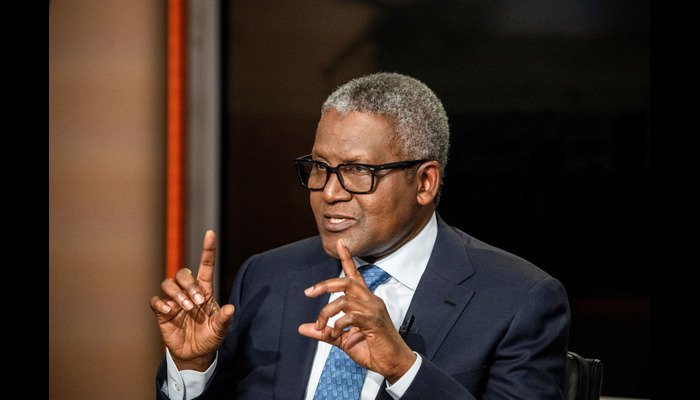
Speaking in an exclusive interview with Nairametrics, Dr. Muda Yusuf, an economist and CEO of the Centre for the Promotion of Private Enterprise (CPPE), highlighted the worsened situation of the power sector since February 2026.
According to him, the Middle East conflict involving the US and Iran is only a part of the reasons for rising energy costs. He said that the above-mentioned geopolitical tension pushed diesel and gas prices to grow, resulting in the rise of costs of business operations.
Yusuf stressed that energy-intensive industries are particularly sensitive to energy costs, as they depend on those fuels in their production and other operations. According to him, the more energy sector consumes, the more loss it can suffer from rising energy prices.
“Energy costs continue to be one of the greatest challenges for the industrial sector and it may even be the greatest challenge for the entire sector. The more energy consumption the sectors show, the more vulnerable they are,” he stated. He added that Nigeria failed to make much improvement in grid electricity, which remains the major source of power for the country, and noted the extremely slow development of the electricity sector.
Discussing measures that can help to cope with high energy prices, Yusuf said that cement manufacturers normally build their own power plants as an element of their business model. Referring to Dangote’s policy, he said that the company does not build plants depending on public electricity supply, but provides for itself the means of generation of electricity to meet its needs.
Also commenting on the issue, Abiodun Ogunniyi, an investment strategist and Head of Research at GTI Securities Limited, explained how high energy prices led to growing production expenses, squeezing profit margins, and reducing free cash flow. He said that these could prevent manufacturers from increasing capacity.
However, he added that higher energy spending did not necessarily reduce profitability of the manufacturers. In addition, according to him, manufacturers could partially compensate themselves with the help of economies of scale, increasing operational efficiency, and raising the price of goods when market conditions allowed.
However, Ogunniyi warned that weak purchasing power of consumers, decreased construction activities, and increased competition could prevent manufacturers from passing on additional costs to their clients.
Moreover, Ogunniyi observed that captive power generation could cut down the revenues of electricity Distribution Companies (DisCos), as large industrial customers form the major part of their valuable customer base. This could weaken the revenues of the DisCos and impede investments into distribution infrastructure.
Self-Generated Power Due to Unreliable Grid.
According to a recent report published by the Manufacturers Association of Nigeria (MAN), manufacturers spent N1.34 trillion on alternative sources of power – diesel, gas, and other self-generation sources – in 2025, 21% more than N1.11 trillion in 2024. This figure shows the additional costs for manufacturers in order to keep their operations going amid unreliability of grid electricity.
In order to mitigate outages and stop production disruptions, many manufacturers decreased their dependency on Distribution Companies using gas or low-pour-flood oil (LPFO) as fuel of their factories and production facilities. This enabled them to avoid losses and keep continuity in production despite the unreliability of the grid.
Currently, Dangote Cement maintains at least 345 megawatts of captive power capacity distributed among its four Nigerian plants, thus having a great internal supply of power for its operations. Similarly, BUA Cement has estimated power generation capacity of 240-280 megawatts with the majority of it being supplied by gas-fired plants. HBM Nigeria provides at least 200 megawatts of captive generation capacity to its operations.
According to a report published by the Nigerian Electricity Regulatory Commission (NERC), during the period from January to August 2026, the 11 Distribution Companies (DisCos) of the country billed their customers about N2.01 trillion and collected about N1.63 trillion of the amount, which gives a collection rate of about 81%.
What you should know
As Nairametrics reported in March 2026, the fragile electricity supply chain of Nigeria experienced severe pressure due to financial and contractual disputes between Generation Companies (GenCos) and gas producers. This resulted in disruptions in fuel deliveries to power plants and worsened grid instability and blackouts.
The ongoing crisis was associated with mounting debts, foreign exchange issues, and infrastructure vulnerability. These factors continued to hamper reliability of gas-fired power plants that produce more than 70%, and in some seasons, more than 80% of the electricity produced in Nigeria.
Such problems continued to affect electricity supply for manufacturers forcing them to use alternative sources of power to keep production going.