
Nigeria’s digital economy is often measured through telecoms, fintech and internet access. But these indicators do not show whether connectivity becomes useful economic activity. The Nigeria Tech Outlook Report 2026 examines that gap: access to technology is not the same as meaningful adoption.
Why NITDA and NBS are measuring beyond ICT
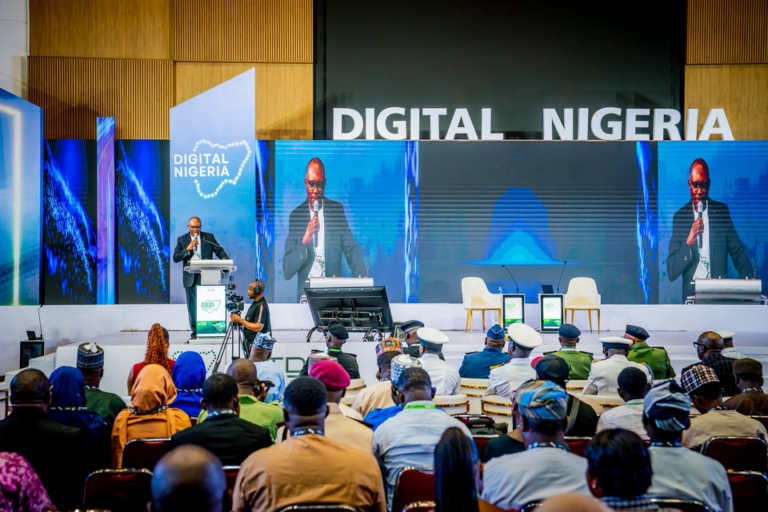
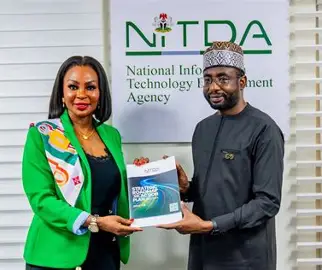
The National Information Technology Development Agency (NITDA) launched the report on November 11 at Digital Nigeria 2026 in Abuja. It was developed with the National Bureau of Statistics (NBS), which worked with NITDA on a nationwide telephone survey using Computer-Assisted Telephone Interviews (CATI).
It covered 2,147 households and 539 primary healthcare facilities across the 36 states and the Federal Capital Territory. It also drew on 15 key informant interviews and records from 10 institutions. Its 105 indicators cover finance, telecoms, commerce, e-government, e-health, devices, skills, trust and inclusion.
Of the indicators, 63 were fully supported, 34 had partial evidence, and eight had no supporting data. Forty per cent of the framework is therefore partly evidenced or still has a data gap. The report is a useful baseline, not a complete picture.
Also Read: African Countries Unite to Push Affordable Internet Access and Lower Smartphone Costs
Account ownership does not equal digital participation
The report says 86.5 per cent of Nigerian adults have financial accounts, but only 12 per cent accessed digital credit in the past year. Just 6.6 per cent bought goods online in the previous three months, while 17.9 per cent used government services online in the past year. Voice of Nigeria+1
These figures measure different services and periods. Account ownership alone cannot prove widespread use of digital finance, online commerce or e-government. Services must also be affordable, accessible and useful.
Smartphone statistics need careful interpretation
NITDA reported that 40.6 per cent of adults personally use smartphones. A separate KPMG study put smartphone ownership at 75 per cent in 2025 among 13,251 respondents across 12 major cities. The figures are not directly comparable: one measures personal use, the other ownership, and the studies used different samples. Owning a smartphone does not guarantee reliable data or confidence to use digital services.
Demand is an opportunity, not proof of adoption
In healthcare, 75.9 per cent of adults said they would be willing to use telemedicine if available. This measures stated interest, not current use. The report also found that 11.3 per cent had insurance coverage and 13.1 per cent had experienced digital financial fraud.
The findings suggest opportunities in health technology, payments and online services, but also expose barriers. Investors must consider affordability, electricity, connectivity, skills and consumer protection. NITDA says its dashboard will make the evidence accessible and support feedback. Its value will depend on whether better data leads to better services.
Back Story: Nigeria’s digital skills drive
NITDA launched its Digital Literacy for All initiative nationwide in 2025, targeting digital skills coverage of 70 per cent by 2027 and 95 per cent by 2030. The Tech Outlook Report adds a measurement tool to that effort. NITDA says the publication will be updated annually.
Also Read: World Bank Raises Africa’s 2026 Growth Forecast to 4.3%, Urges Governments to Invest in AI