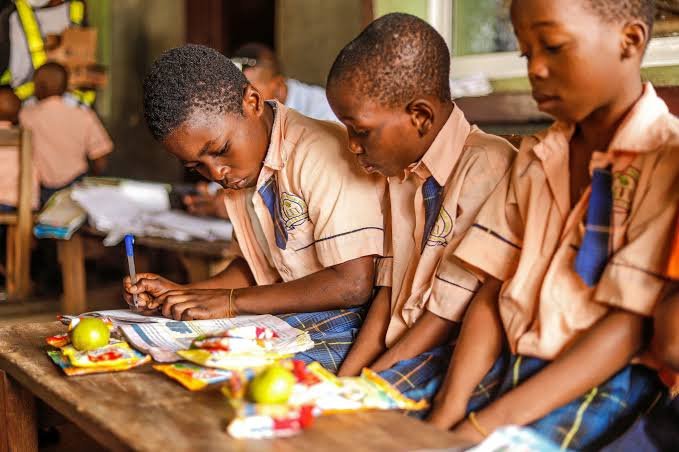

Africa’s education systems are facing a financial reality that governments can no longer ignore. Across the continent, the demand for quality education is growing faster than public resources available to fund classrooms, teachers, learning materials, digital infrastructure and other essential services.
That pressure is increasingly pushing governments to look beyond traditional budget allocations and work more closely with philanthropists, foundations, development organisations and private-sector partners.
The shift does not mean governments are abandoning their responsibility to finance education. Rather, it reflects the scale of the challenge facing African countries at a time when public budgets are being squeezed by debt, economic pressures, conflict and other competing national priorities.
The African education financing gap is substantial. UNICEF reported that African countries need about $183 billion annually to meet education-related Sustainable Development Goal targets, while available resources stood at about $106 billion, leaving a gap of more than 40 per cent.
For millions of African children, the consequences of this shortfall are visible in overcrowded classrooms, shortages of teachers, inadequate learning resources and limited access to early childhood education.
Also Read: AI Could Become Africa’s Biggest Education Opportunity Yet
Governments Are Looking Beyond Traditional Education Funding
The growing funding pressure has created a stronger case for partnerships between governments and philanthropic organisations.
At the recent Africa Foundational Learning Exchange in Malawi, representatives from 42 African governments and the African Union agreed to pursue stronger action on foundational learning, financing and other education priorities. Importantly, fresh commitments from government budgets and philanthropic sources were part of the discussions.
This development is significant because philanthropy is increasingly being viewed as a partner capable of supporting areas that public funding alone may struggle to reach quickly.
Foundations can provide funding for teacher development, literacy programmes, technology, scholarships, school infrastructure, research and innovative education projects. They can also test approaches that governments may later adopt at a larger scale.
For countries such as Nigeria, where millions of children remain outside the formal education system, these partnerships could provide additional support for interventions that require urgent attention.
However, philanthropy cannot become a substitute for government responsibility. Private donations are often project-based, while education requires predictable and long-term financing. Salaries, school maintenance, teacher recruitment and basic education services cannot depend entirely on the generosity of individuals or foundations.
The more sustainable approach is therefore to use philanthropic funding to complement public investment while governments strengthen their own domestic financing systems.
Also Read: Governments Increase STEM Investment to Prepare Workforce for Future Skills Demand
Back Story: Why Africa’s Education Financing Crisis Has Deepened
Africa’s education funding problem is not new, but recent economic pressures have made it more difficult to ignore.
In 2015, African governments and other UNESCO member states endorsed international benchmarks calling for countries to spend between 4 and 6 per cent of GDP on education and between 15 and 20 per cent of public expenditure on the sector. Yet progress towards those targets has remained uneven.
Human Rights Watch reported in 2025 that only one-third of African countries met globally endorsed education financing benchmarks over the decade from 2013 to 2023. By 2022 and 2023, that proportion had fallen to only one-quarter. Fourteen African countries failed to meet any of the benchmarks during the entire decade.
The problem is also connected to debt. Human Rights Watch noted that 15 African countries were spending more on debt servicing than on education, putting further pressure on already limited public resources.
The situation is particularly worrying because Africa has one of the world’s youngest populations. More children and young people are entering school-age and working-age groups, creating enormous demand for quality education and skills development.
If education financing does not keep pace with population growth, the continent risks producing a generation that has access to schooling without receiving the quality of education required to compete in a changing global economy.
Philanthropy Can Help, But Governments Must Remain Accountable
The growing involvement of philanthropists in African education presents an opportunity, but it also raises an important question: who ultimately carries responsibility for educating Africa’s children?
The answer must remain government.
Philanthropic organisations can bring money, innovation, expertise and speed. They can help fund pilot programmes, support vulnerable communities and invest in areas that receive insufficient attention from public budgets. But education is a public good and a fundamental responsibility of the state.
For Nigeria and other African countries, the priority should therefore be building stronger public-private partnerships without allowing external funding to replace domestic commitment.
Governments also need stronger transparency around education spending. More money will only make a difference when it reaches schools effectively and produces measurable improvements in learning.
Africa’s education crisis cannot be solved by philanthropy alone. But at a time when public finances are under pressure, strategic philanthropic support can help governments close urgent gaps while they work towards stronger and more sustainable domestic financing.
The real opportunity is to turn philanthropy from an emergency response into a carefully coordinated partner in education development, while ensuring that African governments remain responsible for delivering the quality education their children deserve.