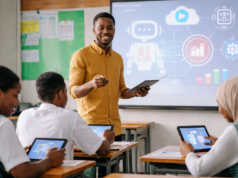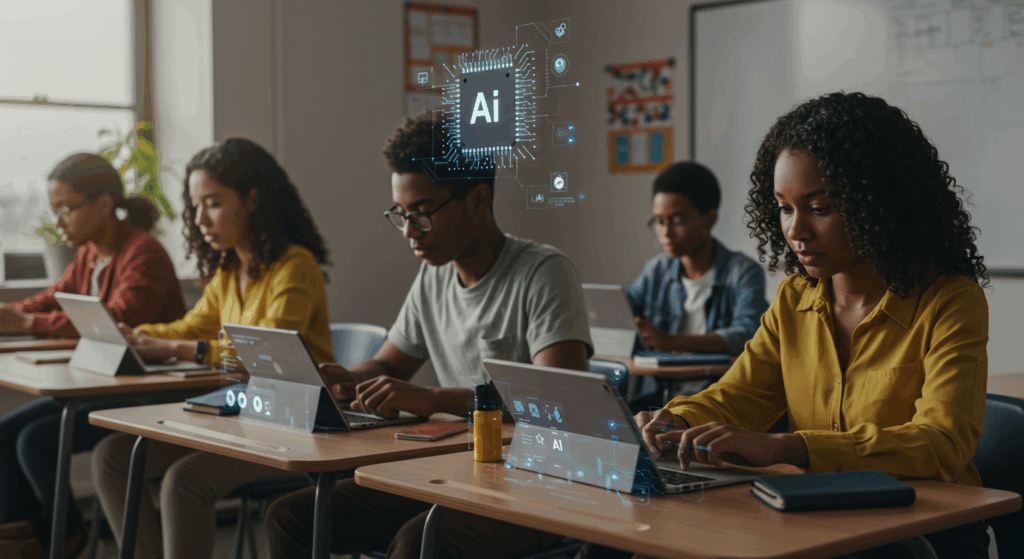
A quiet but powerful shift is unfolding across classrooms globally as major technology companies intensify efforts to embed artificial intelligence into everyday learning. What began as experimental tools has now evolved into a full-scale competition among global tech giants, each aiming to shape how the next generation learns, thinks, and interacts with knowledge.
From North America to Europe, Asia, and emerging education markets, artificial intelligence is no longer a distant concept. It is becoming a daily classroom companion. Companies such as Microsoft, Google, OpenAI, and Anthropic are investing heavily in tools that promise to personalise learning, automate administrative tasks, and enhance student engagement.
At the centre of this competition lies a simple but strategic goal. Whoever wins the classroom today is likely to influence the workforce of tomorrow. As a result, schools have become the newest battleground in the global AI race.
The Global Push to Integrate AI into Learning
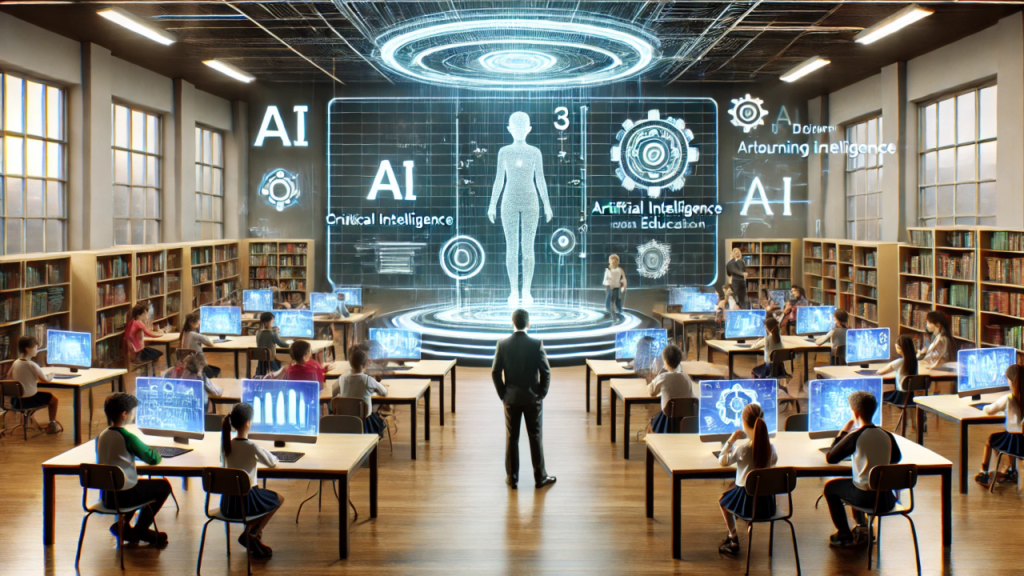
Across continents, the adoption of AI in education is accelerating at a pace few anticipated just a few years ago. Governments, private institutions, and technology firms are working together to deploy AI-powered tools in both basic and advanced education systems.
In countries like Estonia, national programmes are already placing AI tools directly into the hands of thousands of students and teachers, signalling a future where digital intelligence becomes as essential as textbooks. Meanwhile, similar initiatives are unfolding in regions such as the Middle East and Asia, where AI platforms are being integrated into school systems to enhance teaching and learning outcomes.
For technology companies, the classroom offers more than just a testing ground. It provides early access to users at a formative stage of development. By introducing students to specific AI platforms early, these firms are effectively building long-term familiarity and loyalty.
This strategy explains why companies are not only offering tools but also funding infrastructure and training programmes. Microsoft alone has committed billions of dollars towards expanding AI education and digital skills globally, with a focus on preparing millions of learners for the future workforce.
At the same time, collaborations between tech companies and education organisations are increasing. These partnerships aim to ensure that AI tools are not just available but also effectively used within classrooms.
Teachers at the Centre of the Transformation
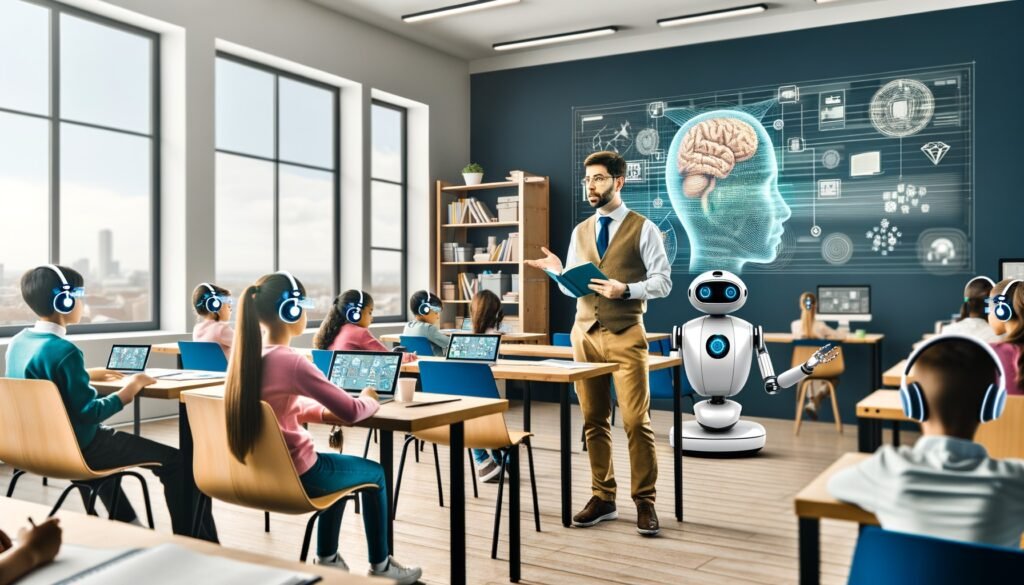
While much of the attention is on students and technology, teachers remain at the heart of this transformation. Without proper training and support, even the most advanced tools can fail to deliver meaningful impact.
Recognising this, major tech firms are investing millions of dollars in teacher training initiatives. Programmes are being developed to help educators understand how to integrate AI into lesson planning, assessment, and classroom management.
These initiatives are not just about technical skills. They also address concerns around ethics, data privacy, and responsible use of AI. Teachers are being encouraged to see AI not as a replacement but as a support system that can enhance their effectiveness.
In practical terms, AI tools are already changing how teachers work. Tasks that once took hours, such as grading assignments or preparing lesson materials, can now be completed in minutes. AI can generate customised content for students at different learning levels, translate materials into multiple languages, and even create interactive learning experiences.
However, this shift has also raised important questions. Some educators worry about over-reliance on technology and the potential loss of critical thinking skills among students. Others are concerned about job security, although most experts agree that AI is more likely to augment teaching rather than replace it.
The balance between embracing innovation and preserving the human element of education remains a key challenge.
Opportunities and Risks for Africa and Nigeria
For countries like Nigeria and others across Africa, the rise of AI in classrooms presents both a significant opportunity and a complex challenge.
On one hand, AI has the potential to address longstanding issues in the education sector. With large class sizes, limited teaching resources, and uneven access to quality education, AI tools could help bridge gaps by providing personalised learning experiences at scale.
Students in remote or underserved areas could benefit from AI-driven platforms that deliver high-quality educational content without the need for extensive physical infrastructure. Teachers could also gain access to resources and training that were previously unavailable.
On the other hand, there are concerns about accessibility and equity. The deployment of AI tools often depends on reliable internet access, electricity, and digital devices, all of which remain inconsistent in many parts of Nigeria and the broader African continent.
There is also the issue of data privacy and control. As global tech companies expand their presence in local education systems, questions arise about who owns student data and how it is used.
Furthermore, experts warn that the rapid introduction of AI without adequate policy frameworks could widen existing inequalities. Schools with better funding and infrastructure may adopt these technologies faster, leaving others behind.
Despite these challenges, the potential benefits are difficult to ignore. If implemented thoughtfully, AI could play a transformative role in reshaping education across Africa.
The Future of Learning in an AI-Driven World
The race among big tech firms to dominate AI tools in classrooms is more than a technological competition. It is a defining moment for the future of education.
Artificial intelligence is gradually shifting the focus from one-size-fits-all teaching methods to more personalised and adaptive learning experiences. Students can learn at their own pace, receive instant feedback, and access a wide range of resources tailored to their needs.
At the same time, the role of teachers is evolving. Rather than being the sole source of information, educators are becoming facilitators, guiding students in how to use technology effectively and think critically about the information they receive.
However, the success of this transformation will depend on how well key challenges are addressed. Issues such as digital inequality, ethical use of AI, and the preservation of human interaction in learning must remain at the forefront of discussions.
For Nigeria and other developing nations, the priority should not be to adopt AI blindly but to do so strategically. Investments in infrastructure, teacher training, and policy development will be essential to ensure that the benefits of AI are widely shared.
As the competition among tech giants intensifies, one thing is clear. The classroom is no longer just a place for learning traditional subjects. It is becoming a gateway to the future, shaped by algorithms, data, and innovation.
And in this new reality, the decisions made today will determine how the next generation learns, works, and contributes to society.
Join Our Social Media Channels:
WhatsApp: NaijaEyes
Facebook: NaijaEyes
Twitter: NaijaEyes
Instagram: NaijaEyes
TikTok: NaijaEyes