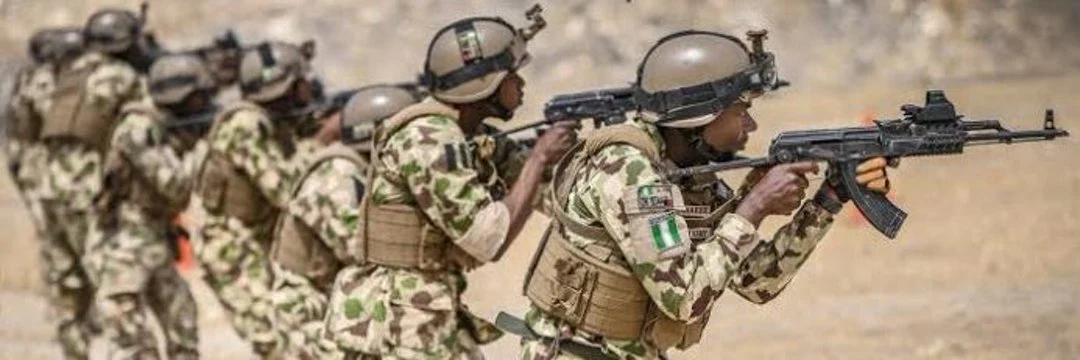

Troops of the 1 Brigade Nigerian Army have successfully cleared the Bagega–Anka major supply route in Zamfara State of explosive threats, restoring safe passage for commuters and motorists.
Security analyst Zagazola Makama disclosed the development in a post on X, noting that the operation was carried out around 9:30 a.m. on July 2.
According to him, the exercise involved troops of the brigade working alongside a Quick Response Force (QRF) and an Explosive Ordnance Disposal (EOD) team.
The operation reportedly focused on a detailed route clearance along the Bagega–Anka Main Supply Route in Anka Local Government Area, with the aim of detecting and neutralising improvised explosive devices (IEDs) and other explosive materials that could pose threats to road users.
Following the operation, the route was declared safe and reopened for vehicular movement.
Zagazola also revealed that during the clearance exercise, troops recovered a Nigeria Police Counter-Terrorism/Counter-Strike (NP CSK) vehicle that had recently been damaged after hitting an improvised explosive device on the same road.
He added that the operation was completed successfully without any casualties among the troops.
According to him, the route clearance is part of ongoing counter-insurgency and anti-banditry efforts aimed at improving safety for residents, security personnel, and travellers using strategic roads across Zamfara State.
Zamfara State has remained one of the states most affected by banditry, armed attacks, and roadside explosives in recent years, with several communities and key transport routes repeatedly targeted by criminal groups.
Strategic roads linking local government areas such as Anka, Bagega, and surrounding communities have often been vulnerable to attacks, ambushes, and the planting of improvised explosive devices, posing serious threats to both civilians and security personnel.
In response, Nigerian security forces have intensified counter-banditry operations across the state, carrying out regular patrols, route clearance missions, and intelligence-led operations aimed at securing major supply routes and restoring confidence among residents.
The latest operation forms part of these wider efforts to improve movement, strengthen security presence, and reduce the risks faced by travellers and communities in the troubled region.