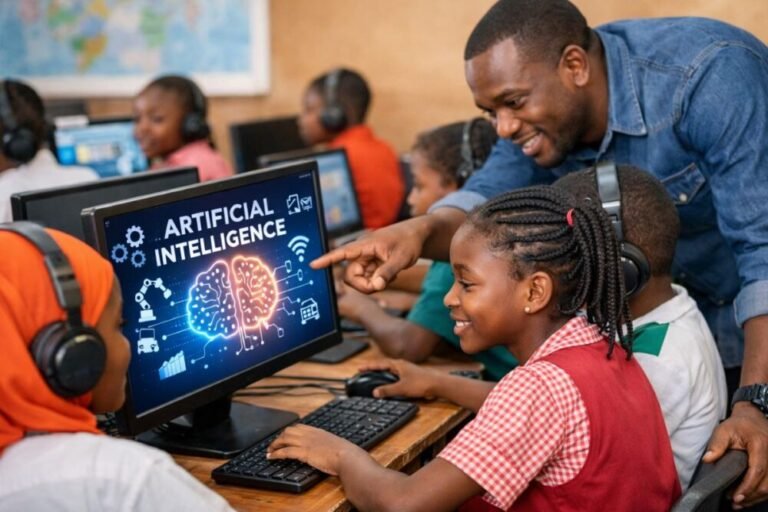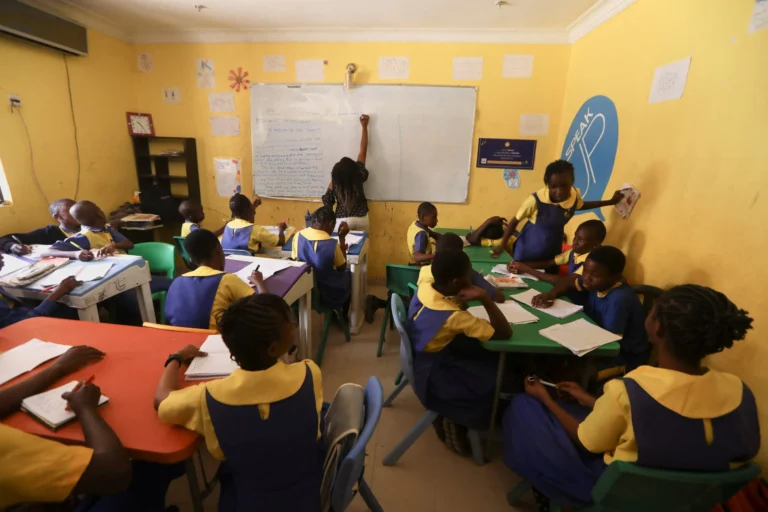

Artificial intelligence could make science lessons easier for millions of Nigerians who understand everyday explanations in Pidgin English better than formal academic English. But there is a critical question: when an AI chatbot explains gravity, electricity or the human body in Naija, does it communicate the science correctly, or does it simply produce a convincing answer?
The concern is not just whether chatbots can speak Pidgin. It is whether they understand its Nigerian varieties well enough to explain scientific concepts without confusing learners. Research published in 2025, titled Does Generative AI Speak Nigerian-Pidgin?, highlights a significant weakness in how language models handle this widely spoken language.
The researchers found that Nigerian Pidgin, also known as Naija, is not linguistically identical to West African Pidgin English. Their analysis suggests that generative AI systems tend to operate more effectively with the latter variety, raising questions about how reliably these tools serve Nigerian users.
For students, teachers and parents, the distinction matters. An explanation can sound natural while still using unfamiliar expressions, misrepresenting a concept or failing to match the language a learner understands.
Also Read: India’s Technology-Driven Examination Reforms Offer Fresh Lessons for WAEC, NECO and JAMB
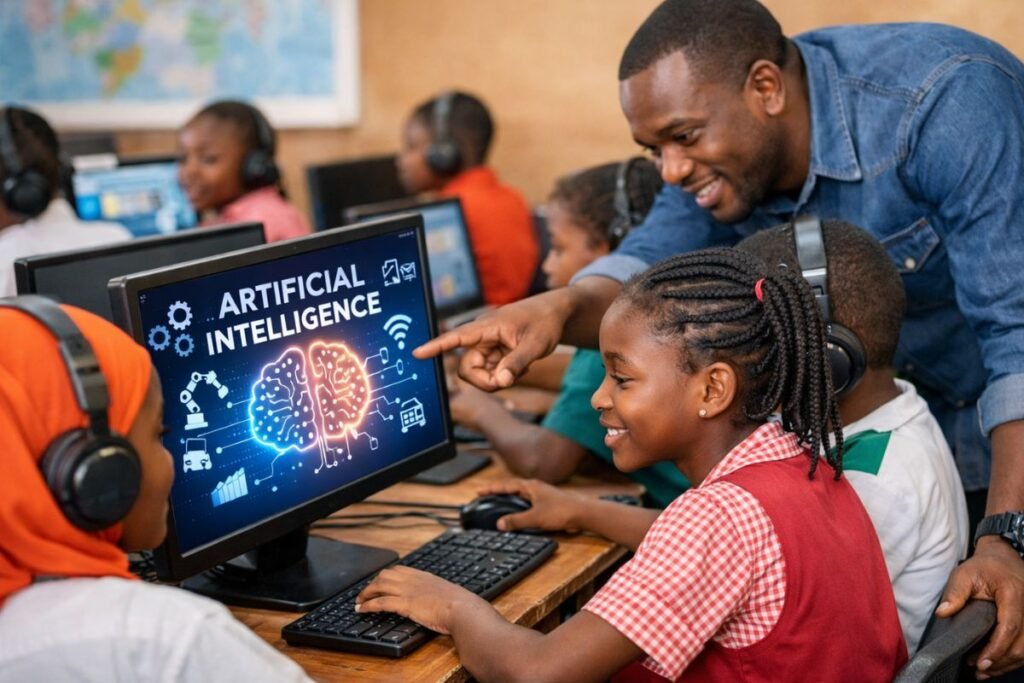
Why Nigerian Pidgin Matters in Science Education
Nigeria is a multilingual country, and English remains the principal language of formal education. However, many people use Pidgin in everyday conversations, markets, homes and informal learning environments. For some students, it offers a familiar starting point for understanding difficult subjects.
Consider a lesson on evaporation. A teacher might explain that water changes into vapour when it gains enough energy. An AI chatbot could reinforce the explanation with a simple Pidgin example involving wet clothes drying under the sun. Such an illustration could help a student connect an unfamiliar scientific term to an everyday experience.
This is where AI-assisted learning has potential. Instead of repeating a textbook definition, a chatbot can provide alternative explanations, examples and follow-up answers based on a student’s questions.
However, translation alone is not enough. Scientific explanations must preserve the meaning of important terms, distinguish everyday observations from scientific processes and avoid introducing errors while simplifying the language.
A 2025 study on AI in Nigerian science education found that educators recognised the potential of AI to support teaching, while identifying infrastructure, budget and professional development as major implementation challenges. Language accuracy adds another issue that schools must address before adopting AI more widely.
Can AI Become a Reliable Learning Assistant?
The practical solution is not to abandon AI, but to use it with clear safeguards. A chatbot can be asked to explain a scientific concept in Nigerian Pidgin, provide the equivalent Standard English terminology and give an example drawn from daily Nigerian life. Teachers can then review the response before sharing it with students.
For instance, when explaining electrical circuits, an AI tool should distinguish between current, voltage and resistance rather than treating them as interchangeable ideas. The explanation should be accessible without sacrificing scientific accuracy.
There is encouraging evidence that AI can support learning in Nigeria. A World Bank working paper published in 2025 examined an AI-assisted tutoring programme involving first-year senior secondary school students. The intervention produced measurable improvements in English learning and broader assessments. However, the findings do not establish that AI explanations in Nigerian Pidgin are accurate or that the same results would follow from using Pidgin for science lessons.
That distinction deserves attention. Success in one educational setting does not automatically prove effectiveness in another.
Schools should also consider internet access, the cost of devices and the availability of teachers who can evaluate AI-generated material. Without these safeguards, technology intended to widen educational access could leave disadvantaged learners with misleading explanations.
Back Story: The Language Problem Behind AI Learning
The debate about AI and Nigerian Pidgin reflects a wider challenge in artificial intelligence: whose language does the technology understand best?
In their research on Nigerian Pidgin and generative AI, David Ifeoluwa Adelani and his co-authors examined linguistic representation and bias in large language models. Their findings showed that Nigerian Pidgin and West African Pidgin English have differences in vocabulary and word order that cannot simply be ignored.
This matters because AI systems learn patterns from the data used to train them. When particular language varieties are underrepresented, their speakers may receive less reliable responses than people using more widely represented languages.
For Nigeria, the opportunity is to develop educational AI that reflects local expressions, classroom realities and the country’s linguistic diversity. Researchers, teachers and fluent Pidgin speakers can work together to evaluate explanations, correct mistakes and build dependable learning resources.
Ultimately, AI may become a valuable companion in Nigerian science education, but fluency should never be mistaken for expertise. Students deserve explanations they can understand, and teachers need tools they can trust. Until Nigerian Pidgin science responses are properly tested, human oversight remains essential.
Also Read: Five UNIMED Academics Make the 2026 List of the World’s Top 2% Scientists