
The Federal Government’s Presidential Fertiliser Initiative (PFI) has assured Nigerian farmers that there is no cause for concern over fertilizer shortages or rising costs.
According to him, the Tinubu administration placed advance orders and secured fertiliser at lower prices before the recent crisis in Iran, helping to cushion the impact of disruptions currently affecting several countries.
He added that Nigeria’s fertiliser supply for the 2026 wet season has already been secured, with the country also saving over $42 million through early planning ahead of peak demand.
Takang explained that rising global tensions have disrupted key shipping routes, leading to higher freight charges and increased prices of fertiliser inputs such as Granular Ammonium Sulphate (GAS), Diammonium Phosphate (DAP), and Muriate of Potash (MOP).
He noted that these challenges have created supply gaps in many markets, raising concerns about availability and pricing ahead of the planting season.
According to official Q1 2026 procurement and shipment data, the Federal Government, through the PFI, secured nine vessels carrying a total of 407,304 metric tonnes of fertiliser raw materials.
This brings the total available supply to 534,219 metric tonnes, including opening stock for the 2026 cycle, for NPK fertiliser production.
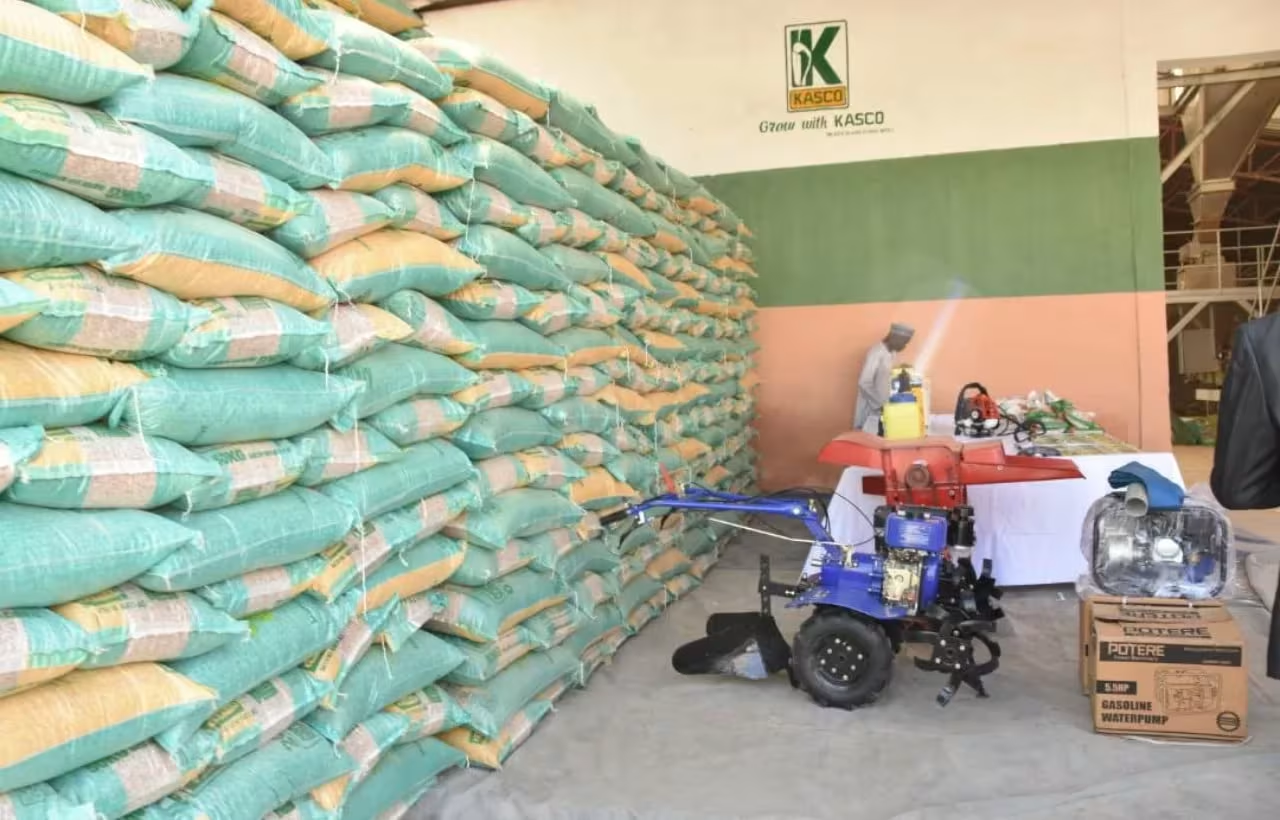
The data also shows that by mid-April 2026, over 323,109 metric tonnes (about 6.5 million 50kg bags) had been released to blending plants nationwide, while over 198,264 metric tonnes (about 4 million bags) had already been distributed.
Takang said the government deliberately moved early to secure supply, lock in prices, and put financial arrangements in place to avoid exposure to global market disruptions.
He added that this proactive strategy has ensured Nigeria remains insulated from current global fertiliser shortages.
Financial records further show that the early procurement approach saved the country about $43.99 million, equivalent to approximately N61.58 billion, compared to prevailing global market prices.