
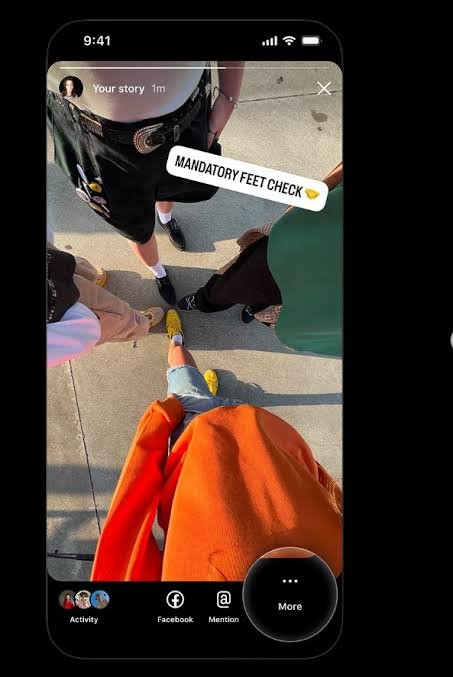

Instagram has introduced a 15-minute window for editing certain elements of a Story after publication, allowing users to correct mistakes without deleting the post and losing its engagement.
Instagram head Adam Mosseri announced the change on November 18. Users can edit text, music, stickers and drawings for up to 15 minutes after sharing. Views, likes, and replies remain attached to the Story. To access the tool, open the published Story, tap the three-dot menu and select “Edit Story”. Mosseri announced the update on Instagram, with further reporting from The Verge and Gizmodo.
The update matters to creators and businesses that use Stories for quick announcements. A seller can correct a price written over a product image, while an event promoter can fix a typo without removing the original Story.

What Users Can and Cannot Change
Mosseri’s announcement identifies four editable elements: text, music, stickers and drawings. It does not include replacing the underlying photograph or video. Someone who uploads the wrong product image or clip should not expect to swap the main visual through this feature.
Gizmodo reports that an edited Story carries an “Edited” label. This matters because some viewers may have seen the first version before a correction. The 15-minute limit also means users must spot and address mistakes quickly.
The feature is rolling out, so the absence of an “Edit Story” option does not necessarily indicate an account problem. Reports identify restrictions for some Stories, including content shared to Facebook or containing certain interactive stickers, according to PCMag’s reporting.
Also Read: LG Expands ‘Make Life Good’ Reality Series to Spotlight Innovation Across Africa
What the Change Means for Nigerian Businesses
For Nigerian vendors using Stories to announce prices, delivery arrangements or limited-time offers, the tool provides an opportunity to correct text without discarding the engagement already collected. Publishers and event organisers can make similar corrections to names, dates or venue details.
But preserving engagement is not the same as notifying every viewer. If an edit affects a price, deadline or venue, a business should consider publishing a follow-up Story that clearly identifies the correction. Customers should confirm important transaction details directly with sellers before paying.
Social media managers also face a measurement issue. Since a Story can retain views, likes and replies after its content is edited, the final version may not be what every viewer originally saw. Teams assessing campaign performance should record significant corrections rather than treating the engagement figures as proof that everyone saw the same information.
Back Story: A Change to a Format Built for Quick Updates
Instagram launched Stories in August 2016 as a way to share photos and videos in a sequence that disappeared after 24 hours. Until this update, correcting a published Story generally required deleting and uploading it again.
The November 18 announcement changes that workflow, not the format’s purpose. It gives users a brief correction period while preserving existing engagement. The narrow time limit and four specified edit categories mean checking details before publication remains important.
For Nigerian creators and businesses, the practical gain is useful: some mistakes can now be corrected without starting the Story again.
Also Read: Facebook, Instagram Hit by Global Outage, Leaving Millions Locked Out of Their Accounts