In a development that has captured the attention of investors, tech leaders and analysts around the world, American social media and technology giant Meta Platforms has signed an extraordinary deal with semiconductor manufacturer Advanced Micro Devices. The agreement, recently announced, commits Meta to purchasing up to six gigawatts of AMD’s newest artificial intelligence chips over the next several years. The scale of the contract is eye-popping and has sent waves through global markets, particularly in the United States.
The terms of the arrangement are significant in both volume and value. Meta will take delivery of these powerful processors, known as AMD Instinct MI450 GPUs, which are designed specifically to power AI workloads and inference processes in large data centres. Under the plan, shipment of the first one gigawatt of computing power will begin later this year, with the full six gigawatts expected to be deployed over five years. Industry estimates now place the total value of the contract somewhere between sixty billion and one hundred billion dollars, reflecting both the size of the order and the anticipated demand for AI infrastructure.
In a strategic twist, as part of the deal, Meta has also been granted performance-based equity warrants that allow it to acquire up to ten percent of AMD’s shares. These warrants are tied to milestones in production and deployment of the chips, and only vest if AMD meets agreed stock performance and hardware shipment goals. This structure aligns the two companies, ensuring that Meta’s long-term success with the deployment feeds directly into AMD’s own growth prospects, according to mint.
Wall Street reacted swiftly to the news. Shares in AMD climbed strongly in trading following the public announcement, with gains of nearly nine percent recorded at the close of markets. The jump reflected renewed confidence among investors that AMD is now positioning itself as more than just a secondary option behind the long-dominant Nvidia. Even before this announcement, AMD had been gaining traction through other major deals in the AI space, but this agreement with one of the largest technology companies in the world marks perhaps the boldest statement yet of its ambitions.
Meta’s stock price on the day of the announcement was relatively flat or marginally lower, a pattern that reflects mixed sentiment among market watchers. While some see the deal as a strategic move to diversify Meta’s supply chain, others view the performance-based warrants and the potential dilution of AMD shares as points of caution. Despite these concerns, the deal signals a new era of intense competition in the AI hardware market, where demand for powerful chips continues to grow as companies race to build and operate advanced AI systems.
What This Means for AMD and Nvidia
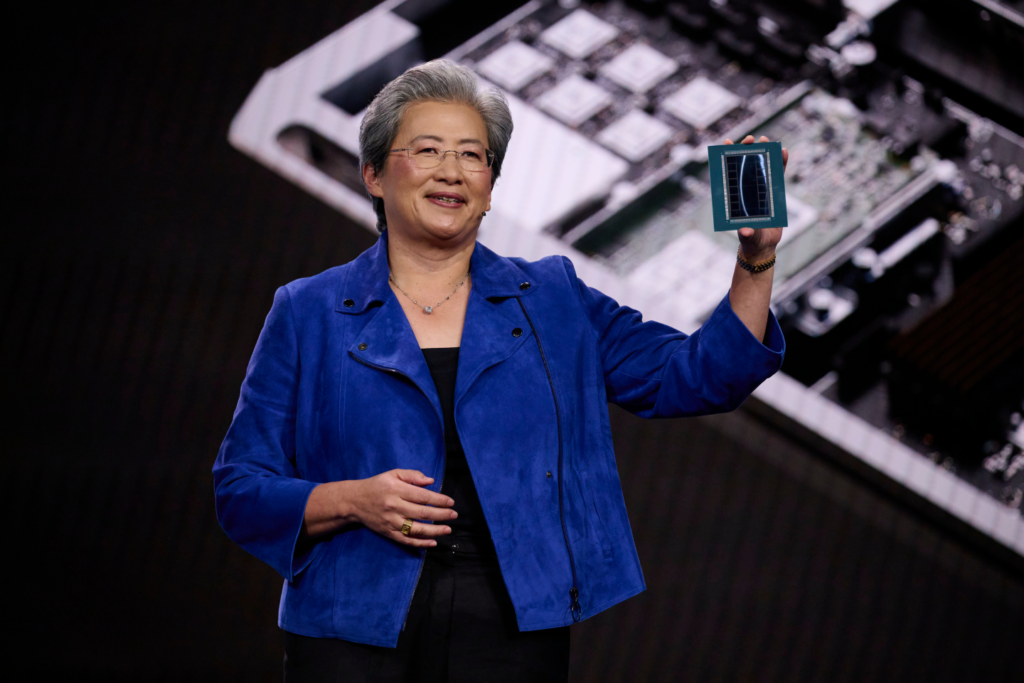
For AMD, the announcement was nothing short of a milestone. Under the leadership of CEO Lisa Su, the company has spent years trying to close the gap with Nvidia, the long-recognised leader in GPUs that power both gaming and artificial intelligence systems. The renewed commitment from a major AI user such as Meta demonstrates a rising level of confidence in AMD’s ability to deliver technology that can stand toe to toe with the best offerings in the industry.
Industry insiders describe this as a turning point for AMD’s prospects in the AI market. Historically, Nvidia has held a dominant position due to its early investments and extensive ecosystem of software and hardware designed for building and training complex machine learning models. AMD’s spot in the market has been growing, but this deal gives it a major platform to prove its capabilities at scale with one of the most demanding users in the world.
The specific technology in focus here, the MI450 GPU, is built to handle inference workloads effectively. Inference refers to the part of AI processing where trained models are used to make decisions or generate outputs. This is a critical function in data centres, where the speed and energy efficiency of chips can make a direct difference to costs and performance. That is why Meta’s choice of AMD technology is being watched closely by other potential customers.
Meanwhile, Nvidia remains a central figure in the narrative. Around the same time as this AMD news broke, Nvidia was preparing to release its own quarterly earnings figures. Wall Street analysts and investors were already watching the company’s results eagerly, as Nvidia continues to generate massive revenue from its data centre AI chips and GPU platforms. NVIDIA’s own partnerships with Meta continue, with multi-year supply agreements in place to deliver GPUs and other hardware for Meta’s data centre expansions.
This dual supply arrangement, where Meta works with both AMD and Nvidia, highlights a broader trend in the AI ecosystem. Large technology companies are increasingly choosing to diversify their hardware suppliers to avoid over-reliance on a single source. This approach reduces risk, increases bargaining power, and encourages competitors to innovate faster. Investors have noted that Nvidia’s earnings remain robust, but the rising challenge from AMD and the growing complexity of supply relationships could change competitive dynamics in the years ahead.
Financial analysts are now watching both companies closely as they navigate this shifting landscape. For AMD, securing these long-term contracts with major AI builders is a major validation of its technology and strategy. For Nvidia, the challenge is to maintain its leadership by building on its strong performance and developing even more advanced and efficient hardware that keeps pace with growing demand.
Reactions in the US Stock Markets
The response from investors in US stock markets was immediate and pronounced. On the day the news broke, AMD’s share price surged nearly nine percent, a reflection of broad optimism about the company’s commercial prospects. Trading volumes were heavy as both institutional and retail investors took positions based on the potential long term value of the Meta contract.
NVIDIA’s share price experienced a slight dip in the same trading session, a reaction that reflects short term market sensitivity rather than a judgment about the company’s long term health. NVIDIA remains the largest chip maker by market capitalisation, and its products continue to dominate the AI training and inference markets. Even dealers who trade Nvidia’s stock expect that its earnings report will demonstrate solid topline growth and strong demand from cloud service providers and enterprise data centres.
Market experts say that part of the reason for AMD’s stock rally is not just the headline value of the contract. The structure of the warrants, which could see Meta take a meaningful ownership stake in AMD if milestones are achieved, creates narrative and financial incentives that many investors find attractive. At the same time, some caution remains among investors due to the performance-based nature of these warrants and uncertainty about when and how quickly the chip shipments will materialise.
There are also broader questions about how the infusion of AI hardware demand will shape the semiconductor industry in the long run. Some market watchers view the current market conditions as a hyper-growth phase, where technology companies are placing unprecedented orders ahead of actual deployment. Others warn that there could be risks if too many companies bet on oversized projections of demand. These debates will likely continue as further earnings reports and contract details become public in the coming months.
What This Means for the Future of AI Infrastructure
For businesses and governments watching these developments, the implications go beyond share prices and quarterly earnings. The rapid scaling of AI infrastructure by global technology leaders such as Meta shows how central artificial intelligence has become to strategies for growth and competitive advantage. Data centres powered by advanced GPUs are now fundamental to running large language models, visual recognition platforms, recommendation engines and other AI-driven services used by millions of people every day.
In Nigeria and across Africa, interest in AI is also growing. Companies, universities and startups are increasingly seeking ways to leverage artificial intelligence to solve local challenges, from healthcare diagnostics to agricultural forecasting. While the large-scale contracts being signed by Meta and AMD may seem distant from local markets, they show the speed at which the technology is advancing and how investment flows towards bigger and more efficient AI systems. In time, this will have ripple effects on global tech accessibility, skills development and the way local tech ecosystems prioritise training and infrastructure development.
For tech professionals, investors and students, staying informed about these developments is now more important than ever. AI technology is reshaping whole industries, and understanding how chip supply, hardware innovation and corporate strategy are evolving will be key to making smart decisions, whether in careers or in financial planning.
In conclusion, the combination of a massive AI chip contract between Meta and AMD and the anticipation surrounding Nvidia’s latest earnings report illustrates just how dynamic and competitive the artificial intelligence hardware market has become. The deal is a bold strategic move for both companies, promising strong revenue streams and signalling a new era of diversified partnerships in the global technology landscape.
Join Our Social Media Channels:
WhatsApp: NaijaEyes
Facebook: NaijaEyes
Twitter: NaijaEyes
Instagram: NaijaEyes
TikTok: NaijaEyes