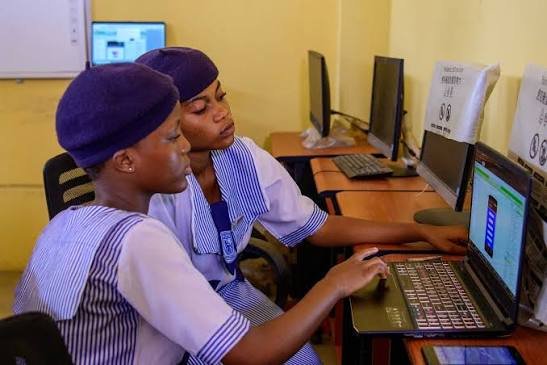

Nigeria’s efforts to widen access to quality education are gaining momentum as the Nigeria Learning Passport (NLP) reaches millions of learners across the country, giving pupils and teachers new ways to access educational resources beyond traditional classrooms.
The digital learning initiative, implemented by the Federal Government in partnership with the United Nations Children’s Fund (UNICEF) and other stakeholders, provides curriculum-aligned lessons through online and mobile platforms, with offline learning options also available.
According to a report published by Tribune Online on October 21, 2026, the programme has expanded across 26 states, with more children gaining access to digital learning materials. The report also highlighted the platform’s growing role in supporting classroom instruction and helping young people develop practical digital skills.
The expansion comes at a time when Nigeria continues to grapple with unequal access to quality education, particularly in underserved communities where inadequate learning facilities, limited internet connectivity and the cost of educational resources can prevent children from reaching their full potential.
Also Read: AI Computing Shortages Are Reshaping the Global Technology Industry
Nigeria Learning Passport Expands Access to Digital Learning
The Nigeria Learning Passport is designed to make learning more accessible by providing educational content that pupils can use at school or at home. Its resources cover pre-primary, primary and secondary education, giving learners access to lessons and supplementary materials aligned with the Nigerian curriculum.
According to UNICEF Nigeria, the platform offers thousands of educational resources, including interactive lessons, digital textbooks and self-paced learning modules. Its content covers core subjects such as Mathematics, English, Science and Social Studies.
The platform supports learning in English, Hausa, Igbo and Yoruba, helping accommodate learners from different linguistic backgrounds.
Its combination of digital and offline learning options is particularly important in communities where reliable internet access remains a challenge. Learners can use compatible devices to access available resources, while teachers can incorporate digital materials into their classroom activities.
Recent reports also indicate that the programme has surpassed 2.5 million registered students, alongside nearly 100,000 registered teachers. These figures point to growing adoption, although registration numbers alone do not establish how frequently learners use the platform or how much their academic performance improves.
Free Access and Teacher Training Drive Adoption
Beyond providing learning materials, the initiative relies on partnerships to address the cost of connectivity and improve teachers’ ability to use technology effectively.
A Punch report published on October 21, 2026 said UNICEF, Airtel Africa and the Federal Government had expanded digital learning and skills development initiatives to nearly 2,000 schools, reaching about one million students and more than 20,000 teachers.
The report also noted that more than 19,000 teachers had received digital literacy training under the partnership. Selected educational platforms benefit from zero-rated data access, allowing eligible users to access approved learning content without paying the usual data charges for that access.
These measures are important because distributing digital learning materials alone cannot guarantee better education. Teachers need the skills to integrate technology into lessons, while students need suitable devices, electricity and dependable access to educational content.
The initiative also connects digital education with wider opportunities for young people. Related programmes, including Passport to Earning and the Youth Agency Marketplace, support the development of employability, entrepreneurship and digital skills that can help young Nigerians prepare for further education and work.
Back Story of the Nigeria Learning Passport
The Nigeria Learning Passport was officially launched on March 24, 2022, by the Federal Government, UNICEF and development partners to help children continue learning regardless of their location or circumstances.
At its launch, the programme aimed to provide continuous education to three million learners in 2022 and reach 12 million by 2025. The initiative emerged partly in response to the disruption caused by the COVID-19 pandemic, which exposed the difficulties many Nigerian children faced when schools closed.
According to UNICEF’s original announcement, the platform was developed to support pre-primary, primary and secondary education, including children in remote communities and those affected by emergencies.
By June 2024, the Nigeria Learning Passport had reached one million subscribers. Subsequent expansion efforts, including partnerships supporting internet access, teacher training and the provision of digital devices, have helped increase its reach.
The programme now forms part of broader efforts to improve digital inclusion and strengthen Nigeria’s education system. However, its long-term success will depend on sustained investment, effective implementation and ensuring that children who face the greatest barriers to education can benefit.
As the initiative expands, the priority should be to turn access into meaningful learning outcomes. Reaching millions of pupils is an important milestone, but improving literacy, numeracy, digital competence and classroom participation will ultimately determine its lasting value to Nigerian children.
Also Read: M-KOPA Reaches 10 Million Customers as Revenue Rises 45% to $600 Million