
South Africa is positioning itself for a bigger role in Africa’s artificial intelligence economy, but a proposed hyperscale data centre in the Coega Special Economic Zone is bringing a difficult question into focus: can the country’s power infrastructure support the rapid growth of AI without creating new pressure on the electricity system?
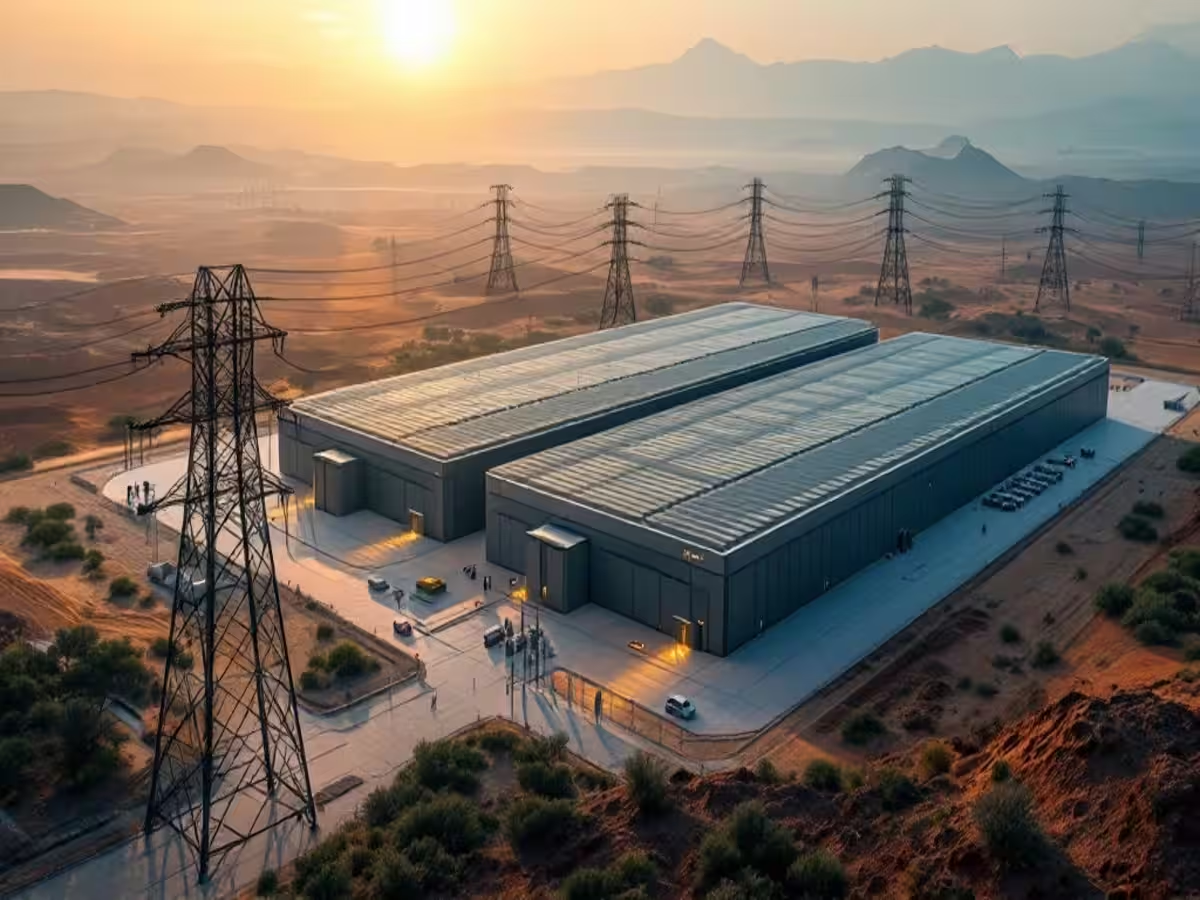
Vexa Infrastructure has presented plans for a major data centre campus at Coega in Nelson Mandela Bay, with electricity requirements that could eventually reach 556 megawatts (MW). The company told the Nelson Mandela Bay municipal council that the project would not be commercially viable if it had to purchase electricity through the municipality. Instead, it wants to become a direct Eskom customer. The Herald reports that the council has approved the proposal in principle, although further discussions and agreements are still required.
The proposed development could bring substantial economic benefits. Vexa estimates that the project could generate about 34,800 construction job-years over six years, create approximately 500 permanent jobs and contribute an estimated R895 million a year in municipal property rates.
For South Africa, however, the size of the electricity requirement makes this more than another property or technology investment story. It is becoming a test of how prepared the country’s infrastructure is for the AI economy.
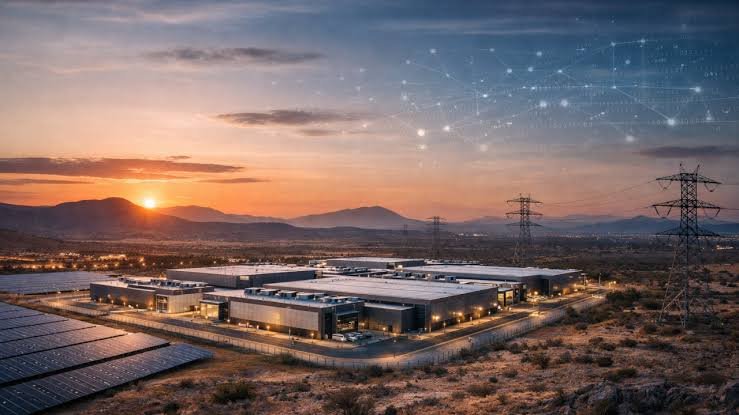
Why AI Data Centres Are Becoming an Energy Challenge
AI systems depend on powerful computing equipment that needs large amounts of electricity to operate and cool. As companies deploy more AI applications, demand for data centre capacity is increasing rapidly across the world.
South Africa is already Africa’s largest data centre market, with the country accounting for roughly 70% of the continent’s data centre infrastructure, according to recent reporting on the sector.
The country’s data centre electricity requirements are also expected to grow sharply. A Development Bank of Southern Africa study estimates that installed IT load capacity could increase from 435MW in 2024 to 829MW by 2029, representing annual growth of 17.5%. ITWeb reported that inaccurate forecasting could create additional risks for the electricity system.
Against that background, a single proposed facility requiring up to 556MW is significant.
The challenge is not necessarily that South Africa has no electricity available. Eskom says the power system has improved considerably, with better generation availability and lower unplanned outages. The utility has also reported periods of surplus capacity. Eskom’s latest operational updates point to continued improvements in system reliability.
The bigger issue is whether generation, transmission infrastructure and local grid connections can expand quickly enough to accommodate new industrial-scale digital loads.
Also Read: MTN Targets Nigeria for AI Data Centres as Africa Enters a New Computing Era
Water and Infrastructure Add to the Concern
Electricity is only one part of the discussion surrounding the Coega project. Data centres also require substantial cooling infrastructure, which can create additional pressure on water resources.
This is particularly sensitive in Nelson Mandela Bay, where water security has remained a major concern. During the council discussion, questions were raised about the proposed facility’s water requirements.
Vexa said it plans to use seawater for cooling its graphics processing units rather than relying on municipal drinking water. The coastal location of Coega is therefore an important part of the company’s infrastructure strategy, according to The Herald’s report on the council presentation.
The concerns come as South Africa’s expanding data centre industry faces wider scrutiny over electricity, water, environmental impact and land use. The South African Human Rights Commission investigation reported by ITWeb is examining the human rights implications of the country’s growing digital infrastructure footprint.
This suggests that future data centre developments will increasingly be judged not only by the investment and jobs they bring, but also by their effect on surrounding communities and public infrastructure.
Back Story: South Africa’s AI Ambition Meets an Infrastructure Reality
South Africa has strong reasons to pursue the data centre opportunity. Its international submarine cable connections, established technology ecosystem and relatively developed digital infrastructure give it an advantage in attracting cloud and AI investment.
Eskom is also actively courting major technology companies as it seeks to benefit from increased electricity demand from the data centre sector. The Financial Times reported that Eskom is targeting the country’s data centre boom as it looks for major new customers.
Government is simultaneously trying to reform the electricity sector. President Cyril Ramaphosa endorsed plans in July for an independent transmission system operator, with the government saying the reform should improve investment, competition and energy security. The South African government said the new structure is intended to support reliable and cost-effective electricity.
That reform could become increasingly important as AI infrastructure expands.
The Coega proposal therefore represents both an opportunity and a warning. South Africa could attract billions of rand in investment and strengthen its position as an African AI hub. But the country must ensure that new data centres have reliable, sustainable power without undermining the infrastructure needed by homes, manufacturers and other businesses.
The AI race may be digital, but its foundation remains physical. For South Africa, the ability to generate and deliver enough reliable electricity could ultimately determine how far its AI ambitions can go.
Also Read: Africa’s AI Future Hinges on Power Supply More Than Smart Algorithms, IMF Warns