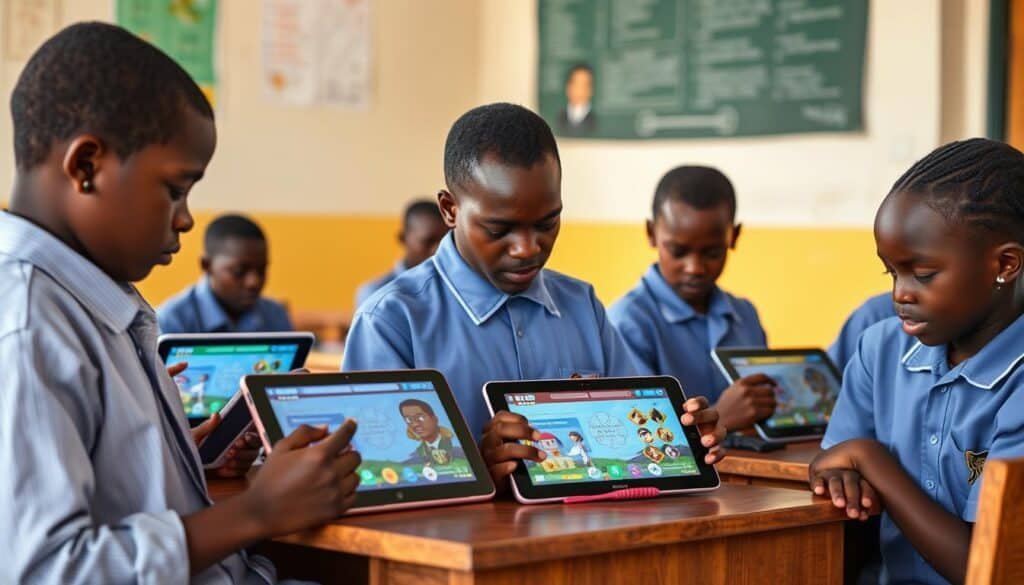

Artificial intelligence is entering African classrooms through chatbots, adaptive learning platforms, automated marking and research tools. It can explain concepts to students and help teachers prepare lessons. Yet its price extends beyond buying software.
The question is whether schools can use AI fairly and safely without diverting money from essentials or widening the gap between connected and under-resourced learners.
The infrastructure bill
AI learning depends on electricity, internet access, devices, maintenance, and sometimes paid subscriptions. UNESCO reported in September 2025 that only 40 per cent of schools in Africa had internet access. Its World Education Statistics 2024 report found electricity in just 32 per cent of primary schools in sub-Saharan Africa, compared with close to 80 per cent at secondary level.
A school with unstable power, few computers or costly data cannot offer the same experience as a well-equipped urban institution. The bill includes connectivity, equipment replacement, technical support and staff time. Without budgets for these recurring costs, AI benefits may concentrate in better-funded schools.
Also Read: Nigeria’s Private Schools Face Pressure to Prepare Teachers for AI Education
Teachers need training, not just tools
AI can help teachers prepare lesson plans and practice questions, but it can also generate false or biased answers. Educators need to check outputs and judge when a tool is suitable.
UNESCO’s 2024 AI Competency Framework for Teachers identifies 15 competencies across five areas, including ethics, AI foundations, pedagogy and professional learning. UNESCO noted that few countries had defined these competencies or developed national training programmes when the framework was published.
Buying licences without training leaves schools with tools but little capacity to use them responsibly. It may also add to teachers’ workload as they verify AI-generated material.
Student data is part of the price
Students may enter names, assignments and personal details into AI platforms. Schools should establish what providers collect, how long information is retained, who can access it and whether it is transferred abroad.
Nigeria’s Data Protection Act 2023 has specific provisions for children’s personal data. Section 31 requires parental or guardian consent where a controller relies on consent to process a child’s information, subject to stated exceptions. It also requires age and consent verification. Schools must assess providers and explain data practices before introducing classroom accounts.
Language, culture and control
AI trained mainly on dominant languages and online material may perform less reliably in African languages or overlook local knowledge. In April 2026, UNESCO reported that ChatGPT recognised only 20 per cent of written Hausa sentences in a study it cited. Its article does not detail the test method, so the figure is a warning about language coverage, not a universal score for all AI tools.
Back Story
The AI debate rests on an older digital divide. Unequal access to electricity, internet connectivity and devices existed long before generative AI became popular. UNESCO’s 2025 report identifies connectivity, capacity and cost as central considerations in the digital transformation of education.
An October 2025 paper by the European Centre for Development Policy Management identified infrastructure, hardware costs, privacy, child protection and bias as barriers to AI in African education. It also highlighted tension between commercial incentives and public education goals.
Before purchasing AI, schools should assess learning benefits, total costs, privacy, language performance and teacher readiness. Technology should complement teachers and public investment, not replace them.
Also Read: African Schools Need AI Education Policies Built for African Realities