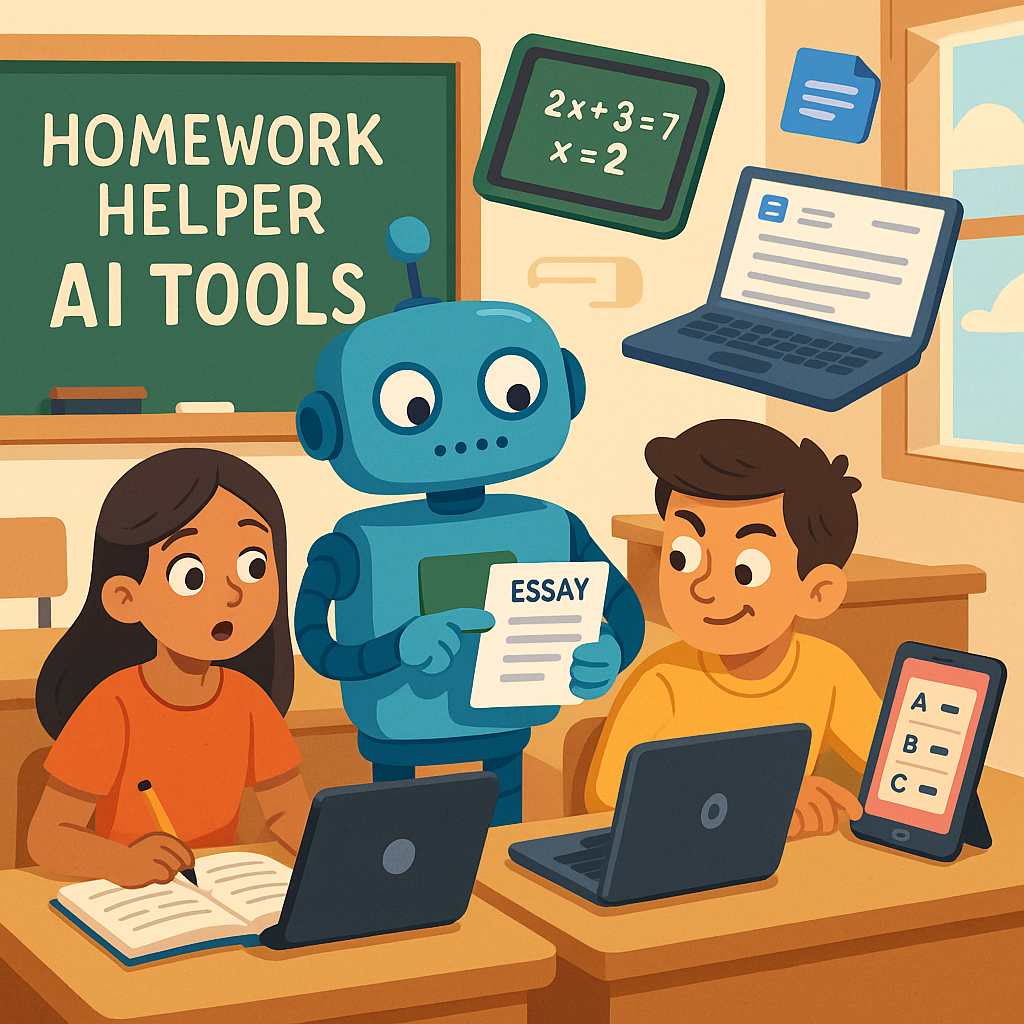
Artificial intelligence is changing the way children learn, and many pupils now turn to AI homework assistants before asking a teacher, parent or classmate for help. Whether it is explaining difficult Mathematics, summarising a long passage or helping with an essay outline, AI tools are becoming part of everyday education.
For many parents, this presents a difficult question. Should children be allowed to use these tools, or should they be kept away from them completely?
Education experts believe the answer lies somewhere in the middle. AI can support learning when used responsibly, but it can also weaken important skills if children become too dependent on it. Recent studies show that a growing number of young people now rely on AI for homework, making it more important than ever for families to understand both the opportunities and the risks.
Instead of treating AI as either a miracle solution or a dangerous threat, experts encourage parents to see it as another digital tool that requires supervision, guidance and healthy boundaries.
Also Read: Why Schools Should Lead AI Education Instead of Banning Technology
Why Parents Should Stay Involved
One of the biggest concerns surrounding AI homework assistants is that children may begin to depend on them for answers rather than learning how to solve problems independently.
Educational specialists say homework is designed to help students practise thinking, reasoning and applying knowledge. When AI completes those tasks instead, children may miss the opportunity to develop essential skills such as critical thinking, creativity and problem solving.
Parents are encouraged to ask children how they are using AI rather than simply banning it. Open conversations can help children understand that AI is a learning companion, not a replacement for effort.
Experts also advise parents to encourage children to attempt homework first before asking AI for assistance. This approach allows them to identify areas where they genuinely need support instead of relying on instant answers.
Privacy is another important issue. Many AI platforms collect information entered by users. Parents should remind children never to share personal details such as their full name, home address, school information, passwords or family information while using AI tools.
Families should also explain that AI systems can make mistakes. Although responses often appear confident, they are not always accurate. Children should therefore verify facts using textbooks, trusted educational websites and their teachers whenever possible.
For younger children, experts generally recommend that AI use should happen with parental supervision. As children grow older, parents can gradually teach them how to question AI responses, check sources and recognise misinformation instead of accepting every answer as correct.
Schools Are Also Setting New Boundaries
Concerns about excessive dependence on AI are leading many schools to introduce new policies governing its use.
In the United States, Katy Independent School District recently announced restrictions on generative AI. The policy prohibits AI use in the early years of schooling while allowing older students to access approved tools under teacher supervision. The district says AI should support classroom learning without replacing independent thinking or academic integrity.
Education researchers also note that AI can be especially valuable for students who need additional learning support. It can explain difficult concepts in different ways, assist with organisation and provide personalised feedback when used appropriately. However, they stress that teachers and parents remain essential in helping children interpret information and build genuine understanding.
Rather than asking whether children should use AI at all, many educators now believe the more important question is how they should use it responsibly.
Teaching children to evaluate AI responses, question information and think independently may become just as important as teaching them how to search the internet was a generation ago.
Back Story
Artificial intelligence has rapidly entered classrooms and homes across the world, changing how students complete assignments and access information.
Research released this year shows that AI use among children continues to rise, with many using chatbots regularly for homework support. Some children even report turning to AI before seeking help from parents or teachers.
This rapid adoption has sparked discussions among educators, technology companies and policymakers about balancing innovation with responsible use.
While experts acknowledge that AI offers powerful educational benefits, they also warn that children still need opportunities to struggle with challenging tasks, develop original ideas and strengthen independent thinking. Those experiences remain central to meaningful learning and cannot be replaced by technology alone.