In a major development that has captured the attention of global technology watchers, Indian IT powerhouse Infosys and chip manufacturing giant Intel have expanded their long‑standing collaboration to support enterprises in adopting and scaling artificial intelligence technologies across their operations. This partnership is built around helping businesses become more efficient, future‑ready and innovation‑driven by blending cloud computing and generative AI with advanced hardware and software tools designed to accelerate performance, reduce costs, and unlock measurable value at scale, according to Infosys.com.
At a time when companies across sectors are re‑evaluating how they use data and AI to gain a competitive advantage, this renewed collaboration sends a strong signal that leading technology providers are doubling down on joint approaches to make artificial intelligence both accessible and impactful. While the technical details of how this collaboration will roll out are complex, the core of this initiative is straightforward: to help enterprises integrate generative AI into key business processes safely and efficiently by pairing Infosys’ AI‑driven services with Intel’s cutting‑edge processor and accelerator technologies.
This expanded alliance is not just about selling products or services. It represents a shared vision where Infosys’ deep expertise in digital transformation complements Intel’s decades of innovation in computing chips and ecosystem tools. In doing so, they aim to help companies across industries, from banking and telecommunications to healthcare and manufacturing, to embrace AI responsibly and strategically.
What the Collaboration Entails
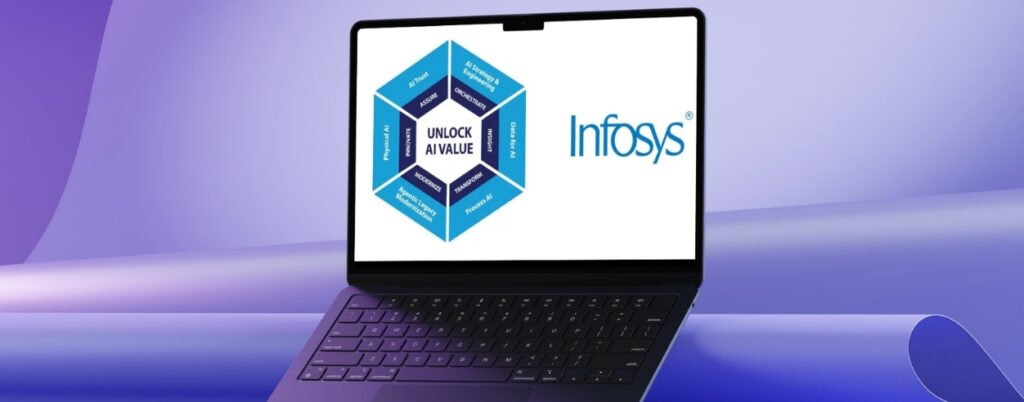
The heart of this strategic collaboration lies in Infosys Topaz, a suite of AI‑first services, solutions and platforms that help organisations harness the power of generative AI to drive new levels of business value. Infosys Topaz acts as a flexible framework that enterprises can adopt to build, deploy and scale AI capabilities that are customised to their strategic goals. When combined with Intel’s hardware stacks and tools, this framework is designed to drastically improve the speed, reliability and performance of AI implementations.
Intel’s contribution to this expanded collaboration is centred on its range of AI‑optimised computing technologies. These include Intel® Xeon® processors, which are widely used for data centre and cloud workloads, Intel® Gaudi® accelerators, designed for machine learning tasks, and the latest Intel® Core™ Ultra Processors, which deliver high performance for next‑generation computing. By integrating these technologies with Infosys Topaz, the partners are building a robust stack that can support everything from data‑intensive analytics to real‑time AI inference workloads.
In addition to hardware and software integration, employee skill development plays a crucial role in this collaboration. Infosys has said it will leverage Intel’s AI training assets to upskill its workforce on Intel’s product portfolio. This means not only training engineers and consultants on how to build and deploy solutions using Intel’s technologies, but also creating a global community of AI practitioners who can support clients as they navigate their AI journeys. This element of the partnership helps ensure that enterprises working with Infosys will have access to consultants who are fluent not just in AI strategy, but also in the technical nuts and bolts of the technologies that power those strategies.

Broader Implications for Businesses
The tech world is at a pivotal point. Businesses everywhere are under pressure to adopt AI to stay competitive, but many struggle with choosing the right technologies, building trustworthy systems and managing costs. The collaboration between Infosys and Intel aims to address these challenges directly by providing what they describe as responsible AI solutions that are performance‑driven and cost-effective. This phrase reflects the growing demand from companies that want AI systems that deliver real value without introducing undue risk or complexity.
One key benefit of this collaboration is the focus on generative AI, a branch of artificial intelligence that can create text, images, audio and other rich content from simple prompts. Generative AI has opened up new possibilities for businesses, from automating customer support with intelligent chatbots to generating insights from unstructured data such as documents and reports. With Infosys’ deep experience in enterprise consulting and Intel’s AI‑centric computing platforms, organisations are better positioned to implement generative AI solutions that meet both operational and ethical guidelines.
From a practical standpoint, this collaboration could help companies achieve what many leaders call time to value. This is the period between when an organisation decides to adopt a new technology and when it begins seeing measurable benefits from that investment. By combining Infosys’ implementation expertise with Intel’s performance hardware, enterprises are likely to see faster deployment cycles, improved system reliability and more predictable outcomes.
Another important implication lies in how these solutions can support cross‑industry digital transformation. For example, retailers could use the combined capabilities to enhance e‑commerce experiences and personalise customer interactions. Financial services firms could deploy AI models that improve fraud detection and risk assessment. Healthcare providers might use AI to speed up diagnosis or personalise treatment plans. In each of these scenarios, the collaboration aims to enable secure and scalable solutions tailored to sector‑specific requirements.
Strategic Vision and Leadership Insights
Senior executives from both companies have spoken about the strategic value of this collaboration, highlighting how it aligns with broader technological shifts and market needs. From the Infosys side, leaders underline their commitment to an AI‑first strategy that places generative AI at the centre of business transformation engagements. According to Balakrishna D.R., Executive Vice President and Global Services Head for AI and Industry Verticals at Infosys, this approach helps clients unlock significant business value across their operations.
On the Intel side, executives stress the importance of open standards and ecosystem‑focused innovation. Christoph Schell, Executive Vice President and Chief Commercial Officer at Intel Corporation, has emphasised that customers and developers are looking for competitive total cost of ownership and faster time to value from their AI investments. This means fostering an open AI software ecosystem and accelerating the adoption of Intel’s AI‑capable hardware to support enterprise adoption.
This focus on collaboration and ecosystem development reflects a broader trend within the technology industry, where partnerships between software consultancies and hardware manufacturers are becoming increasingly common. Such alliances are seen as necessary to provide end‑to‑end solutions that can address the varied needs of different industries without forcing organisations to stitch together disparate technologies on their own.
The joint work by Infosys and Intel also highlights how responsibility and ethics in AI deployment are becoming core considerations. Although early AI implementations were sometimes criticised for issues like data bias, lack of transparency and security vulnerabilities, the current approach emphasises building systems that are responsible by design. This includes embedding governance and ethical frameworks into AI implementations from the outset, rather than treating them as afterthoughts.
What This Means for Nigerian and Global Markets
For countries like Nigeria and others in Africa, the implications of such high‑level collaborations are significant even if implementation timelines vary. Many organisations in fast‑growing economies are eager to adopt advanced technologies to leapfrog traditional development stages, improve service delivery and build competitive advantages on the global stage. Partnerships like the one between Infosys and Intel provide access to frameworks and tools that would otherwise be hard to assemble independently. This could shorten innovation cycles for enterprises seeking to modernise rapidly.
In addition, partnerships with major global tech players can attract investment and talent, build local capabilities through training programmes and create opportunities for technology transfer. Nigerian businesses that are looking to integrate AI into existing systems may find that collaborations backed by major players such as Infosys and Intel offer a trusted roadmap rather than a voyage into uncharted territory.
The broader impact is also felt in sectors like education and workforce development. As enterprises adopt advanced AI solutions, there is a growing need for skilled professionals who can manage and optimise these systems. Initiatives that include training and upskilling components can therefore help create a more robust talent pipeline, ensuring that local economies are not just consumers of technology but active participants in shaping its application.
Final Thoughts
The expanded collaboration between Infosys and Intel represents a meaningful step forward in the global enterprise AI landscape. By building a joint framework that marries advanced hardware with intelligent software services, the partnership aims to reduce barriers to AI adoption and help organisations achieve sustainable, high‑impact transformation. The blend of performance, responsibility and technical expertise at the heart of this collaboration makes it one to watch, not just among technology companies, but among any enterprise that is serious about embracing AI as a strategic business capability.
As global competition intensifies and digital transformation accelerates, collaborations like this could be the difference between organisations that lead and those that lag. The journey to becoming AI‑first is neither simple nor cheap, but with partners like Infosys and Intel working together, the path becomes clearer and more achievable for companies ready to step into the future.
Join Our Social Media Channels:
WhatsApp: NaijaEyes
Facebook: NaijaEyes
Twitter: NaijaEyes
Instagram: NaijaEyes
TikTok: NaijaEyes