
Nigeria’s aviation training sector received a significant boost as the Nigerian College of Aviation Technology (NCAT), Zaria, secured a new round of international accreditation in 2026, reinforcing its reputation as one of Africa’s leading aviation training institutions. The development signals growing global recognition for the institution’s training standards and its role in producing skilled aviation professionals across Nigeria and the wider African region.
The accreditation places the college firmly on the global aviation training map and highlights its commitment to maintaining international best practices in aviation education, safety training, and professional development. For Nigeria’s aviation industry, the recognition is more than a ceremonial achievement. It represents a strategic milestone that could deepen confidence in local aviation training and reduce reliance on overseas institutions for specialised aviation programmes.
Established in 1964, the Nigerian College of Aviation Technology has for decades served as the country’s foremost centre for aviation training. The institution was originally founded with technical support from international partners to develop manpower for the aviation sector and has since grown into a major training hub for aviation professionals in Africa.
Today, the college trains pilots, engineers, air traffic controllers, safety officers, aviation managers, and other aviation specialists. Over the years, thousands of professionals have passed through its programmes, contributing to aviation safety and operational excellence in Nigeria and several other countries.
Accreditation Valid Until 2031 Reflects Global Confidence
The latest accreditation granted to NCAT covers several of its major training programmes and will remain valid from February 19, 2026, until February 28, 2031. The certification confirms that the institution continues to meet internationally accepted aviation training standards.
For aviation training institutions, accreditation is a critical benchmark. It demonstrates that training facilities, instructional methods, curriculum design, and operational procedures meet the expectations set by international aviation bodies and regulatory authorities.
In the case of NCAT, the renewed recognition reflects confidence in the college’s ability to maintain quality training for complex aviation disciplines such as aircraft maintenance, air traffic services, aviation safety, and flight operations. These areas are vital to the global aviation industry, where safety standards and technical competence must remain consistently high.
Industry observers say the development also strengthens Nigeria’s position as a regional centre for aviation training. As aviation activity continues to expand across Africa, demand for highly trained aviation personnel is increasing. With this accreditation, NCAT is better positioned to attract students and aviation professionals from across the continent.

Nigeria’s Premier Aviation Training Institution
Located in Zaria, Kaduna State, NCAT remains Nigeria’s flagship institution for aviation training. The college was established through an Act of Parliament in 1964 to support the country’s growing aviation industry and to build technical capacity in aviation operations and safety management.
The institution began operations in 1966 with assistance from international organisations that helped develop its training infrastructure and curriculum. Over time, the Federal Government of Nigeria assumed full responsibility for the institution, ensuring its continued expansion and development.
More than five decades later, NCAT has become a central pillar of aviation manpower development in Africa. The college provides training not only for Nigeria’s aviation agencies but also for personnel from other African countries and beyond.
Its programmes cover a wide range of aviation disciplines, including pilot training, aircraft engineering, aeronautical telecommunications, aviation management, airport emergency operations, and air traffic services. These programmes are designed to align with international aviation standards and regulatory frameworks.
The institution’s mission is to provide professionals and skilled personnel to the aviation industry through high-quality training that promotes safe and efficient air transportation.
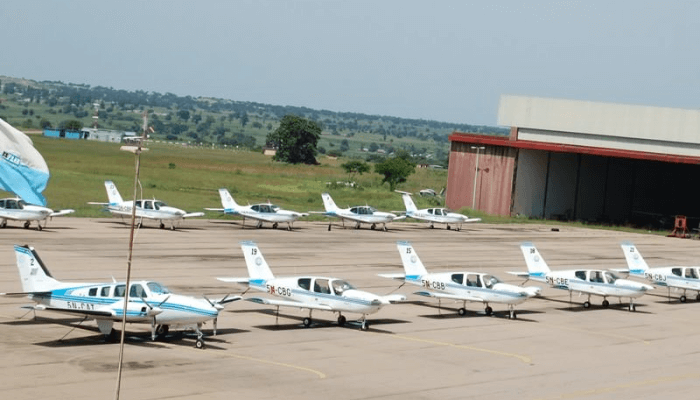
This objective has driven significant investments in training infrastructure over the years. The college operates advanced simulation systems and specialised training equipment that replicate real aviation environments. These facilities enable trainees to gain practical experience in handling aircraft operations, air traffic control systems, and emergency response situations.
Global Partnerships and ICAO Recognition
One of the factors behind NCAT’s international recognition is its long-standing relationship with global aviation organisations and training networks. The college has maintained strong partnerships with institutions and regulatory bodies that help ensure its training programmes remain globally relevant.
Among these partnerships is its involvement in international aviation training frameworks associated with global aviation regulatory bodies. Through these collaborations, the institution contributes to the development of aviation training materials and participates in international instructor development programmes.
In addition to its international accreditation, the institution has also received recognition as a Regional Training Centre of Excellence. This designation allows the college to develop specialised training programmes aligned with international aviation standards and to serve aviation professionals across West Africa and beyond.
The recognition has significantly elevated NCAT’s profile within the global aviation training community. It means the college is authorised to deliver training programmes that meet global aviation requirements in areas such as aerodrome management, air transport operations, aviation security, and environmental safety.
Over the years, the institution has also been recognised for producing large numbers of aviation instructors and professionals who contribute to aviation safety across the region.
Impact on Nigeria’s Aviation Industry
For Nigeria’s aviation sector, the renewed international accreditation carries important implications. Aviation is one of the most technically regulated industries in the world, where training standards directly affect safety outcomes.
By strengthening local training capacity, the accreditation helps reduce Nigeria’s dependence on foreign aviation training centres. In the past, many aviation professionals had to travel abroad to obtain specialised training due to limited local capacity.
With NCAT expanding its global recognition and training capabilities, more Nigerian aviation professionals can now access internationally recognised training within the country.
This has financial benefits for both individuals and aviation organisations. Training costs abroad can be extremely high due to travel expenses, foreign currency requirements, and accommodation costs. Local training options that meet global standards provide a more accessible pathway for aviation professionals.
Industry analysts also believe the development could help address the shortage of skilled aviation personnel in Nigeria. As air travel continues to grow and new airlines emerge, the demand for trained pilots, engineers, and aviation managers is expected to increase significantly.
By producing skilled professionals locally, NCAT plays a key role in supporting the expansion of Nigeria’s aviation ecosystem.
Future Prospects for Aviation Training in Nigeria
Looking ahead, the renewed accreditation is expected to encourage further investments in training infrastructure and curriculum development at NCAT. Aviation technology is evolving rapidly, with increasing reliance on digital systems, automation, and advanced aircraft technologies.
Training institutions must continuously adapt their programmes to reflect these changes. For NCAT, maintaining international accreditation means constantly upgrading its facilities, training equipment, and instructional capacity.
The college has already introduced several modern training tools, including advanced aircraft simulators, safety training systems, and specialised engineering equipment designed to reflect modern aviation environments.
These improvements aim to ensure that graduates of the institution remain competitive in the global aviation workforce.
Beyond Nigeria, the college is also positioning itself as a major training destination for aviation professionals across Africa. With many countries in the region seeking to expand their aviation industries, the need for qualified aviation personnel will continue to grow.
Institutions like NCAT are therefore expected to play a central role in building the human capital required for Africa’s aviation expansion.
The latest international accreditation reinforces the institution’s credibility and signals that its training programmes remain aligned with global aviation standards.
For Nigeria, it is also a reminder that sustained investment in education and professional training remains essential for strengthening critical sectors of the economy. Aviation, with its complex technical requirements and safety demands, depends heavily on highly trained professionals.
As the Nigerian College of Aviation Technology moves forward with renewed international recognition, the institution stands poised to continue shaping the future of aviation training not only in Nigeria but across the African continent.
Join Our Social Media Channels:
WhatsApp: NaijaEyes
Facebook: NaijaEyes
Twitter: NaijaEyes
Instagram: NaijaEyes
TikTok: NaijaEyes