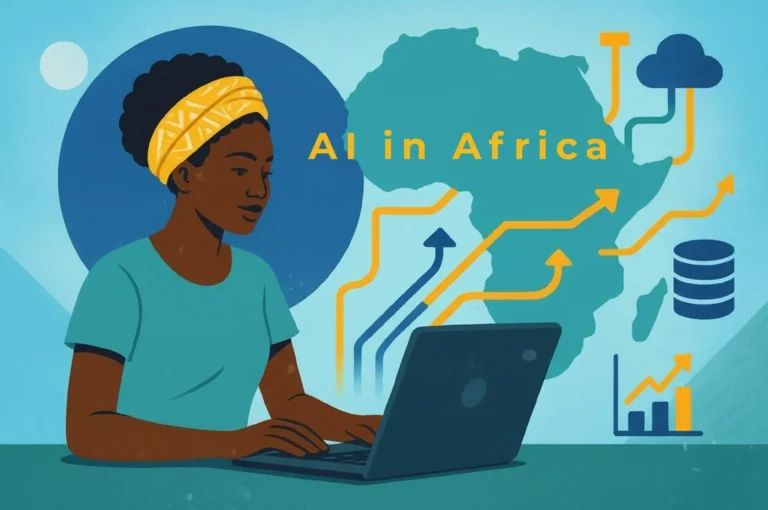

Artificial intelligence is changing the world at a breathtaking pace. From chatbots and translation tools to voice assistants and recommendation systems, AI is now shaping how people work, learn, and communicate. Yet beneath this global technological revolution lies a major blind spot that affects millions of people across Africa.
Many of the continent’s languages are barely represented in the datasets used to train modern AI systems. This means that despite Africa’s growing digital population, many communities still struggle to interact with the latest technologies in their own languages.
For a continent with one of the richest linguistic landscapes in the world, the stakes are high. The question is no longer just about technology. It is about culture, identity, economic opportunity, and whether Africa will fully participate in the next phase of the digital economy.
Understanding why African languages matter for AI is therefore not just a technical issue. It is a critical conversation about inclusion, innovation, and the future of global technology.
Africa’s Linguistic Diversity and the AI Gap
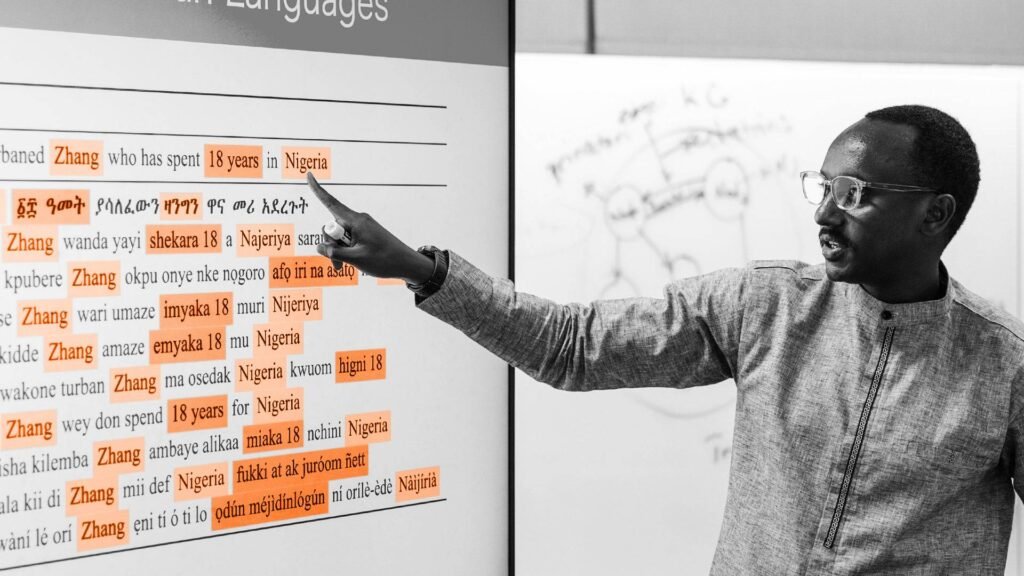
Africa is home to one of the most diverse linguistic environments on the planet. Researchers estimate that more than 2,000 languages are spoken across the continent, representing nearly one-third of the world’s linguistic diversity. Yet most artificial intelligence systems today are designed primarily around English and a handful of other dominant global languages.
This imbalance has real consequences. Many widely spoken African languages, such as Hausa, Yoruba, Amharic, and Swahili, are often poorly understood by modern AI systems. In some cases, models recognise only a small fraction of sentences written in these languages because they lack sufficient training data.
The root of the problem lies in how AI is built. Machine learning systems require enormous volumes of digital text and speech data to learn patterns in language. These datasets usually come from the internet, books, research papers, and recorded conversations.
Unfortunately, much of Africa’s linguistic heritage exists outside digital spaces. Many languages are primarily spoken rather than written, and historical texts may not yet be digitised. As a result, there is simply not enough online material for AI models to learn from.
Even when data exists, it may be fragmented across dialects or written in different orthographic styles. This makes it harder to standardise datasets and build accurate models. Linguistic complexity also plays a role. Many African languages use tonal systems, complex verb structures, and regional variations that traditional natural language processing systems were not originally designed to handle.
The result is a technological gap that mirrors earlier digital divides. While AI tools become increasingly powerful in parts of the world where dominant languages prevail, millions of Africans are left interacting with technology in languages that are not native to them.
Why Language Inclusion in AI Matters
Language is far more than a tool for communication. It carries culture, identity, history, and collective knowledge. When languages are absent from digital technologies, the communities that speak them risk being excluded from the digital future.
One of the most immediate consequences is reduced access to information. Many AI tools power search engines, education platforms, voice assistants, and automated customer service systems. If these tools cannot understand local languages, millions of people face barriers when trying to access services online.
This issue becomes especially important in sectors such as healthcare, education, agriculture, and financial services. For example, farmers receiving AI-powered advice about crop diseases or weather forecasts may benefit far more if the information is delivered in their native language rather than a second language.
Beyond accessibility, language inclusion also supports economic development. Businesses across Africa increasingly rely on digital tools for marketing, e-commerce, and customer engagement. AI systems that understand local languages can help companies reach broader audiences and build stronger relationships with their customers.
There is also a cultural dimension that cannot be ignored. Many African languages already face the threat of extinction as younger generations adopt global languages for education and employment. Experts warn that around fifteen percent of African languages are at risk of disappearing entirely if they are not preserved and documented.
Artificial intelligence, if developed responsibly, could become an important tool for protecting linguistic heritage. By recording speech, analysing grammar, and digitising texts, AI can help document languages that might otherwise fade away.
In other words, ensuring that African languages are part of the AI ecosystem is not simply about fairness. It is about preserving knowledge systems and cultural identities that have existed for centuries.

The Challenges of Teaching AI African Languages
While the importance of language inclusion is clear, the path toward achieving it is complex. Building AI systems for African languages presents several technical, economic, and logistical challenges.
The first challenge is data scarcity. AI models rely heavily on large datasets of text and speech, but many African languages lack digitised resources such as dictionaries, annotated corpora, and transcribed audio recordings. Without these foundational tools, training accurate models becomes extremely difficult.
A second challenge is linguistic diversity itself. With thousands of languages spoken across the continent, each with its own dialects and grammatical rules, creating comprehensive datasets requires extensive collaboration between linguists, researchers, and native speakers.
Code switching also complicates matters. In many African countries, people frequently mix multiple languages within the same conversation. A sentence might begin in English and end in Yoruba or Swahili. AI models trained on monolingual data often struggle to interpret such hybrid communication.
Funding and infrastructure are additional barriers. Much of the global AI research ecosystem is concentrated in North America, Europe, and parts of Asia. African institutions and startups often face limited access to computing resources and research funding.
However, these challenges are not insurmountable. Across the continent and beyond, a growing network of researchers, developers, and community organisations is working to close the gap.
One promising approach involves community-led data collection. Native speakers contribute translations, record speech samples, and help create open-source datasets that can be used to train AI systems. This grassroots model ensures that language technology is developed with local knowledge and cultural context.
Another strategy involves adapting existing AI models through transfer learning. In this approach, a model trained on large global datasets is fine-tuned using smaller datasets from specific African languages. This reduces the amount of data required while still producing useful results.
Academic initiatives are also playing an important role. Some research groups have already created large multilingual datasets covering dozens of African languages and thousands of hours of speech recordings. These resources provide a foundation for the next generation of language technologies.
Africa’s Opportunity in the Global AI Future
Despite the challenges, momentum is building around the development of AI tools that support African languages. Researchers, technology companies, and governments are increasingly recognising that the future of artificial intelligence must be inclusive.
Grassroots initiatives such as Masakhane, an open research community focused on African language technology, have demonstrated the power of collaboration. By bringing together linguists, engineers, and volunteers from across the continent, these projects are accelerating the creation of translation systems, speech recognition tools, and sentiment analysis models tailored to African contexts.
Telecommunications companies and technology firms are also beginning to invest in this space. Some companies are exploring ways to train large language models using regional datasets, enabling AI tools to better understand local accents, vocabulary, and cultural references.
These efforts could have far-reaching benefits. Imagine voice assistants that respond fluently in Yoruba or Igbo, digital classrooms that teach science in Swahili, or healthcare chatbots that provide medical guidance in Amharic.

Such innovations would not only improve accessibility but also create new economic opportunities for African developers and entrepreneurs.
There is also a strategic advantage. Africa’s youthful population and rapidly expanding digital ecosystem position the continent as a potential leader in the next phase of AI innovation. By investing early in language technologies, African researchers can help shape global standards and ensure that the continent’s voices are represented in future digital platforms.
Ultimately, the question of African languages in AI is about more than algorithms and datasets. It is about building a technological future that reflects the diversity of the world’s cultures and communities.
If artificial intelligence is truly meant to serve humanity, it must learn to speak humanity’s many languages.
Africa’s linguistic heritage is one of its greatest assets. Ensuring that these languages thrive in the age of artificial intelligence will require collaboration, investment, and long-term commitment. But the reward will be a more inclusive digital world where technology works for everyone.
And perhaps most importantly, it will ensure that the voices of millions of Africans are heard clearly in the global conversation about the future of technology.
Join Our Social Media Channels:
WhatsApp: NaijaEyes
Facebook: NaijaEyes
Twitter: NaijaEyes
Instagram: NaijaEyes
TikTok: NaijaEyes