The Federal Government has renewed its push to reduce illiteracy across Nigeria, calling for deeper and more practical collaboration with state governments as a critical pathway to meaningful progress. The move reflects growing concern over the scale of illiteracy in the country and the slow pace of improvement despite existing interventions.
At the centre of this renewed effort is the recognition that education outcomes, especially in adult and non-formal education, depend heavily on how effectively states implement policies at the grassroots level. Authorities say that without stronger alignment between federal and state structures, national literacy targets may remain out of reach.
Why Collaboration Between Federal and State Governments Matters
Nigeria’s literacy challenge is not just a policy issue but a structural one. While the Federal Government provides direction, funding frameworks and institutional support, the actual delivery of literacy programmes happens largely at the state and community levels.
Officials emphasise that state agencies are closer to the people and better positioned to understand local realities, from cultural barriers to economic limitations that affect school attendance and adult education participation. According to education stakeholders, weak coordination between federal and state bodies has continued to limit the effectiveness of literacy initiatives.
The National Commission for Mass Literacy, Adult and Non-Formal Education has stressed that its success is directly tied to the performance of state agencies. Where states lack motivation, resources or alignment with national goals, the overall impact becomes diluted.
This reality has pushed the Federal Government to prioritise collaboration as a strategic necessity rather than a policy option. Stakeholder engagements are now being used to bridge gaps, clarify roles and strengthen accountability across all levels of implementation.
The Role of Data and Localised Solutions in Fighting Illiteracy
A major issue identified by education authorities is the lack of reliable, locally generated data. Policymakers argue that overdependence on international reports can present an incomplete or sometimes inaccurate picture of Nigeria’s literacy situation.
To address this, the government is advocating for a stronger reliance on homegrown data systems that reflect realities on the ground. Institutions such as the National Bureau of Statistics and the Universal Basic Education Commission are expected to play a more active role in data generation and validation.
Experts believe that credible data is essential for effective planning. Without accurate figures, interventions may be misdirected, resources poorly allocated and progress difficult to measure.
Beyond data, there is also a shift towards community-driven solutions. Authorities are exploring flexible learning models that can accommodate adults who balance education with work and family responsibilities. This includes informal learning centres, vocational training programmes and tailored literacy initiatives that reflect local needs.
Economic realities are also being factored in. With rising living costs, many Nigerians prioritise immediate income over education, especially in adult learning contexts. Policymakers now acknowledge that literacy programmes must be designed in a way that makes participation practical and beneficial for everyday life.
The Scale of Nigeria’s Illiteracy Challenge
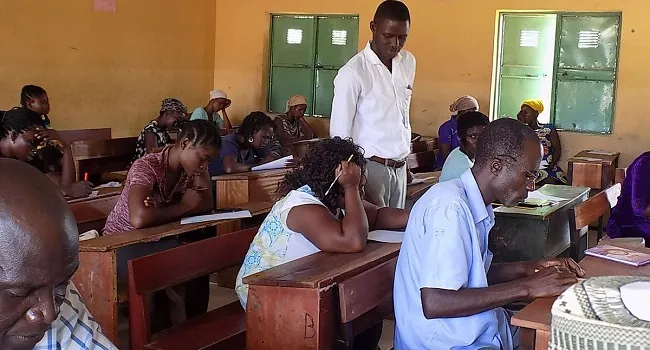
The urgency of the Federal Government’s call is underscored by the scale of the problem. Millions of Nigerians, particularly adults and out-of-school children, still lack basic reading and writing skills.
Estimates indicate that tens of millions of adults remain illiterate, while millions of children are still outside the formal education system. These figures highlight a persistent gap that affects not just individual livelihoods but also national development.
Illiteracy has far-reaching consequences. It limits access to employment opportunities, reduces productivity and weakens civic participation. It also creates a cycle where children of illiterate parents are more likely to face educational disadvantages.
Education experts point out that improving adult literacy has a ripple effect across generations. When parents are educated, they are more likely to prioritise schooling for their children, creating a long-term positive impact on society.
The Way Forward for Nigeria’s Education Sector
The Federal Government’s renewed emphasis on collaboration signals a shift towards a more integrated approach to tackling illiteracy. However, experts warn that calls for partnership must be backed by concrete actions.
First, there is a need for sustained funding and proper utilisation of resources at both federal and state levels. Literacy programmes often suffer from inconsistent funding, which affects continuity and outcomes.
Second, capacity building for state agencies is essential. Training educators, improving data systems and adopting modern tools can significantly enhance programme delivery.
Third, accountability must be strengthened. States are being urged to properly document their activities and ensure transparency in reporting. Accurate data and honest assessments are critical to measuring progress and identifying areas that need improvement.
Finally, there is growing recognition that literacy cannot be treated in isolation. It must be integrated with broader development strategies, including poverty reduction, job creation and social support systems.
As Nigeria continues to grapple with its education challenges, the success of this renewed push will depend on how well federal and state governments can move from dialogue to coordinated action. Without that alignment, the goal of reducing illiteracy may remain an aspiration rather than an achievement.
Join Our Social Media Channels:
WhatsApp: NaijaEyes
Facebook: NaijaEyes
Twitter: NaijaEyes
Instagram: NaijaEyes
TikTok: NaijaEyes
READ THE LATEST EDUCATION NEWS