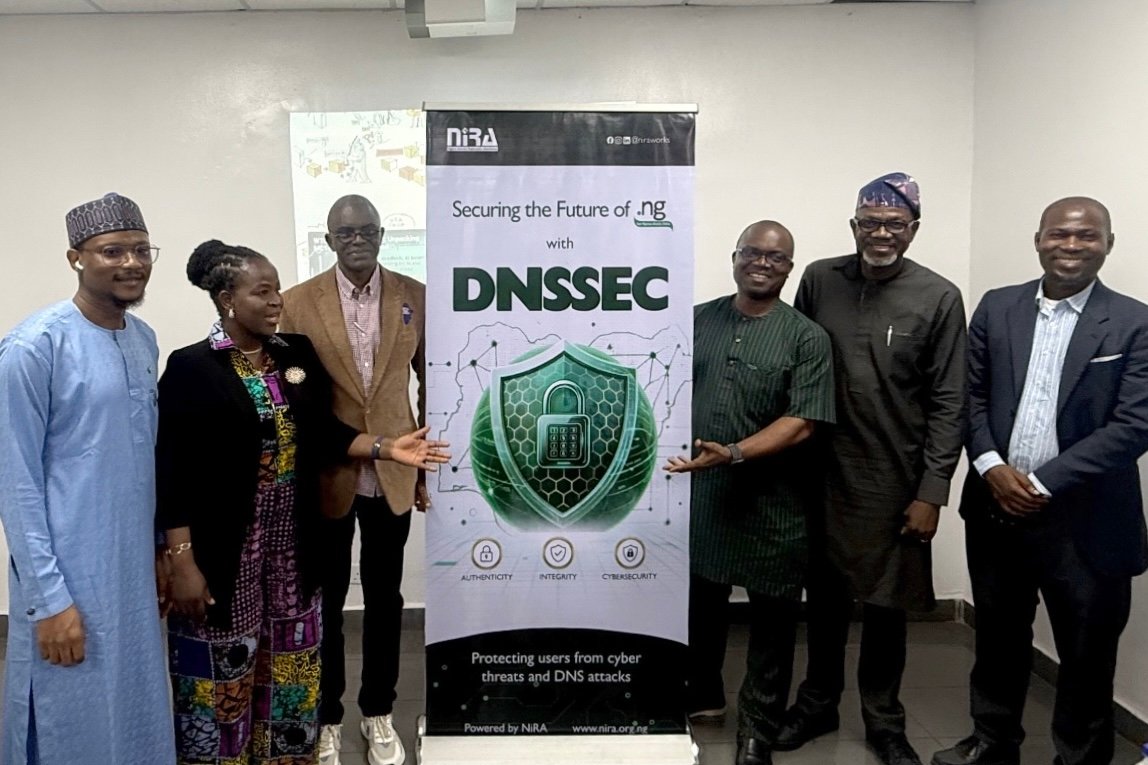

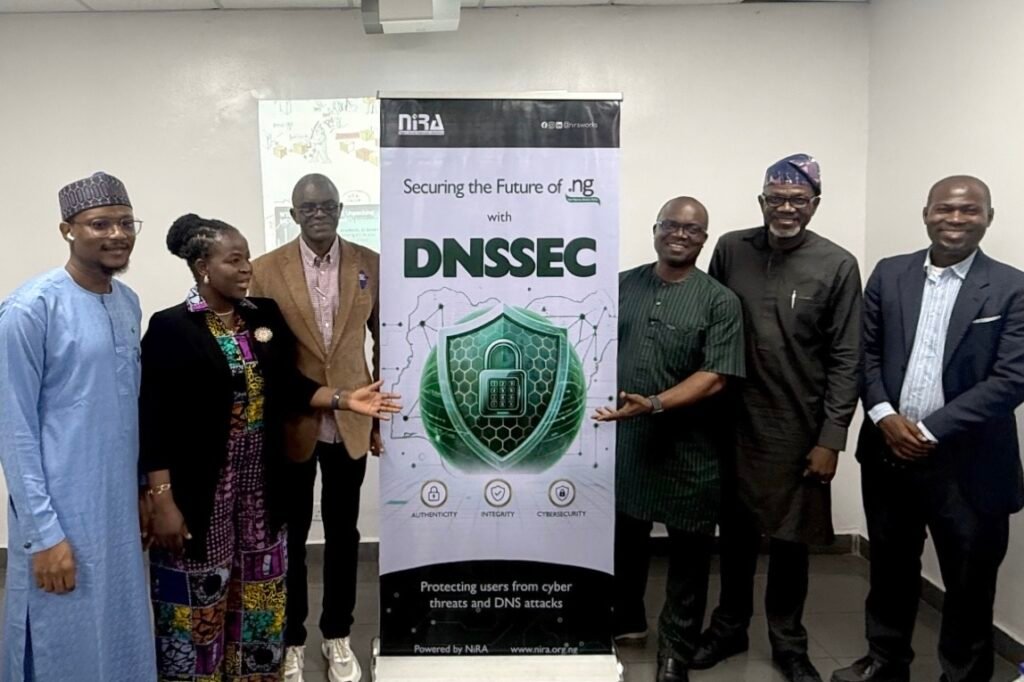
Nigeria has taken a significant step to improve the safety of its digital space with the deployment of Domain Name System Security Extensions, commonly known as DNSSEC, across the country’s .ng domain. The move is being positioned as a critical upgrade to protect internet users, businesses, and government platforms from rising cyber threats.
At its core, the Domain Name System acts like the internet’s address book, translating website names into numerical IP addresses. However, this system was originally built without strong security protections, leaving it vulnerable to manipulation. DNSSEC introduces a layer of cryptographic authentication that ensures users are directed to legitimate websites rather than malicious copies.
For Nigeria, where digital adoption is accelerating across banking, education, media, and governance, the stakes are high. The introduction of DNSSEC is therefore not just a technical upgrade but a strategic move to build trust in the country’s online ecosystem.

How DNSSEC strengthens Nigeria’s internet infrastructure
The deployment of DNSSEC means that information coming from websites under the .ng domain can now be verified as authentic. This is achieved through digital signatures attached to DNS data, allowing systems to confirm that the information has not been altered in transit.
In practical terms, this helps to prevent attacks such as DNS spoofing and cache poisoning, where users are redirected to fake websites designed to steal sensitive data. With DNSSEC in place, such attacks become far more difficult because any tampered data will fail verification checks.
Cybersecurity experts have long emphasised the importance of securing DNS because it underpins almost every online activity. Without trust in DNS, even the most secure websites can be compromised indirectly. DNSSEC addresses this gap by creating a chain of trust from the root of the Internet down to individual domains.
Nigeria’s adoption aligns with global best practices, as more countries and domain registries move to secure their digital infrastructure against increasingly sophisticated cyber threats.
What this means for businesses, users and government services
For businesses operating under the .ng domain, the deployment of DNSSEC is expected to boost credibility and user confidence. Customers visiting Nigerian websites can have greater assurance that they are interacting with legitimate platforms, particularly in sectors like fintech and e-commerce, where trust is critical.
Government services also stand to benefit. As Nigeria continues to expand digital public services, securing official portals becomes essential to prevent impersonation or data breaches. DNSSEC adds an important safeguard that complements other cybersecurity measures already in place.
For everyday internet users, the impact may not be immediately visible, but it is significant. Behind the scenes, DNSSEC helps ensure that when a user types a web address, they are connected to the correct destination without interference from malicious actors.
The Nigeria Internet Registration Association, which manages the .ng domain, has been actively working to improve domain integrity and adoption. The implementation of DNSSEC represents a major milestone in that effort, reinforcing trust in Nigeria’s national digital identity.
Nigeria’s move in the context of global cybersecurity trends
Globally, the adoption of DNSSEC has been gradual, with uneven implementation across different regions. As of recent estimates, less than half of country code top-level domains have fully operational DNSSEC, highlighting the challenges involved in deployment.
Despite these challenges, the importance of DNS security continues to grow as cyber threats become more advanced. High-profile incidents involving domain hijacking and internet outages have demonstrated how vulnerable the DNS layer can be when not properly secured.
Nigeria’s decision to deploy DNSSEC places it among forward-looking countries prioritising digital resilience. It also signals a broader commitment to strengthening the nation’s cybersecurity posture at a time when digital transformation is accelerating across Africa.
Experts note that while DNSSEC significantly improves integrity and authenticity, it does not address all aspects of security, such as data confidentiality or service availability. This means it should be seen as part of a wider cybersecurity framework rather than a standalone solution.
The road ahead for .ng domain security and adoption
While the deployment of DNSSEC is a major achievement, its full impact will depend on widespread adoption across registrars, organisations, and website owners. For DNSSEC to be effective, domain operators must enable and maintain the necessary configurations, including managing cryptographic keys.
There are also technical and operational challenges. DNSSEC can increase the size of DNS responses and place additional load on servers, requiring upgrades to infrastructure and expertise. However, these challenges are generally outweighed by the security benefits, especially in a digital environment where threats are constantly evolving.
Looking ahead, the success of DNSSEC in Nigeria will likely depend on awareness, capacity building, and collaboration among stakeholders. Training for IT professionals, incentives for adoption, and continued investment in infrastructure will all play a role in ensuring that the .ng domain remains secure and competitive.
Ultimately, the deployment marks an important step in Nigeria’s digital journey. By strengthening the foundation of its internet infrastructure, the country is positioning itself to support safer online interactions, attract investment, and build greater confidence in its digital economy.
Join Our Social Media Channels:
WhatsApp: NaijaEyes
Facebook: NaijaEyes
Twitter: NaijaEyes
Instagram: NaijaEyes
TikTok: NaijaEyes