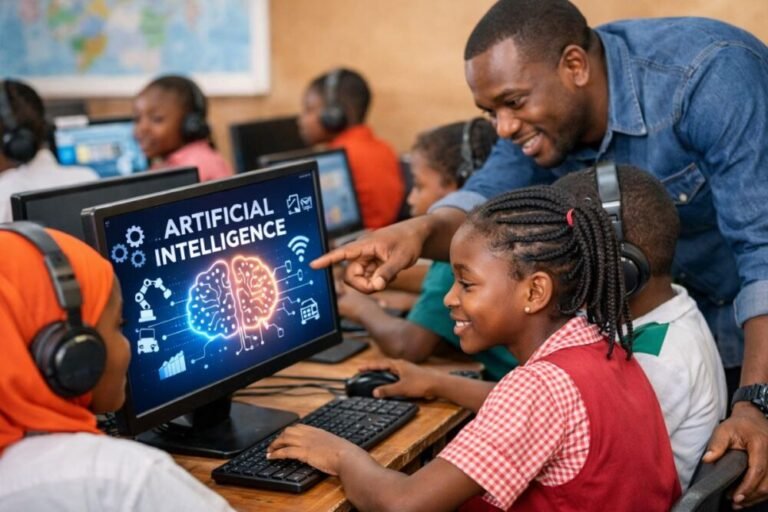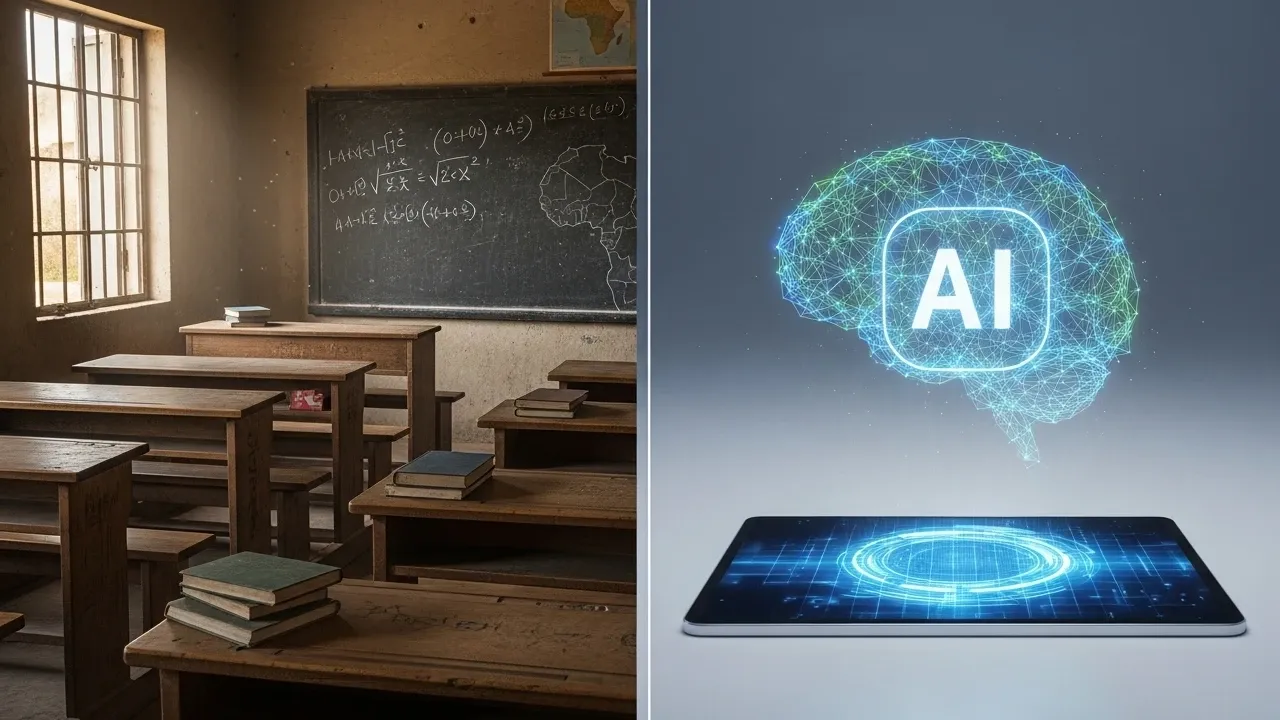

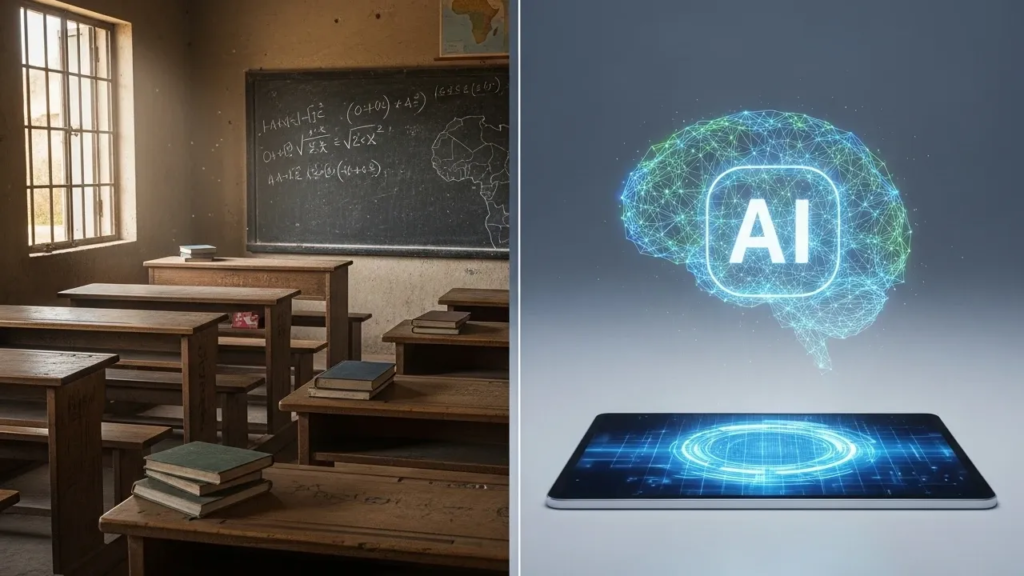
Artificial intelligence is quietly entering classrooms across the world, and Nigeria is no exception. From automated grading tools to adaptive learning platforms, schools are beginning to experiment with systems that promise to personalise education. But one of the most sensitive and potentially transformative applications is emerging in a more complex space: the early detection of learning disabilities.
In a country where access to trained psychologists and specialised assessment tools remains limited, the question is no longer theoretical. Can AI step in to identify learning challenges early, even in classrooms that lack professional diagnostic support? The answer, according to emerging research and pilot projects, is both promising and complicated.

AI Enters the Classroom as a Silent Observer
Unlike traditional assessment methods that rely heavily on clinical testing and professional evaluation, AI systems operate quietly in the background. They analyse patterns in student behaviour, academic performance, and even handwriting or language use over time.
Recent studies show that AI can detect subtle indicators of learning difficulties by processing large datasets from classroom interactions. These systems track how a student reads, writes, solves problems, and responds to feedback, identifying patterns that may not be immediately obvious to teachers.
For example, a child who consistently struggles with reading comprehension but performs well in verbal discussions may trigger an early alert for possible dyslexia. Similarly, irregular writing patterns or difficulty maintaining attention during digital tasks could signal other learning challenges.
In some experimental models, machine learning tools have achieved high accuracy levels in early detection, with some systems reporting results close to 90 percent in controlled environments. While these figures are still being tested in real-world classrooms, they suggest a strong potential for early screening.
In Nigeria, where many schools operate with limited specialist support, this kind of automated observation could be a game-changer.
Bridging the Gap Where Psychologists Are Scarce
The traditional process of diagnosing learning disabilities involves trained professionals such as educational psychologists, speech therapists, and neuropsychologists. These experts use a combination of cognitive testing, behavioural observation, and academic assessments to make a diagnosis.
However, such expertise is not widely available in many Nigerian schools, particularly in rural or underfunded areas. Even in urban centres, access can be expensive and limited to private institutions.
This is where AI is being positioned as a practical alternative, not to replace professionals entirely, but to bridge the gap. By offering early screening, AI tools can flag students who may need further evaluation, allowing limited human resources to be used more effectively.
Research focused on education systems similar to Nigeria shows that AI-driven platforms can support early identification of learning difficulties while also reducing teacher workload. Teachers can receive insights about students who may be struggling, enabling quicker intervention rather than waiting for a formal diagnosis.
For a typical public school teacher handling large class sizes, this kind of support could make a significant difference. Instead of relying solely on observation and intuition, teachers can use data-driven insights to guide their decisions.

The Limits of Technology in a Human Centred Problem
Despite its promise, AI is not a complete solution. Learning disabilities are complex and deeply personal, often influenced by social, cultural, and emotional factors that technology alone cannot fully capture.
One major concern is accuracy in diverse classroom environments. Many AI models are trained on datasets from Europe, North America, or other regions with different educational systems. Applying these models directly to Nigerian classrooms without adaptation may lead to misinterpretation or bias.
There is also the risk of over-reliance on automated systems. A child flagged by AI as having a learning difficulty may still require careful, human-centred evaluation before any conclusion is reached. Misdiagnosis could affect a child’s confidence, academic path, and social development.
Experts continue to stress that AI should be used as a support tool rather than a replacement for professional judgment. Even the most advanced systems depend on quality data and proper implementation to deliver reliable results.
What This Means for Nigerian Education
The potential impact of AI in this area goes beyond individual classrooms. Early detection of learning disabilities can significantly improve long-term educational outcomes.
Research shows that when learning challenges are identified early, targeted interventions can help children catch up with their peers and avoid long-term academic struggles. In contrast, late diagnosis often means missed opportunities for support during critical developmental stages.
For Nigeria, this presents both an opportunity and a responsibility. Integrating AI into education systems could help address longstanding gaps in special education services. However, it also requires investment in infrastructure, teacher training, and policy frameworks to ensure ethical and effective use.
Organisations within the country are already working to support children with developmental and learning challenges, highlighting the growing awareness of this issue. AI could complement these efforts by expanding reach and improving early identification.
At the same time, policymakers will need to address concerns around data privacy, accessibility, and equity. If not carefully managed, the introduction of AI could widen existing inequalities between well-resourced schools and those with fewer resources.
Back Story: Why Early Detection Has Always Been a Challenge
The difficulty of identifying learning disabilities early is not unique to Nigeria, but the challenges are more pronounced due to systemic limitations.
Historically, special education in Nigeria has been driven by a mix of government initiatives, non-governmental organisations, and missionary efforts. Access to specialised schools and trained professionals has improved over time, but remains uneven across regions.
Globally, learning disabilities affect millions of individuals, yet many cases go undetected until children are already struggling significantly in school. Traditional diagnostic methods are often time-consuming, expensive, and dependent on specialist availability.
In many Nigerian classrooms, teachers rely on experience and observation to identify struggling students. While this approach can be effective, it is not always sufficient, especially in overcrowded classrooms where individual attention is limited.
The emergence of AI in education is part of a broader effort to address these gaps. By providing scalable, data-driven insights, technology offers a new pathway to tackle an old problem.
Yet, as with any innovation, success will depend on how it is implemented. AI alone cannot solve the structural challenges of the education system, but it can become a powerful tool when combined with human expertise and thoughtful policy.
Join Our Social Media Channels:
WhatsApp: NaijaEyes
Facebook: NaijaEyes
Twitter: NaijaEyes
Instagram: NaijaEyes
TikTok: NaijaEyes